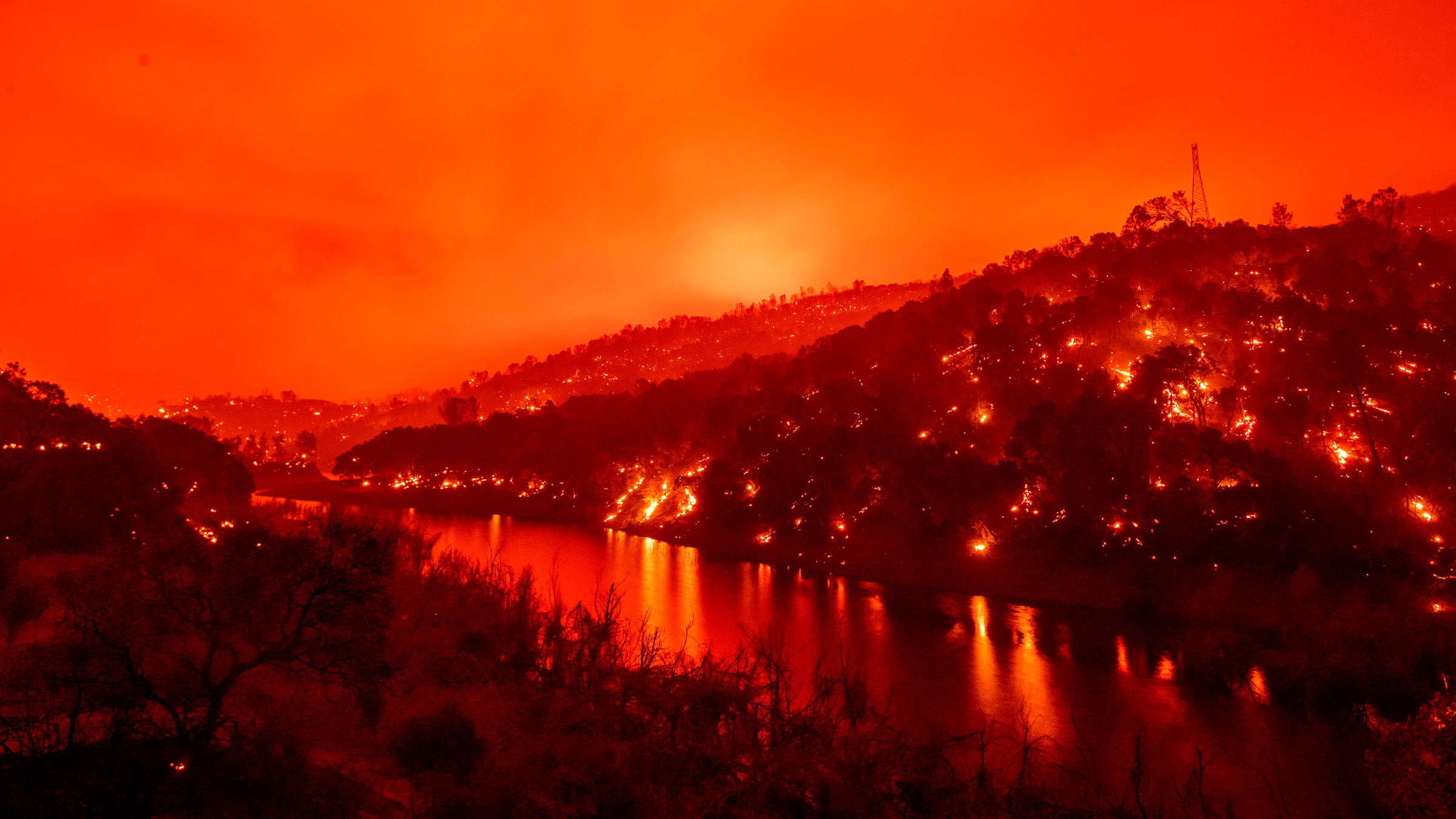
As California battles both wildfires and the ongoing coronavirus outbreak, resources have been “stretched totally thin,” the California Department of Forestry and Fire Protection (Cal Fire) told Newsweek.
Cal Fire President Tim Edwards said: “In the last few weeks, resources across California have been stretched totally thin.”
Nearly 150 firefighters from Cal Fire, which is responsible for fighting fires in over 96 to 99 million acres of California’s nearly 101.7 million total acres of land, are currently in quarantine due to COVID-19 infection or exposure.
“For Cal Fire, right now statewide we have approximately 130 firefighters who are quarantined. Out of those, over half have tested positive [for COVID-19] and the rest were exposed due to it. So this adds to the strain on Cal Fire,” he said.
Even before the outbreak began, due to budget cuts Cal Fire was short by 400 firefighters to bring the department up to its minimum operational requirement, Edwards noted.
If you liked this post you’ll love our daily newsletter, EnviroPolitics.It’s packed with the latest news, commentary and legislative updates from New Jersey, Pennsylvania, New York, Delaware…and beyond. Don’t take our word for it, try it free for an entire month. No obligation.
ALBANY — A federal appeals court decision on Friday delayed a final determination on whether social gatherings of 50 or more people can proceed in New York.
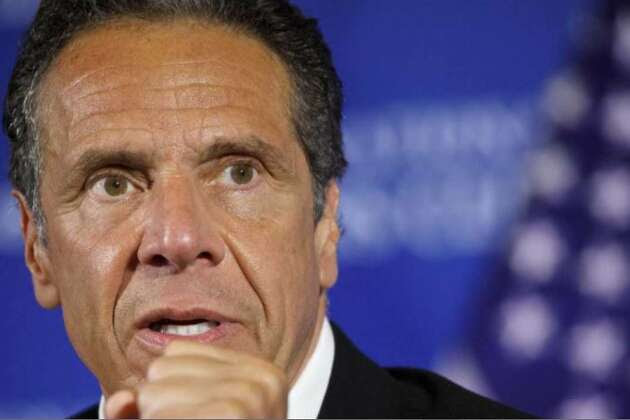
The decision was issued in connection with a legal challenge in which two western New York couples, one whose wedding is scheduled for Saturday, sought a court order overturning an executive order by Gov. Andrew M. Cuomo barring gatherings of more than 50 people during the coronavirus pandemic.
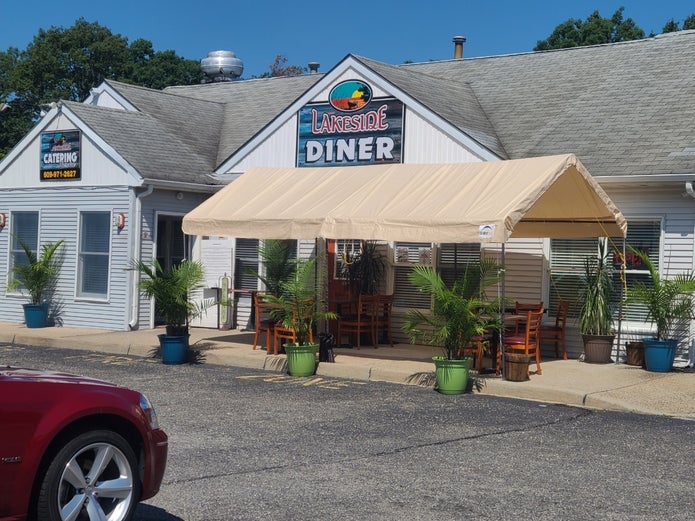
LACEY, NJ — Authorities say they changed Lakeside Diner’s locks early Friday morning since the owner has repeatedly defied Gov. Phil Murphy’s ban on indoor dining and received several citations.
The Ocean County Sheriff’s Office assisted Lacey police Friday morning at the request of the County Prosecutor’s Office, according to Sheriff Michael G. Mastronardy. Lacey police did not immediately return comment.
“I just got off the phone with the owner of the diner, Brian (Brindisi),” Mastronardy told Patch. “He assured me that our officers treated him with the respect that he did them.”
Mastronardy did not address what happened after authorities took the action.
“With us, there’s no issues,” he said. “But we’re responsible for assisting law enforcement agencies, whether it’s ICE or the Prosecutor’s Office.”
Judith M. Persichilli, New Jersey’s Department of Health commissioner, issued a closure order Aug. 13. A temporary restraining order was issued against the diner, according to state officials.
State officials said the measure wasn’t an “intimidation tactic,” but Murphy said authorities are sending a message.
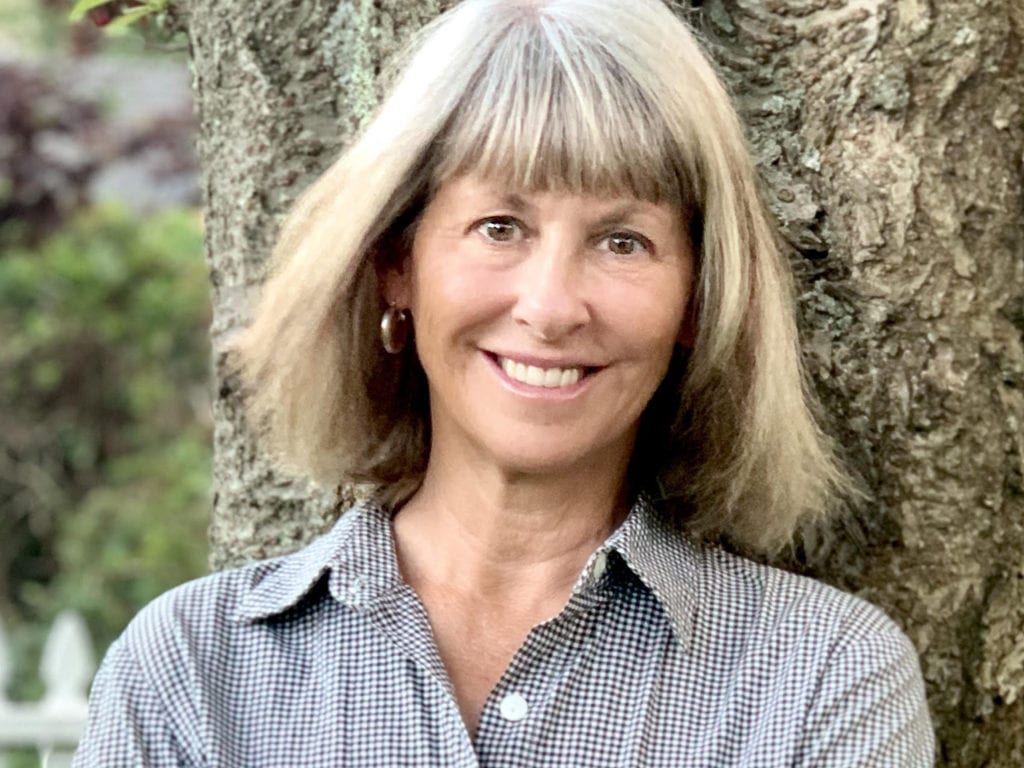
Patty Cronheim, of Hopewell, is the new campaigns director for the NJ League of Conservation Voters.
New Jersey League of Conservation Voters has named Patty Cronheim the organization’s new campaigns director. New Jersey LCV is the statewide political voice for the environment, advocating for environmental policy and holding elected officials accountable.
Through her position as campaigns director, Cronheim will be developing, overseeing and leading New Jersey LCV and the New Jersey LCV Education Fund’s environmental campaign plans, including stormwater utility and clean energy campaigns. She will work to bring together stakeholders to ensure an equitable transition to renewable energy that protects the health and safety of all New Jerseyans.
Prior to joining New Jersey LCV, the Hopewell resident worked as the outreach coordinator at ReThink Energy NJ, where she helped foster the transition to renewable energy to reduce the use of fossil fuels. She organized communities statewide to improve their health and safety by opposing fossil fuel projects, such as the PennEast Pipeline and the Northeast Supply Enhancement Project.
Cronheim holds a bachelor’s degree in film and television from New York University and a master of science in nutrition and applied physiology from Columbia University.
EPA announces plan to address creosote in groundwater at former lumber treatment site
NEW YORK (August 20, 2020) – The U.S. Environmental Protection Agency (EPA) is proposing a cleanup plan to address creosote contamination at the GCL Tie and Treating Superfund site located in the Village of Sidney, New York, along the Susquehanna River. Creosote is an oily contaminant obtained from extracting coal tar at a high temperature and is commonly used as a wood preservative. EPA’s proposed plan addresses the portion of the site where creosote contamination is impacting groundwater and calls for heating the subsurface soil to reduce the thickness of the creosote non-aqueous phase liquid (NAPL) to the point that the NAPL can be better extracted through specialized extraction wells.
“EPA’s previous actions under the Superfund program significantly reduced the extensive creosote contamination impacting the soil and groundwater at the GCL Tie and Treating site,” said EPA Regional Administrator Pete Lopez. “Through this proposed plan, we are upholding our commitment to protect the environment for future generations by addressing the remaining creosote contamination in soil and bedrock at the site.”
The GCL Tie and Treating property comprises 26 acres of the 60-acre Superfund site in an industrial area of Sidney, N.Y. The property formerly contained a sawmill, a wood-treating facility, and a light manufacturing company and is bordered by commercial and industrial properties, a railroad line, and undeveloped federal- and state-regulated wetlands. The non-GCL properties at the site are those with contaminated soil, sediment, and groundwater originating from the GCL property.
Creosote contaminated several locations across the GCL property as a result of drip-drying creosote-soaked lumber without containment and major documented spills. One major spill occurred when a pressurized treatment vessel used at the GCL property malfunctioned in 1986, causing an estimated 30,000-gallon release of creosote. GCL representatives excavated the contaminated surface soil and stockpiled it onsite. In 1991, EPA took early action and disposed of various wastes on the property including the removal of thousands of gallons of creosote from tanks, piping, floors, sumps, and other equipment.
The site was added to the Superfund National Priorities List of the country’s highest priority hazardous sites in May of 1994. EPA previously excavated and treated contaminated soil and sediments using thermal desorption and addressed groundwater contamination by installing a pump and treat system that brings contaminated groundwater to the surface where it is treated before it is discharged. The primary groundwater contaminants at the site include polycyclic aromatic hydrocarbons (PAHs) – naphthalene, benzene, toluene, and ethylbenzene – and xylene isomer (BTEX) compounds. Contaminant concentrations have been substantially reduced since the groundwater treatment system began, however, elevated levels of PAHs and BTEX continue to be detected in the groundwater in areas where pockets of creosote remain in fractured bedrock and soil that received the most significant direct discharges from site operations.
EPA’s proposed cleanup plan addresses the remaining source of creosote contamination at the site that is continuing to contaminate groundwater. The plan proposes to use in-situ (in place) thermal treatment. Thermal treatment works by applying very high temperatures directly underground to the contaminated area, which makes the creosote less viscous and enables it to move more easily through soil toward extraction wells where it is collected and piped to the surface to be treated. It is anticipated that the creosote in the fractured bedrock would be extracted by injecting steam underground through wells drilled in the contaminated area and the creosote in targeted areas of soil would be extracted by using heaters placed in steel pipes underground. The heat can make the contaminated area hot enough to destroy some chemicals.
The estimated cost of this proposed plan is $25 million. With this proposed plan, EPA expects to address an ongoing source of groundwater contamination and help the aquifer to recover. A final action for the groundwater will be determined after this remedy is implemented.
As part of the public comment period, EPA will hold a virtual public meeting on the proposed plan on September 3, 2020 at 7:00 pm. Please register in advance of the meeting by https://us-epa-gcl-public-meeting.eventbrite.com or by emailing Shereen Kandil, Community Involvement Coordinator, at kandil.shereen@epa.gov or calling her at (212) 637-4333. To participate by telephone, please call into the conference line: (315) 565-0493, Code ID: 171654660#. Anyone interested in receiving a hard copy of the proposed plan or the materials for the public meeting should contact Shereen Kandil with such a request by Friday, August 28, 2020.
Written comments on EPA’s proposed plan should be mailed or emailed to: Ashley Similo, Remedial Project Manager, U.S. Environmental Protection Agency, 290 Broadway, 19th Floor, New York, New York 10007-1866 or similo.ashley@epa.gov. Comments postmarked up until September 21, 2020, will be accepted.
Federal prosecutors in New York unsealed criminal charges Thursday against Stephen K. Bannon, President Trump’s former chief strategist, and three other men they alleged defrauded donors to a massive crowdfunding campaign that claimed to be raising money for construction of a wall along the U.S.-Mexico border.
In a news release, prosecutors said Bannon and another organizer, Air Force veteran Brian Kolfage, lied when they claimed they would not take any compensation as part of the campaign, called “We Build the Wall.” Bannon, prosecutors alleged, received more than $1 million through a nonprofit entity he controlled, sending hundreds of thousands of dollars to Kolfage while keeping a “substantial portion” for himself.
The campaign, publicly supported by several of the president’s allies, raised more than $25 million through hundreds of thousands of donors, the news release states.Trump says he ‘didn’t like’ Bannon projectPresident Trump responded Aug. 20 to news of the arrest of his ex-political adviser Steve Bannon, saying he hadn’t worked with Bannon for “years.” (The Washington Post)
Prosecutors alleged that Bannon and Kolfage along with two others — Andrew Badolato and Timothy Shea — routed payments from the crowdfunding campaign through the nonprofit and another shell company, disguising them with fake invoices to help keep their personal pay secret.
All four were arrested Thursday and charged with conspiracy to commit wire fraud and money laundering. They were expected to make court appearances later in the day.
Bannon, a law enforcement official said, was taken into custody off the coast of Westbrook, Conn., while aboard a 150-foot yacht owned by a friend, Chinese billionaire Guo Wengui — who is wanted by authorities in Beijing on charges of fraud, blackmail and bribery. This official, like others, spoke on the condition of anonymity to discuss an active investigation.
Another law enforcement official said that Attorney General William P. Barr was briefed about the matter in advance.
Bannon, 66, served on Trump’s presidential campaign and then as the White House’s chief strategist. He was ousted in the summer of 2017 amid what appeared to be a major falling out with Trump, who derided his onetime confidant as “Sloppy Steve.” An attorney and a spokeswoman for Bannon did not immediately return messages seeking comment.
Asked about the matter Thursday, Trump said he felt “very badly” but asserted of Bannon, “I haven’t been dealing with him for a very long period of time.” Trump said he felt the private fundraising effort was “something I very much thought was inappropriate to be doing.”
“I don’t like that project,” the president said. “I thought it was being done for showboating reasons.”
White House press secretary Kayleigh McEnany said Trump had “no involvement in this project” and pointed to a tweet he issued last month in response to a ProPublica story about a privately funded section of wall, saying: “I disagreed with doing this very small (tiny) section of wall, in a tricky area, by a private group which raised money by ads. It was only done to make me look bad, and perhaps it now doesn’t even work.”
“President Trump has always felt the Wall must be a government project and that it is far too big and complex to be handled privately,” McEnany said in a statement. During the last presidential campaign, Trump vowed that Mexico — not U.S. taxpayers — would fund the border wall.
Those involved in the project had close ties to the administration, and campaign memorabilia was often pictured on the privately built section of the border wall.
Trump’s son Donald Trump Jr. was a guest at a symposium hosted by the We Build the Wall group in New Mexico in 2019, praising the organization as “private enterprise at its finest.”
“Doing it better, faster, cheaper than anything else,” he added.
One of the group’s advisers, Kris Kobach, is the former Kansas secretary of state known for his hard-line views of immigration and close ties to the Trump administration. Earlier this month, Kobach was defeated in a Republican primary for U.S. Senate in Kansas.
In January 2019, Kobach told the New York Times that he had described the organization to President Trump in a personal phone call and that he had given it his blessing.
“I talked with the president, and the We Build the Wall effort came up,” Kobach said. “The president said, ‘The project has my blessing, and you can tell the media that.’ ”
Other board members included Erik Prince, a conservative activist and defense contractor close to Bannon, as well as former congressman Tom Tancredo (R-Colo.).
In a statement, an attorney for Prince said he joined the group’s advisory board because he was a believer in its mission to build a wall on the southern border. “He had nothing to do with the conduct alleged in today’s indictment, was never contacted in connection with any investigation, and doesn’t know anything about it,” attorney Matthew L. Schwartz said.
Kobach and Tancredo could not be immediately reached for comment.
Bannon was brought in to lead Trump’s presidential campaign in 2016 after it had cycled through two other campaign managers and was trailing Democrat Hillary Clinton in the polls. He was the impetus for some of Trump’s populist ideas and a provocateur, coming up with ideas such as bringing Bill Clinton’s accusers to a debate after damaging audio emerged of Trump suggesting he could sexually assault women. Before working for Trump’s campaign, Bannon had promoted many of the same ideas that Trump espoused during the race, via the conservative news site he had run, Breitbart.AD
Once joining the White House as the president’s top political strategist, he kept a whiteboard of campaign promises in his West Wing office, along with newspaper articles on which Trump had written messages to him with a Sharpie.
He was ousted after seven months in the White House, having clashed with a number of senior officials — most notably the president’s son-in-law, Jared Kushner. Bannon was frequently profane and was accused by a number of other administration officials of leaking damaging information about them.
But he kept a prominent role in Trump’s Washington, throwing parties at his Capitol Hill townhouse, which he called the “Breitbart Embassy,” and hosting prominent government officials and media figures.
In early 2018, Trump viciously attacked Bannon for his comments published in Michael Wolff’s book “Fire and Fury,” which included on-the-record quotes by Bannon criticizing Trump’s family, the president and the White House’s operations.AD
He has slowly come back into Trump’s orbit, though he is not in regular touch with him. The president appreciated Bannon’s fierce defense of him during his impeachment, and Bannon hosted a pro-Trump podcast with Jason Miller, now a Trump campaign strategist, until earlier this year.
In private, Bannon was often critical of the president’s focus and performance in the White House, people who know him say, though he has remained publicly supportive.
Kolfage, 38, of Miramar Beach, Fla., is a military veteran who in 2004 was severely injured in a rocket attack while he was stationed in Baghdad. According to the We Build the Wall website, he lost both of legs and his right arm instantly and was in a coma for three weeks. He would later take a civilian role in the Air Force, work on a veterans advisory committee for then-Rep. Gabrielle Giffords (D-Ariz.) and found a coffee company.
Kolfage’s wife declined to comment.
In a 23-page indictment, prosecutors described how Kolfage and others in December 2018 launched the wall-building fundraising campaign to immediate success, raising almost $17 million in the first week — money they claimed would be given to the federal government. But with success came scrutiny, and GoFundMe, the site the group had been using to collect funds, suspended the campaign and warned Kolfage the donations would be refunded if he could not identify a legitimate nonprofit to which they would be transferred.
Around that time, Kolfage recruited Bannon and Badolato, an entrepreneur and venture capitalist, prosecutors alleged. The two took significant control of the campaign’s day-to-day activities and oversaw creation of a nonprofit, We Build the Wall Inc., to which funds could be transferred and then spent on private construction of a border wall, prosecutors alleged.
The group claimed publicly and to the crowdfunding website through which it had initially raised funds that Kolfage would take no salary and that “100 percent” of the money raised would be spent on wall construction, prosecutors alleged. It also agreed that existing donors would have to opt in to having their funds transferred to the new nonprofit.
“I’m taking nothing! Zero,” Kolfage wrote on social media. He also wrote a mass email to donors asking them to buy from his coffee company because that was how he “keeps his family fed and a roof over their head.”
For his part, Bannon said during interviews, “we’re a volunteer organization,” prosecutors alleged.
Former White House chief strategist Steve Bannon was arrested Thursday after being charged with defrauding hundreds of thousands of donors through his “We Build the Wall” fundraising campaign.
Bannon and three associates were indicted in a federal investigation in the Southern District of New York. Prosecutors allege the four defrauded donors by raising “more than $25 million to build a wall along the southern border of the United States,” but some of that money was used for personal gain.
The United States Postal Inspection Service assisted in the investigation.
Others in the indictment are Timothy Shea, a 49-year-old from Colorado accused of owning a shell company, Brian Kolfage, a disabled Iraq war veteran, and Andrew Badolato, who according to his own website was a contributor to Breitbart News, the conservative publication Bannon used to run.
The campaign was intended to raise money to help President Donald Trump fulfill a campaign promise to build a border wall. Instead, prosecutors allege that Bannon and his team profited off the arrangement.
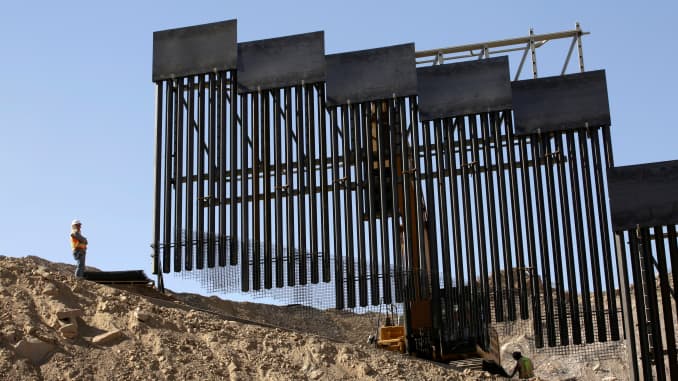
A construction crew works on a bollard-type private border wall, crowd-funded by We Build The Wall group at Sunland Park, New Mexico, as pictured from Ciudad Juarez, Mexico May 30, 2019.Jose Luis Gonzalez | Reuters
The indictment said the defendants “collectively received hundreds of thousands of dollars in donor funds from ‘We Build the Wall,’ which they each used in a manner inconsistent with the organization’s public representations.”
“The defendants defrauded hundreds of thousands of donors, capitalizing on their interest in funding a border wall to raise millions of dollars, under the false pretense that all of that money would be spent on construction,” Acting U.S. Attorney Audrey Strauss said in a statement. “While repeatedly assuring donors that Brian Kolfage, the founder and public face of We Build the Wall, would not be paid a cent, the defendants secretly schemed to pass hundreds of thousands of dollars to Kolfage, which he used to fund his lavish lifestyle. We thank the USPIS for their partnership in investigating this case, and we remain dedicated to rooting out and prosecuting fraud wherever we find it.”
If you liked this post you’ll love our daily newsletter, EnviroPolitics.It’s packed with the latest news, commentary and legislative updates from New Jersey, Pennsylvania, New York, Delaware…and beyond. Don’t take our word for it, try it free for an entire month. No obligation.