Small California Town Takes on the Oil Industry

Trends in California's Oil and Gas Development - Violations ...

The mostly low-income, Latino residents of Arvin have joined with other communities to demand setbacks for wells. Their slogan: “No drilling where we are living.”

By Julia Kane Inside Climate News

In Arvin, a small, agricultural town at the southern tip of the San Joaquin Valley, pollution is a pervasive part of life. Pesticides sprayed on industrial-scale farms, fumes drifting from the region’s ubiquitous oil and gas wells, exhaust from the trucks barrelling down Interstate 5—it all gets trapped in the valley, creating a thick haze. This year the American Lung Association ranked Bakersfield, just 15 miles northwest of Arvin, as the worst metropolitan area in the U.S. in terms of annual particle pollution.

Arvin’s residents, like people in many other parts of California, are especially concerned by the oil and gas wells sprinkled throughout their community. These wells, sometimes drilled and operated in close proximity to neighborhoods, schools, and health care centers, release a toxic mix of hydrogen sulfide, benzene, xylene, hexane and formaldehyde into the air.

Related news: The toxic legacy of old oil wells: California’s multibillion-dollar problem

Studies have linked living near oil and gas extraction to a wide range of adverse health effects, including increased risk of asthma, respiratory illnesses, preterm birth, low birthweight and cancer—serious fears for the more than two million Californians who live within a quarter-mile of operational oil and gas wells. 

Creating a setback distance between oil and gas operations and places where people live, researchers have found, reduces the risks. Yet in California, the industry operates under a patchwork of regulations, with no statewide rule on setbacks—a regulatory gap that is rare among the nation’s top oil-producing states.

KQED photo

California is a paradox; though widely regarded as one of the most environmentally-conscious states, the oil industry wields considerable power here, and has consistently attempted to thwart new regulations, including public health protections. During the current legislative session, the Western States Petroleum Association and Chevron have been the two top lobbying groups in the state, spending $9.9 billion and $7.5 billion, respectively.

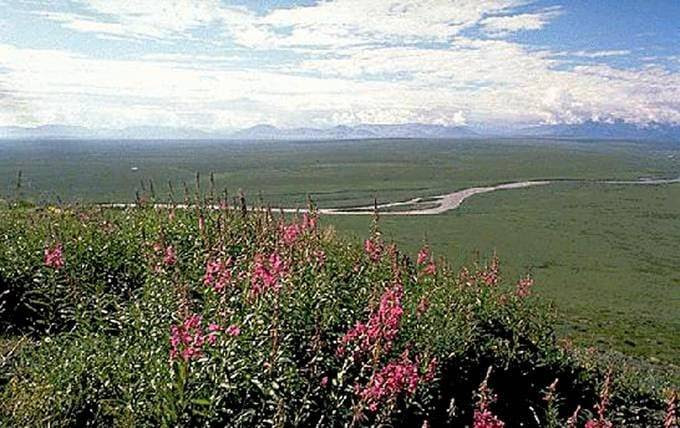
But in Arvin, a small group of mostly low-income, Latino residents is going against the grain, taking on the big oil companies in a David-versus-Goliath fight to protect the environment and their health. Their struggle is unusual in Kern County, where pumpjacks sucking heavy crude from the parched floor of the San Joaquin Valley stretch for miles. Here, in one of the poorest parts of the state, oil means big money: the county extracts 70 percent of the oil and 78 percent of the gas produced in California.

Read the full story

If you liked this post you’ll love our daily newsletter, EnviroPolitics. It’s packed with the latest news, commentary and legislative updates from New Jersey, Pennsylvania, New York, Delaware…and beyond. Don’t take our word for it, try it free for an entire month. No obligation.

Small California Town Takes on the Oil Industry Read More »

Downtown Boston’s empty, surreal summer

Congress Street in Boston’s normally bustling Financial District was nearly empty at 10 a.m. one morning last week.DAVID L. RYAN/GLOBE STAFF

By Tim Logan Boston Globe Staff

In normal times, South Station would be bustling at 8:15 in the morning, with wave after wave of commuters pouring from the Red Line and commuter rail. Some would hurry over Fort Point Channel to the Seaport, while thousands of others headed for the thicket of office towers downtown.

On Thursday, at about the same time, just a handful of people got off when the Red Line rumbled into the basement of South Station. Upstairs, a commuter rail train from Plymouth, built to carry hundreds of passengers, discharged about 50. Masked and heads-down, they scattered across Dewey Square, past a papered-over coffee shop and the stub of a stalled-out skyscraper that not so long ago hummed with activity.

“It’s all just so weird,” said Walter Downey, an investment advisor who has worked downtown for decades, as he walked to his office on Federal Street. “It’s like you can hear the dogs barking out there.”Get Business Headlines in your inboxThe Globe’s latest business headlines delivered every morning, Monday through Friday.Sign Up

It has been that kind of summer in the heart of Boston: quiet, a little lonely, and kind of weird. There are no throngs of tourists following the Freedom Trail or searching for Fenway Park. The weekday commuters are far fewer; landlords estimate that office towers are maybe 10 percent full. Without those workers to serve, the delis, convenience stores, and dry cleaners that form the fabric of downtown’s streets, are quiet, too. Some remain closed. And the after-work beer gardens and outdoor boot camps that have popped up in recent years didn’t happen this summer.

It’s not like there is no one around. People still trickle in and out of office buildings, though the relatively high percentage who are wearing shorts suggests a more relaxed dress code inside. Tourists still stare at their maps. Construction workers still linger on lunch break. But there is no escaping the depressing reality: The normally bustling center of a city that just months ago brimmed with life, today feels like some lesser place. A place left behind, or suspended in amber.

Read the full story

Like this? Click to receive free EP Blog updates


Downtown Boston’s empty, surreal summer Read More »

Half of N.J. under tropical storm warning as Isaias approaches with heavy rain, wind gusts of up to 75 mph

Tropical Storm Isaias Monday Aug 3
Drenching rain will last all day in New Jersey on Tuesday, Aug, 4 as Isaias moves through the state. Up to six inches is possible.AccuWeather.com

By Jeff Goldman | NJ Advance Media for NJ.com

All or part of 11 New Jersey counties are now under a tropical storm warning as Isaias crawls up the Eastern Seaboard, preparing to lash the state with up to six inches of rain and possible flash flooding and storm surge beginning as soon as late Monday night.

Isaias was just off the coast of northeast Florida on Monday morning, about 730 miles south-southwest of Atlantic City. Its maximum winds are 70 mph — just below the 74 mph that would make it a category 1 hurricane — as it meandered north at 9 mph, according to the National Hurricane Center.

Most of Monday will be fine — sunny with temps ranging from the mid 80s along the Jersey Shore to the low 90s inland — before rain starts either late tonight or during the overnight into Tuesday. Isaias is expected to batter the coast of northeastern South Carolina and southern North Carolina as category 1 hurricane later Monday before weakening a bit into a tropical storm again and picking up speed on its journey north.

Tuesday will be a mess in New Jersey, with three to six inches of ran in the forecast as well as 45 to 55 mph winds along the Shore that could gust as high as 75 mph. Tropical storm force winds are expected to arrive somewhere between mid and late morning.

Tropical Storm Isaias on Monday
Tropical Storm Isaias is likely to re-strengthen as it passes off the Carolinas later Monday before slightly weakening by the time it impacts New Jersey on Tuesday.National Hurricane Center

Flash flood watches are in effect for most of the state and forecasters are also concerned that up to 1 to 3 feet of storm surge could force evacuations. Power outages, of course, are also a possibility along with moderate property damage. There is also a possibility tornadoes could develop, the National Weather Service said in in its morning forecast discussion.

Camden, Gloucester, Hunterdon, Mercer, Morris, northwestern Burlington, Salem and Somerset remain under a tropical storm watch. Those counties could be hit with 40 to 50 mph winds that gust to up to 70 mph, though there’s a greater threat of flash flooding in those inland counties than along the Shore.

Isaias will push away from our area Tuesday night, though showers and thunderstorms are possible through the overnight.

Mainly dry, sunny and slightly cooler weather will return on Wednesday and stick around through at least Friday. Highs each day will be in the mid 80s.

Our journalism needs your support. Please subscribe today to NJ.com.

Jeff Goldman may be reached at jeff_goldman@njadvancemedia.com. Follow him on Twitter @JeffSGoldman. Find NJ.com on Facebook.

Like this? Click to receive free EP Blog updates

Half of N.J. under tropical storm warning as Isaias approaches with heavy rain, wind gusts of up to 75 mph Read More »

As temperatures rise, a ‘nightmare’ of toxic algae plagues the hidden gems of Cape Cod

Shubael Pond has been closed to swimmers and pets due to toxic algae blooms that can be harmful if ingested, inhaled, or touched. Sandra Bolton, who has lived next to the pond for 15 years, went swimming every year until two years ago.
Shubael Pond has been closed to swimmers and pets due to toxic algae blooms that can be harmful if ingested, inhaled, or touched. Sandra Bolton, who has lived next to the pond for 15 years, went swimming every year until two years ago.JOHN TLUMACKI/GLOBE STAFF

By David Abel Boston Globe Staff

BARNSTABLE — Fifteen years ago, when Sandra Bolton and her husband bought their three-bedroom Cape overlooking the serene waters of Shubael Pond, their view was like “heaven on Earth,” she said. Few summer days passed when they didn’t take a dip.

But in recent years they began to notice a guacamole-colored scum marring the previously clear waters. Last summer, just as temperatures were increasing and the pond beckoned, local officials banned swimming there after finding toxic algae blooms that can be harmful if ingested, inhaled, or touched.

Earlier this month, they did the same after dead fish were seen floating on a new layer of slime.

“It was like paradise, and then it turned into a nightmare,” said Bolton, 79, a retired elementary school teacher who last year resorted to buying a blow-up pool for her grandchildren. “It’s getting worse.”

Shubael Pond is one of 996 small lakes on Cape Cod, freshwater jewels that offer an alternative to the increasingly shark-infested saltwater on the coast. The remnants of melted glaciers from the Ice Age, the mostly shallow kettle ponds are again being transformed by climate change, a blow to those drawn to their secluded beauty.

Scientists have found that the ponds are warming rapidly, sapping their oxygen, making them more turbid, and altering their distinct ecosystems, which include wildlife ranging from microbes to bullfrogs.

The warming temperatures, combined with increased development and more powerful storms that wash fertilizers, wastewater, and other damaging nutrients into the ponds, have created ideal breeding grounds for cyanobacteria, the toxic ingredients of algae blooms that can multiply in dangerous amounts in very short periods.

“The bacteria like warm, calm places, without a lot of water or wind velocity, and these little lakes are their perfect breeding grounds,” said Charles Culbertson, a microbial ecologist with the US Geological Survey’s New England Water Science Center.

Read the full story

We’re always looking for stories that might interest our readers. If you come across something so interesting that it cries out to be shared, please send it to editor@enviropolitics.com  If we agree, you’ll see it here soon.   

As temperatures rise, a ‘nightmare’ of toxic algae plagues the hidden gems of Cape Cod Read More »

A Quarter of Bangladesh Is Flooded. Millions Have Lost Everything.

The country’s latest calamity illustrates a striking inequity of our time: The people least responsible for climate change are among those most hurt by its consequences.

By Somini Sengupta and Julfikar Ali Manik New York Times

Torrential rains have submerged at least a quarter of Bangladesh, washing away the few things that count as assets for some of the world’s poorest people — their goats and chickens, houses of mud and tin, sacks of rice stored for the lean season.

It is the latest calamity to strike the delta nation of 165 million people. Only two months ago, a cyclone pummeled the country’s southwest. Along the coast, a rising sea has swallowed entire villages. And while it’s too soon to ascertain what role climate change has played in these latest floods, Bangladesh is already witnessing a pattern of more severe and more frequent river flooding than in the past along the mighty Brahmaputra River, scientists say, and that is projected to worsen in the years ahead as climate change intensifies the rains.

“The suffering will go up,” said Sajedul Hasan, the humanitarian director of BRAC, an international development organization based in Bangladesh that is distributing food, cash and liquid soap to displaced people.

Like this? Click to receive free EP Blog updates

This is one of the most striking inequities of the modern era. Those who are least responsible for polluting Earth’s atmosphere are among those most hurt by its consequences. The average American is responsible for 33 times more planet-warming carbon dioxide than the average Bangladeshi.

This chasm has bedeviled diplomacy for a generation, and it is once again in stark relief as the coronavirus pandemic upends the global economy and threatens to push the world’s most vulnerable people deeper into ruin.

An estimated 24 to 37 percent of the country’s landmass is submerged, according to government estimates and satellite data By Tuesday, according to the most recent figures available, nearly a million homes were inundated and 4.7 million people were affected. At least 54 have died, most of them children.

The current floods, which are a result of intense rains upstream on the Brahmaputra, could last through the middle of August. Until then, Taijul Islam, a 30-year-old sharecropper whose house has washed away, will have to camp out in a makeshift bamboo shelter on slightly higher ground. At least he was able to salvage the tin sheet that was once the roof of his house. Without it, he said, his extended family of nine would be exposed to the elements.

Mr. Islam’s predicament is multiplied by the millions among those on the front lines of climate change. Vanuatu is literally sinking into the Pacific. Pastoralists in the Horn of Africa are being pushed to the edge of survival by back-to-back droughts. In the megacity of Mumbai, the rains come in terrifying cloudbursts.

Read the full story

Don’t miss stories like this Click for EP Blog updates

A Quarter of Bangladesh Is Flooded. Millions Have Lost Everything. Read More »