EAST WINDSOR — State police said a truck pulling a trailer carrying horses on the New Jersey Turnpike crashed and burst into flames in the early morning hours, killing all 10 horses.
State police said troopers responded to the turnpike’s northbound lanes at 3 a.m. Sunday in East Windsor, Mercer County.
Police said the truck had been heading north when it struck the concrete divider and became fully engulfed in flames, killing the animals in the attached trailer.
Trooper Charles Marchan told NJ.com the driver and passenger were taken to a hospital, but neither was seriously inured.
We will update this story when more information is available
With no service inside, and tables on terraces spaced at a safe distance, the French came back together, while remaining apart.
Enjoying the terrace at the Café de Flore in Paris, on Tuesday, as cafes and restaurants reopened in France.Credit…Martin Bureau/Agence France-Presse — Getty Images
PARIS — Nothing during the 11-week coronavirus lockdown could replace the ritual: a table in the sun with a tiny cup of black coffee on it. On Tuesday, Parisians rediscovered their favorite moment of sociability — coming together, while remaining apart.
Cafes throughout France were allowed to reopen and the relief was universal, if dispersed.
Many kept tables resolutely piled indoors. In Paris, still officially classified as a virus risk zone, cafes were not allowed to serve inside. No downing the petit noir — the little cup of coffee — at the bar. On the outdoor terraces that didopen, tables had to be three feet apart. And they were not overflowing with customers. This liberation is too new.
Still, Tuesday brought a welcome hint of the life before. From luxurious carriage-trade establishments like the mirrored Left Bank Café de Floreto everybody’s grimy neighborhood “zinc” (argot for bar), Paris reconnected Tuesday with a key element of its urban life.
Parisians could once again sit down with one another, separately. They could be convivial without getting too close to one another, a French ideal. They could be in roughly the same space together, without ever having to talk to one another (only tourists talk across neighboring tables to strangers, a strict Parisian no-no). They could linger for hours if they needed to: the essential difference between the French cafe and its trans-Atlantic cousin.
On a brilliant spring day, the moment could be savored, even if with reserve, restraint and logic.
“It’s obviously the most important turning point for returning to true Parisian life,” said Michel Wattebault.
A retired employee of the nearby Bank of France, he was sitting at one of the handful of outdoor tables at L’Avant-Première, just behind the Palais Royal. “We’ve been waiting for this moment with impatience,” said his friend, Amélie Juste-Thomas, a translator.
It helped that, with the total absence of tourists, the street was as “quiet as a Sunday in August,” Ms. Juste-Thomas said.
Behind them, lingering over his coffee in the sunshine, sat a curator from the grand establishment across the Rue des Petits-Champs, the National Heritage Institute. Farhad Kazemi was planning to find another outdoor terrace at noon, for lunch. It was only about an hour away.
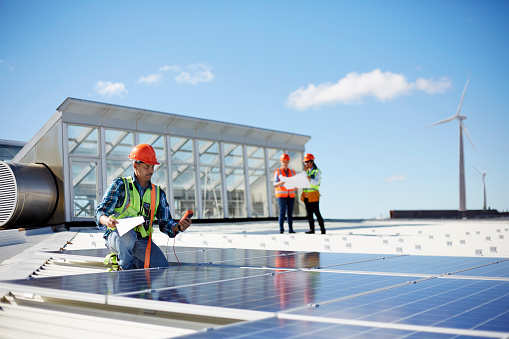
The solar eclipse will begin at 09:56 am IST at Dwarka, Gujarat and will end at 14:29 pm IST at Dibrugarh, Assam. This would be the fourth solar eclipse India would witness in the past decade. The last one occurred in December 2019.
“Eclipse would lead to reduction of all India solar generation by about 11,943 MW at maximum obscuration time and total estimated reduction in energy will be 20 million units compared to a normal day,” it said.
The state-run power operator is planning to manage the deviation of grid frequency from the nominal by flexing fast ramping sources such as hydro and gas-generating stations.
“During the initial period, 8,900 MW of solar generation will reduce in a very short span of time i.e 1:48 hrs and after maximum eclipse, it would increase by 10,362 MW within 2:08 hrs,” POSOCO said in a fresh report.
As on 31 March 2020, with an installed capacity of 34.6 GW, solar PV constituted 9 per cent of the total installed generation capacity of Indian grid.
“Electricity grids with such a significant penetration of solar capacity will be adversely impacted by astronomical events such as solar eclipse, due to variation in solar generation reduction followed by rise in generation and associated large ramp rates,” POSOCO said.
It added that low generation from solar power parks results in high voltages at pooling substations, which needs to be maintained by timely switching of reactors or transmission lines.
Pennsylvania’s coronavirus case counts approached 75,000 on Saturday, as the state sees the numbers ebbing. With the flattening of the curve, Pennsylvania is gradually opening up, with half the counties, including Lehigh and Northampton, in the yellow phase of reopening, and the other half in the green.
Margie Liakakos, of Macungie, enjoys a latte at the Promenade Shops at Saucon Valley on Friday, as the Lehigh Valley moved into the yellow phase of coronavirus reopening. (April Gamiz/The Morning Call)
With Pennsylvania reemerging from the coronavirus crisis after three months of lockdown, the tide of new cases has ebbed across the state, with an additional 701 on Saturday, bringing the total to 75,086.
Twenty-five new cases and five deaths were recorded in the Lehigh Valley — 17 cases in Lehigh County and eight in Northampton County. The case counts are now 3,846 in Lehigh County, with 248 deaths; and 3,144 in Northampton County, with 231 deaths.
Lehigh and Northampton counties were among the remaining 10 moving from the red shutdown phase to the yellow phase on Friday, with outdoor dining resuming and retail outlets opening. Gov. Tom Wolf announced Friday that a dozen counties, including Carbon, will move into the green, or final, reopening phase on Friday. In that phase, which 46 of the 67 counties will be in next week, people can gather in larger groups, albeit while wearing masks and social distancing.
In yellow phase, restrictions on work and social interaction ease, though schools, gyms and hair salons remain closed and large gatherings aren’t permitted.
“The purpose of this phase is to begin to power back up the economy while keeping a close eye on the public health data to ensure the spread of disease remains contained to the greatest extent possible,” Wolf’s office explained in a news release Friday.
The other counties moving into the green on Friday are: Adams, Beaver, Columbia, Cumberland, Juniata, Mifflin, Northumberland, Union, Wayne, Wyoming and York.
The Health Department unveiled an online dashboard Friday to show county progress as Pennsylvania moves through the COVID-19 phased reopening plan. The dashboard breaks down categories used to determine if a county can move into the next phase of reopening, including the average of cases over a two-week period.
Statewide, the average case count over a 14-day period was at nearly 58 per 100,000 people on Saturday, which is higher than Lehigh County’s 14-day average of 52 but much lower than Northampton County’s average of 76.
The Health Department reported that 45 more Pennsylvanians lost their lives to COVID-19, bringing the state’s deaths to 5,931.
It also reported what appeared to be a record one-day testing total of 11,622 coronavirus tests conducted in pubic and private labs across the state. Public health officials have said widespread testing and contract tracing are essential in tamping down the virus.
Senior content editor Christine Schiavo can be reached at 610-508-1551; cschiavo@mcall.com.
EnviroPolitics Blog is working to keep you informed about all aspects of the coronavirus — the status of confirmed cases, disease spread, death toll–and also how Americans are coping. Like this story, for instance. If you like what we are doing, Click to receive free EP Blog updatesand please tell your friends about us.
By Ryan Sharrow – Editor in Chief, Philadelphia Business Journal
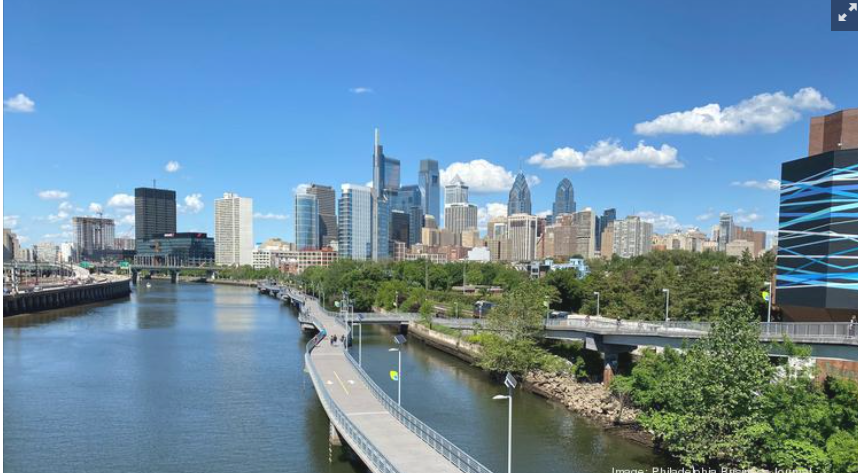
Center City will be closed to vehicles for most of Saturday as large planned demonstrations are scheduled throughout the day.
Starting at 11 a.m., vehicles will be prohibited from Callowhill Street to South Street from the Delaware River to Schuylkill River. Interstate 676 will be closed in both directions from I-95 to I-76 starting at 11 a.m.
The Benjamin Franklin Parkway will be closed to cars starting at 5 a.m. from 22nd Street to the Art Museum.
Residents and business owners in cars will need to show identification to police to get through the road closures.
Due to expected demonstration activity in the area of Center City and the Art Museum, SEPTA expects bus routes to be temporarily detoured as streets are closed. Riders are encouraged to check www.septa.org for affected bus routes. The Broad Street and Market Frankford rail lines will continue to run on their normal schedule, except for stations closed due to Covid-19.
The Benjamin Franklin Bridge connecting Philadelphia to South Jersey will remain open and PATCO will run a normal schedule. The bridge closed last Sunday after protests erupted into violence, widespread looting, fires and over 200 arrests the night before.
Philadelphia on Friday remains under a curfew for the seventh straight evening. The curfew runs from 8 p.m. to 6 a.m. Saturday. No curfew has been announced for Saturday.
Demonstrations have been underway across the U.S. after a video showed George Floyd, a black man, died after a Minneapolis Police Department officer kneeled on him during an arrest.
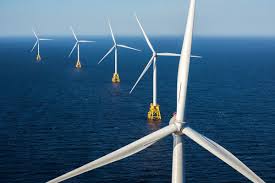
The National Offshore Wind Research and Development Consortium announced selection of 12 projects for contract negotiation, completing its first solicitation for offshore wind research and development technology projects. The 12 awards totaling $10.3 million will support a variety of research areas, including comprehensive U.S. supply chain analyses, studying the impacts of offshore wind on the electric grid system, and innovations in anchoring structures.
“The Consortium is excited to advance offshore wind deployment in the U.S. by supporting these innovation and research projects,” said Carrie Cullen Hitt, Executive Director, National Offshore Wind Research and Development Consortium. “Today’s announcement builds on our collective commitment to drive down costs and make offshore wind more a competitive alternative in generating energy.”
Vincent Schellings, GM for Engineering & Product Development, Offshore Wind at GE Renewables, said, “The National Offshore Wind Research and Development Consortium is a model for how you bring public and private sector interests together to advance our clean energy future. Through the Consortium, we’re able to harness critical funding resources and focus them on the right initiatives to advance the offshore industry and ultimately expand the U.S. supply chain in ways that attract new jobs and private sector investments.”
The Consortium’s efforts were realized through a competitive solicitation which closed in December 2019. The awarded projects include:
Demonstration of Shallow-Water Mooring Components for FOWTs (ShallowFloat), Principle Power
Design and Certification of Taut-synthetic Moorings for Floating Wind Turbines, University of Maine
Dual-Functional Tuned Inerter Damper for Enhanced Semi-Sub Offshore Wind Turbine, Virginia Tech University
Innovative Anchoring System for Floating Offshore Wind, Triton Systems
Techno-Economic Mooring Configuration and Design for Floating Offshore Wind, University of Massachusetts Amherst
Development of Advanced Methods for Evaluating Grid Stability Impacts, National Renewable Energy Laboratory
Development of a Metocean Reference Site near the Massachusetts and Rhode Island Wind Energy Areas, Woods Hole Oceanographic Institute
Enabling Condition Based Maintenance for Offshore Wind, General Electric
Physics Based Digital Twins for Optimal Asset Management, Tufts University
Radar Based Wake Optimization of Offshore Wind Farms, General Electric
Survival Modeling for Offshore Wind Prognostics, Tagup
20 GW by 2035: Supply Chain Roadmap for Offshore Wind in the U.S., National Renewable Energy Laboratory
In addition to these projects, eight projects previously received funding from the Consortium last year, bringing the total projects funded to over $17.3 million. The full listing of the projects that have been funded by the Consortium is available here.