Three months after New Jersey’s first case of the disease, an epidemiologist discusses some of the still unanswered questions
So much about the coronavirus remains unanswered: What are the risks of catching it? Why do otherwise healthy people become gravely ill with COVID-19 while others don’t? What progress, if any, is being made on a vaccine? What are the chances of a so-called second surge?
As the state marks month three in the pandemic, Montclair State University professor of public health and epidemiologist Stephanie Silvera, discusses these and other issues with Briana Vannozzi of NJTV News.
EnviroPolitics Blog is working to keep you informed about all aspects of the coronavirus — the status of confirmed cases, disease spread, death toll–and also how Americans are coping. Like this story, for instance. If you like what we are doing, Click to receive free EP Blog updates and please tell your friends about us.
New Jersey officials reported an additional 603 confirmed cases of COVID-19 today, for a statewide cumulative total of 162,530.
By counties, the most new positive results were reported in Essex (101), Monmouth (49), Ocean (48), Cumberland (39), and Passaic (34).At the other end of the new-case count, single-digit increases were reported in seven counties: Somerset, Salem, Atlantic, Warren, Sussex, Hunterdon and Cape May.
Total COVID-19 deaths among New Jersey residents stand at 11,970, with an additional 92 confirmed fatalities reported today.The counties with the most fatalities when expressed as a proportion of population are Essex (1,694 total, and 2.13 per 1000 residents), Union (1,088, 1.97 per 1,000), Passaic (954, 1.89), Hudson (1,199, 1.79) and Bergen (1,603, 1.72).
The already sharp descent in the number of COVID-19 patients in New Jersey hospitals hastened overnight. According to data reported by all 71 hospitals in the state, 1,982 patients were being treated for confirmed or suspected cases of COVID-19 yesterday, the first time that figure has fallen below 2,000.537 of them were in critical or intensive care, another decrease.406, or roughly 75% of those needing special care, were on ventilators.
Regionally, 910 patients were in hospitals in the north, 583 in central Jersey and 489 in the south.Hospitals were reporting 33 new patients yesterday, all in the south, but officials said they were skeptical that all the hospitals had been accounted for in the stat.219 COVID-19 patients were discharged, either to their homes or other care facilities.
The daily, or spot, positivity rate of COVID-19 tests on May 31 stood at 4.2% statewide, down slightly from the day before.Results of 857,729 tests have now been reported to state officials, including negatives.A total of 20,000 tests were taken May 31.
Gov. Phil Murphy reported again on statistic he first unveiled Tuesday that gauges the spread of COVID-19 by showing how many additional people are infected by each person who has the virus.The so-called rate of reproduction — or “Rt” — stood at 0.85, up slightly from the day before.
A rate that remains under 1.0 is an “indicator that the virus is ultimately going to die” out, Murphy has said. The measure stood at 5.31 on March 21, when cases were surging and Murphy issued his statewide stay-at-home order.
NJ Health Commissioner Judith Persichilli reported an additional child with a rare and serious pediatric inflammatory ailment that’s thought to stem from an overreaction of the immune system to a COVID-19 infection. The total now stands at 35 children, with no deaths. All of the children have tested positive for either an active COVID-19 infection or the presence of antibodies to the coronavirus.
Persichilli has called the ailment a new ailment, one that differs from the more familiar Kawasaki disease in that its victims are often teens and not young children. Six of the children remain hospitalized. She advised parents to be on the lookout for such symptoms as fever or persistent fever, severe abdominal pain and seizure symptoms.
Just shy of 34,000 positive test results have been reported among residents and staffers at 547 nursing homes and other long-term care centers in New Jersey.LTCs in the state are reporting a cumulative total of 6,061 deaths among residents during the pandemic, most of them stemming from laboratory confirmed cases of COVID-19. They are also reporting the deaths of more than 100 staffers.
The state Department of Environmental Protection, in conjunction with the Association of New Jersey Recyclers, annually recognizes excellence in recycling in order to highlight program successes achieved by agencies, businesses, individuals and others in keeping New Jersey communities clean and healthy.
Nominations are due to DEP by Friday, July 31 and awardees will be notified in September. Award winners will be honored at the ANJR Symposium and Awards Luncheon in October.
Applications can be submitted in these categories:
ANJR is a non-profit, non-partisan network representing the public and private sectors that works to promote sustainability by encouraging sound resource management and recycling strategies through education, advocacy and enhancing professional standards. Learn more
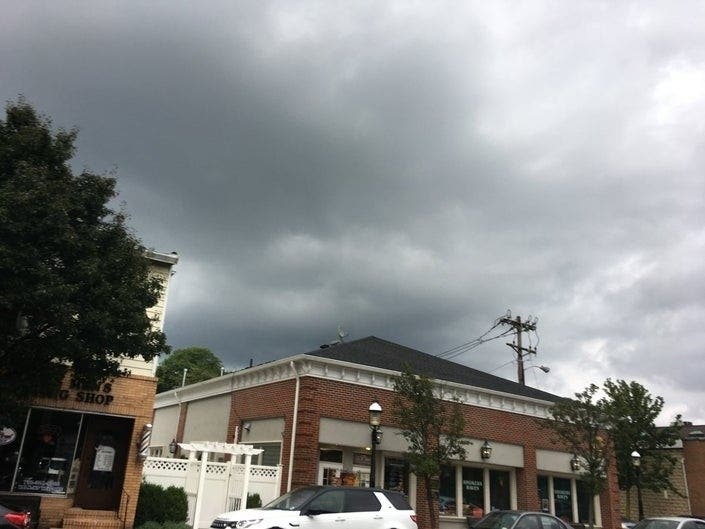
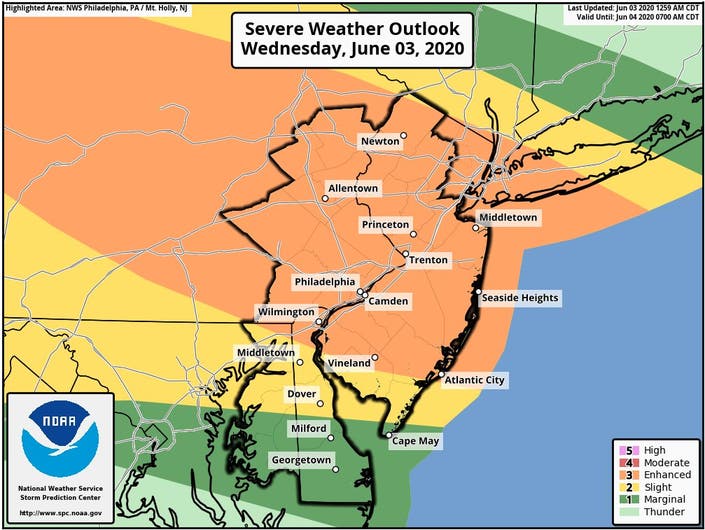
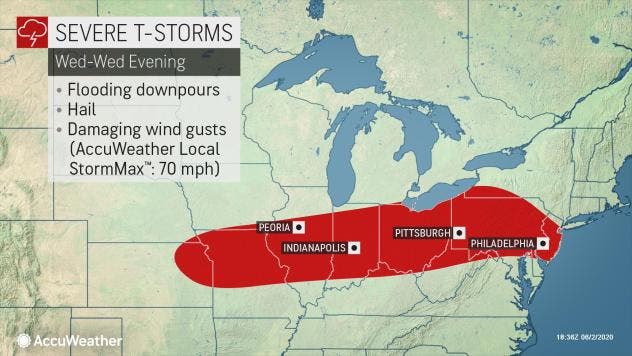
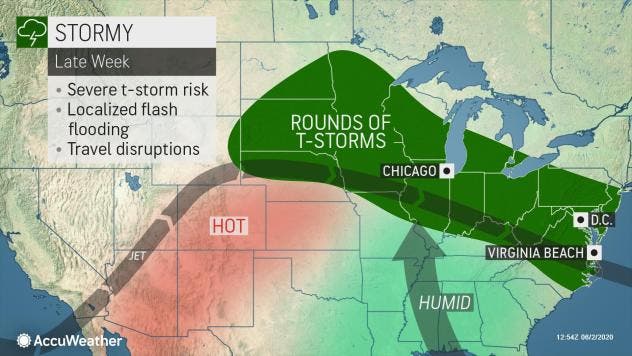
Severe storms are expected to hit New Jersey and Pennsylvania through the week, bringing hail, 60-mph damaging winds, power outages and possibly lightning to the Garden State on Wednesday. The weather could impact management of the coronavirus outbreak (see below).
The National Weather Service has issued a hazardous weather outlook, saying showers and thunderstorms will move through New Jersey on Wednesday beginning at mid-day.
The storms are expected to last through Saturday (see forecast below).
Previous stormy weather caused delays in testing, causing county sites to close up shop. Testing has been viewed as the key to help manage and reduce the number of cases in New Jersey.
Here is what you should expect:
Damaging winds in excess of 60 mph accompanying severe storms could lead to tree damage and scattered power outages from mid-day Wednesday through late this evening
Quarter-size or larger hail is possible with the strongest storms which could result in minor property damage in New Jersey.
Localized heavy rain with rain amounts above one inch is possible which could result in flooding especially in poor drainage areas.
A narrow corridor of heavy rain could lead to localized flash flooding
Photo courtesy of AccuWeather
Lightning could strike without notice, according to AccuWeather. With some of the more intense thunderstorms, frequent cloud-to-ground lightning strikes could occur and the strongest thunderstorms will be capable of spawning a tornado.
Here is what is expected later in the week:
Photo courtesy of AccuWeather
Here is the forecast:
Wednesday: Showers and thunderstorms. Some storms could be severe, with large hail and damaging winds. High near 83. West wind around 10 mph, with gusts as high as 20 mph. Chance of precipitation is 80 percent. New rainfall amounts between a 10th and quarter of an inch, except higher amounts possible in thunderstorms.
Wednesday night: A chance of showers and thunderstorms, mainly before 10pm. Some storms could be severe, with large hail and damaging winds. Mostly cloudy, with a low around 63. West wind around 5 mph. Chance of precipitation is 30 percent. New rainfall amounts of less than a tenth of an inch, except higher amounts possible in thunderstorms.
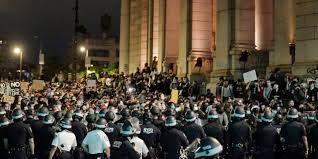
After a week of increasingly violent unrest in the United States, peace largely prevailed on Tuesday night. Brutal clashes between police and the public seemed to subside, and there were only sporadic reports of looting and other mayhem across the nation.
Still, the night was filled with tension in major cities where tens of thousands of protesters defied curfews to express outrage over racism and police brutality following the death of yet another a black man in police custody.
In Los Angeles, demonstrators massed outside the mayor’s residence and demanded the firing of the city’s police chief. And in New York, which is under curfew for the first time in 77 years, hundreds of protesters walked across the Manhattan Bridge and were met by a police blockade.
Here are some significant developments:
The Minnesota Department of Human Rights will investigate the Minneapolis Police Department’s policies and practices over the past decade after filing a civil rights charge in response to George Floyd’s death, the state announced.
Six Atlanta police officers face criminal charges after video captured them pulling two black college students out of a car and firing Tasers at them while enforcing a curfew on Saturday.
Some current and former U.S. intelligence officials have expressed dismay at the similarities between President Trump’s handling of protests and the signs of decline or democratic regression they were trained to detect in other nations.
Televangelist Pat Robertson joined other religious leaders criticizing Trump’s “law and order” response to the protests. ″It seems like now is the time to say, ‘I understand your pain, I want to comfort you, I think it’s time we love each other,’” Robertson said.
Senate Majority Leader Mitch McConnell (R-Ky.) blocked a resolution offered by Democrats that would have condemned Trump for “ordering Federal officers to use gas and rubber bullets against the Americans who were peaceably protesting” near the White House.