Environmental Obligations for Businesses in New York During the Coronavirus Pandemic

Gibbons attorneys’ guidance to clients and friends

David J. Freeman and Jordan M. Asch
3/24/2020

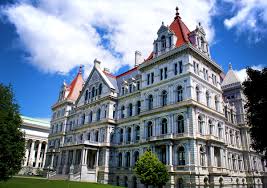
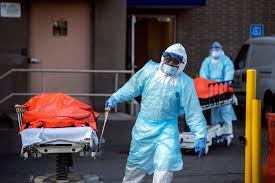
The pandemic caused by the novel coronavirus, or COVID-19, has slowed business—and activity in general in many areas of the United States—to a crawl. New York State is one of the places hit hardest by this pandemic. Indeed, at the time of this writing, New York has the highest number of confirmed COVID-19 cases in the country. Unfortunately, the spread of the virus shows no signs of relenting.

Nonetheless, manufacturing, the real estate industry, and other regulated businesses continue to face environmental reporting obligations, regulatory deadlines, and potential penalties for non-compliance. Businesses and other property owners are dealing with remediation deadlines, as well as operation and maintenance obligations of environmental controls.

Businesses are also rightly concerned about reporting requirements under various permits, including under such federal permitting programs as the Resource Conservation and Recovery Act and others. Meeting these obligations has become significantly complicated by the pandemic and the ancillary issues it has brought on, such as the illness of key personnel, inaccessible facilities, and other impediments.

On March 20, 2020, Governor Andrew Cuomo signed Executive Order 202.8, which directs that all “non-essential” businesses implement remote work policies for 100 percent of their respective workforces, effective March 22 through April 19, 2020. The Executive Order further states that businesses that provide “essential services or functions whether to an essential business or a non-essential business … may operate at the level necessary to… Click Here to View Full Blog Post

Don’t miss information like this Free EP updates

Environmental Obligations for Businesses in New York During the Coronavirus Pandemic Read More »

N.J. coronavirus deaths increase to 44 with 3,675 total cases statewide. 846 new positive tests announced.

By Brent Johnson | NJ Advance Media for NJ.com

New Jersey now has at least 3,675 coronavirus cases with 44 deaths throughout the state as officials announced Tuesday an increase of 846 positive tests. It marks the largest single-day increase in deaths since the outbreak began.

“This is a sobering report,” Gov. Phil Murphy said during an afternoon update, noting New Jersey ranks second in the nation for cases. “This is by far our largest single-day report of new deaths.”

Don’t miss stories like this Click for free updates

The new deaths include cases in Bergen (5), Morris (3), Essex (3), Hudson (2) and one each in Monmouth, Camden, Passaic and Union counties, said Judy Persichilli, commissioner of the state Department of Health.

Persichilli revealed for the first time the testing rate for negatives from seven labs reporting to the state. Of the 12,000 tests, 3,600 have been positive, for 27%.

“That’s a really important rate,” Persichilli said. “That will help us in our predictive modeling.”

Coronavirus cases as of Tuesday, March 24

LOCATIONCASESDEATHS
New Jersey3,67544
New York State25,665210
New York City14,900125
Pennsylvania9307
Philadelphia2520
United States49,768600
Worldwide407,48518,227

Note: Data includes confirmed and presumptive positive cases of COVID-19 reported by the CDC, state health officials and other health agencies since Jan. 21. Updated: March 24 at 2:30 p.m.Table: Len Melisurgo  Source: Johns Hopkins Univ., NY Post, CNN, CBS 3 Philadelphia, State Health Departments in NJ, NY, PAGet the dataCreated with Datawrapper

If you liked this post you’ll love our daily newsletter, EnviroPolitics. It’s packed with the latest news, commentary and legislative updates from New Jersey, Pennsylvania, New York, Delaware…and beyond. Don’t take our word for it, try it free for an entire month. No obligation.

N.J. coronavirus deaths increase to 44 with 3,675 total cases statewide. 846 new positive tests announced. Read More »

‘Deep cleaning’ doesn’t mean anything. Still, deep cleaners are in high demand

Disinfecting a workplace

By SAMANTHA MASUNAGA, Los Angeles Times

It’s happened at schools, stores and offices, warehouses and city halls: Someone who might be infected with the coronavirus passes through.

The building often closes. Then come the calming words: deep cleaning.

The idea is that a thorough cleaning and disinfecting could help prevent people from getting sick. The virus is spread mainly through person-to-person contact, though people can also catch it from droplets exhaled when an infected person coughs or sneezes. Those droplets can stick to surfaces, and the virus can survive for hours or days, according to health officials.

A deep clean is supposed to kill it.

The term sounds official, but it isn’t. It has no standardized definition.

One company says the right approach is using a mechanical sprayer or thermal fogger that mists disinfectant into the air, then wiping all surfaces. Another swears by taking everything out of each room, disinfecting it all and then putting it back.

Some have warned against trusting competitors who, they say, only wipe down places that get touched a lot, like doorknobs or handles, or don’t require workers to wear heavy-duty protective gear.

“Deep cleaning is really just a term they use to make the public feel warm and fuzzy,” said Erick McCallum, founder of Texas-based the Cleaning Guys, which handled ebola cleanup during a 2014 outbreak in Dallas.

Health experts say it’s enough to clean frequently with soap, alcohol or bleach-based products. “You don’t need any unusual procedures or cleaning agents,” says Dr. Timothy Brewer, professor of medicine and epidemiology at UCLA.

That hasn’t stopped the onslaught of calls for deep cleaning.

Servpro workers

The Servpro Extreme Response Team typically handles calls related to water or fire damage repairs in California, Nevada and Arizona. Now it gets about 100 inquiries a week on coronavirus cleanings and goes on four related calls a day.

Aftermath Services, based in Illinois, generally cleans up crime scenes and biohazards. The flood of calls about coronavirus-related cleanings threatened to overwhelm it, so the company pulled people from its finance department to help answer the phones.

“It’s all hands on deck,” said Casey Decker, Aftermath’s vice president of field services.

The calls haven’t slowed even as more companies require employees to work from home.

As restaurants, bars, gyms and other businesses close their doors, some professional cleaning firms expect demand will ramp up. Buildings can be thoroughly disinfected when there are no customers or employees inside.

“It’s very possible that almost everything will end up shutting down,” said Vanessa Cabrera, director of client services at All Clean Inc. MD, which cleans commercial and industrial properties on the East Coast. “When that’s the case, then we’ll have a lot more people calling and more jobs to do…. They’re going to want a deep clean of their facility.”

Workers, at times, might wear full-face respirators, one-piece protective suits, two pairs of gloves and booties, particularly if they’re at a place that had confirmed cases of the coronavirus. Brewer, the UCLA professor, said booties and respirators aren’t necessary. A face shield or surgical mask will do.

“When you’re going in and you’re 100% encapsulated, you feel like you can go up against anything,” Decker said of wearing a protective suit.

Cabrera’s mother, Adriana Corona, a manager at All Clean Inc. MD, is often in the field with workers and said they now wear more protective gear than they would during their normal course of work. She’s also done online training on how to do deep cleanings.

She said she hasn’t been afraid of becoming infected while on jobs. “We just clean and disinfect everything,” Corona said.

Like this? Click to receive free EP Blog updates

Clean Harbors, a Massachusetts company that specializes in hazardous waste removal, designates three different zones for its employees when they arrive at a decontamination job.

Workers suit up in the “warm zone” before entering the “hot zone,” where decontamination occurs. After the job is done, one person who did not enter the building helps the others take off their suits back in the warm zone before they can enter the “cold zone,” or clean area.

The protective gear is put into a drum and incinerated. The respirators are rinsed with bleach, soap and water before they’re used again.

In some ways, there’s precedent for the kind of thorough disinfection that cleaning companies are now doing. Some have compared the work to sewage and mold removal or to cleanups of crime scenes and meth labs. Some even have experience with other viruses, such as MRSA or norovirus.

“We’re used to this,” said Chuck Geer, senior vice president of field services at Clean Harbors. “It’s not uncommon at any point in time for our teams to respond to something like this.”

His company, he said, helped clean up ground zero in New York after the Sept. 11, 2001, attacks; decontaminated oily boats after the Deepwater Horizon oil rig explosion in the Gulf of Mexico; and also has experience with anthrax.

In each of these cases, “you normally know exactly what you’re cleaning up,” Geer said. But with the coronavirus, “you can’t see it,” he said. “When you go into a room or a building, you have to disinfect everything.”

Art Dickerson, president of restoration firm Paul Davis Commercial, compared coronavirus cleanings to sewage or mold cleanups. Workers use the same types of disinfectants.

But these recent jobs are on “a wider scale,” he said. “We only get so many mold jobs or sewage jobs a year.”

The demand for coronavirus cleanings has shifted Aftermath’s primary business from crime-scene cleanups to “virucidal disinfection,” a term a company official acknowledged does not roll off the tongue.

Don’t miss stories like this Click for Blog updates

Aftermath now gets about 500 to 600 calls per day nationwide, up from its usual 50 to 75 calls. Calls have been coming in from all parts of the country, though California is a hot spot, said Vikas Chopra, director of marketing.

Prices vary depending on the size of the place to be cleaned and the types of services desired. For a 800- to 1,000-square-foot building, All Clean Inc. MD charges between $800 and $1,200. Servpro charges 50 cents to $2.50 per square foot.

But it’s important not to go overboard with the cleaning.

Using antimicrobial solutions could inadvertently lead to antimicrobial resistance that can lead to super bugs, said Erica Hartmann, assistant professor of civil and environmental engineering at Northwestern University, who specializes in environmental microbiology.

“Yes, wash your hands. Yes, you can disinfect high-touch surfaces, but within reason,” she said. “We’re not aiming to sterilize everything around us.”

Times staff writer Molly Hennessy-Fiske contributed to this report.

If you liked this post you’ll love our daily newsletter, EnviroPolitics. It’s packed with the latest news, commentary and legislative updates from New Jersey, Pennsylvania, New York, Delaware…and beyond. Don’t take our word for it, try it free for an entire month. No obligation.

‘Deep cleaning’ doesn’t mean anything. Still, deep cleaners are in high demand Read More »

Wolf’s coronavirus shutdown order appears to include Mariner East pipeline construction

Energy. Environment. Economy. A reporting project of  NPR member stations

In this Tuesday, Oct. 22, 2019 photo, pipes lay along a construction site on the Mariner East pipeline in a residential neighborhood in Exton, Pa. Matt Rourke/AP photo

Susan Phillips reports for StateImpact

Construction on the Mariner East pipeline appears to be halted by Gov. Wolf’s new order that shuts down all “non-life-sustaining” operations and businesses.

The new shut-down list released by Wolf Thursday evening indicates all construction projects, including “sub-utility” construction, cannot continue physical operations.

Neither Wolf’s office nor pipeline builder Sunoco responded immediately to requests to confirm that Mariner East construction must stop.

Earlier on Thursday, the company, as well as the Pennsylvania Public Utility Commission, had said construction would continue during the coronavirus outbreak despite criticism from pipeline opponents in suburban Philadelphia.

Like this? Click to receive free EP Blog updates

A statement from the PUC issued before Wolf’s latest order explained that since the commission had designated the natural gas liquid pipeline a public utility, and construction sites had not been included as part of Wolf’s list of “non-essential” businesses, construction on the line could continue.

“As they are essential services, utilities are expected to continue operations, including construction projects,” the statement reads.

The PUC said staff is coordinating with federal pipeline safety regulators, who have not directed pipeline builders to halt construction.
State Sen. Andrew Dinniman, a Democrat from Chester County who is a vocal opponent of the Mariner East project, had written to the PUC asking it to shut down construction in lieu of the coronavirus outbreak.

“What we see here is that the PUC is trapped in its initial decision,” Dinniman said. “The PUC defined this pipeline as a public utility based on a 1930s gasoline line. The truth is the pipeline does not provide any essential public utility service in the Commonwealth.”

The original Mariner East line, Mariner East 1, is a former gasoline pipeline built in the 1930s to transport gas from Philadelphia refineries to rural Pennsylvania.

The PUC approved public utility status for the line when Sunoco, now owned by Energy Transfer, proposed to reverse flow and ship natural gas liquids through the line. The Mariner East 2 and 2x lines were green-lighted based on the original utility status that dates back to the 1930s.

The lines now ship natural gas liquids across the state for export to a plastics manufacturer in Scotland. While construction on the lines is mostly complete, some parts of the line were held up after sinkholes developed in Chester County. The company only recently got the approval from the DEP to restart construction on the remaining sections.

Not receiving our free updates?

A union representing some of the pipeline workers says he feels the sites are abiding by proper coronavirus precautions.

“As long as the job is open, our members want to work,” said Jim Snell, business manager for Steamfitters Local 420. “I have not heard of any issues. That said, we are taking all necessary precautions (hand wipes, soaps, sanitizers, social distancing, etc.) with LU420 and our contractors.”

Snell said if someone feels sick, there is no pressure for them to work.

That sentiment differs from the building trades rank and file at the Shell cracker plant in Beaver County, who flooded their local representatives with calls about concerns over coronavirus and crowding at the job site. The Shell cracker plant shut its operations on Wednesday.

On Tuesday, Energy Transfer posted on its website that it was taking “all possible precautions to protect personal and public health and safety,” including social distancing, at Mariner East construction sites.

If you liked this post you’ll love our daily newsletter, EnviroPolitics. It’s packed with the latest news, commentary and legislative updates from New Jersey, Pennsylvania, New York, Delaware…and beyond. Don’t take our word for it, try it free for an entire month. No obligation.

Wolf’s coronavirus shutdown order appears to include Mariner East pipeline construction Read More »