The state of Pennsylvania approved millions of dollars in aid to help small businesses in the commonwealth impacted by COVID-19.
The $60 million COVID-19 Working Capital Access Program will provide up to $100,000 in loans to small businesses with 100 or fewer full-time employees.
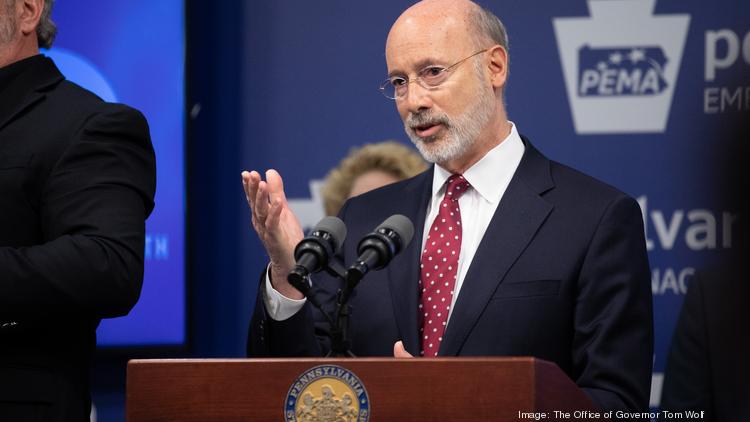
“My top priority is to save Pennsylvania lives, then save their livelihoods,” Gov. Tom Wolf said in a statement. “I am utilizing every resource available to assist Pennsylvania’s business during this incredibly difficult time, and this small business funding availability is a step in the right direction.”
Wolf ordered all non-life-sustaining businesses to close earlier this month to mitigate the spread of the virus, and unemployment claims shot up in the state after dozens of businesses closed their doors “until further notice.”
All loan applications must be made through a Certified Economic Development Organization, and a list of those organizations can be found here. The loans can be used for working capital, excluding fixed assets and production machinery and equipment.
The loan terms are three years, with a 12-year amortization. The state says no payments will be due and payable during the first year; principal, and if applicable, interest payments will be due monthly for years two and three; and a balloon payment will be due and payable at the end of the third year.
The interest rate for the program is 0%, except for agricultural producers, which will have a 2% fixed interest rate for the life of the loan. An agricultural producer is defined by the state as “a business involved in the management and use of a normal agricultural operation for the production of a farm commodity.”
EnviroPolitics Blog is working to keep you informed about all aspects of the coronavirus — the status of confirmed cases, disease spread, death toll–and also how Americans are coping. Like this story, for instance. If you like what we are doing, Click to receive free EP Blog updates and please tell your friends.
An view of Miami from a drone shows an empty, closed beach as the city continues its efforts to prevent the spread of the coronavirus. | Getty Images
DISPATCH FROM THE CRISIS EPICENTER— As the epicenter of the pandemic shifts to New York City , so has the focus moved to Democratic Gov. Andrew Cuomo, who has been aggressive in his handling of the crisis, our New York health reporter Amanda Eisenberg tells us from the Manhattan apartment where she is holed up. Yet while Cuomo has positioned himself as the comforting anti-Trump, talking about how families can be together on a spiritual level even if they can’t be together in person, he’s also been a bit too early in declaring victory.
Cuomo has credited the state’s shelter in place order with stemming the hospitalization rate, but the results of those social distancing efforts won’t be known until next week, when people who were out and about two weeks ago may start showing up at hospitals. The reality is that New York hospitals are preparing for a surge of cases without an end in sight just yet.
“Maybe next week we will start to see a flattening of the curve — only time will tell,” Amanda tells us.
Cuomo has also said that the state has the highest per capita testing rates, but the state’s effort to implement widespread testing have petered out as it runs low on protective equipment, swabs and other testing supplies. Now the only people being tested are those in hospitals with severe symptoms.
BUCKING TRUMP — Even red-state governors normally allied with the president are ignoring his optimistic musings on reopening the country by Easter. Instead they’re sticking with the advice of public health experts to keep social distancing measures in place. Jim Justice, the governor of West Virginia, which is overwhelmingly Trump country, ordered residents Monday to stay at home. Republican Maryland Gov. Larry Hogan blasted Trump on Tuesday for sending confusing signals. “You can’t put a timeframe on saving people’s lives. We’re going to make decisions based on the scientists and the facts,” said Hogan.
U.K. ANTIBODY TEST BREAKTHROUGH —British researchers are close to releasing finger prick tests that would demonstrate if a person has developed coronavirus antibodies and would therefore be safe to return to work and public activity, Ryan Heath reports. Professor Sharon Peacock of Public Health England’s National Infection Service told MPs the kits are in final testing stages in Oxford ahead of possible mass distribution next week. By the end of April 100,000 tests a day could be processed, with Boris Johnson describing the tests as a “total game-changer.”
CANADA CITIZEN CASH PLAN — The Trudeau government will offer Canadian workers affected by coronavirus $1,400 a month for up to four months, starting in April, to help them pay their bills, Maura Forrest reports. The plan is part of a government support package that allows for deferred taxes and provides direct financial support to Canadians, passed by a skeleton House of Commons of 32 MPs at 5:51 a.m.
PARTING WORDS But don’t drink it! With sales slumping because of tasting-room closures, makers of craft whiskey and other spirits have turned to another hot market: They’ve started using their stills to make moonshine hand sanitizer, tax editor Toby Eckert reports. Lawmakers are showing their appreciation by including a one-year federal excise tax waiver in the Senate economic stimulus for “any distilled spirits used for or contained in hand sanitizer that is produced and distributed in a manner consistent with guidance issued by the Food and Drug Administration,” according to a summary shared by Sen. Chuck Grassley’s office.
EnviroPolitics Blog is working to keep you informed about all aspects of the coronavirus — the status of confirmed cases, disease spread, death toll–and also how Americans are coping. Like this story, for instance. If you like what we are doing, Click to receive free EP Blog updates and please tell your friends.
By John Shumway, CBSN Pittsburgh March 23, 2020 at 6:39 pm
PITTSBURGH (KDKA) — The University of Pittsburgh is opening one of its dorms to house doctors and nurses at UPMC who are working extra shifts and can’t go home.
With all but 500 students gone, Pitt is looking at ways it can help UPMC as the region rides the upward trend of the coronavirus outbreak.
With doctors and nurses working long hours and not wanting to take the virus risk home, Pitt is stepping with an alternative.
Lothrop Hall is next to UPMC Presbyterian and in some cases, the buildings are physically connected.
Pitt Chancellor Patrick Gallagher says the remaining students are being moved out of Lothrop Hall to make way for the dorm to be used by UPMC doctors and nurses.
Under normal circumstances, Lothrop can house more than 700 students on its 14 floors.
Most of the rooms are single occupancy.
While Lothrop is the closest to UPMC Presbyterian, it is only one of many dorms on the Pitt campus.
Chancellor Gallagher says the university is under “active consideration” about what other facilities could be made available if the UPMC system gets challenged and needs more space for patients.
EnviroPolitics Blog is working to keep you informed about all aspects of the coronavirus — the status of confirmed cases, disease spread, death toll–and also how Americans are coping. Like this story, for instance. If you like what we are doing, Click to receive free EP Blog updates and please tell your friends.
The New Jersey Assembly today approved, and sent to the Governor, a legislative initiative authored by Senate President Steve Sweeney to cover more workers during public health crises.
“The coronavirus pandemic is creating health care challenges with economic consequences for workers and their families that are likely to become worse,” said Senator Sweeney (D-Gloucester / Salem / Cumberland), who authored the original Paid Family Leave Law. “We must work together to be resourceful, responsive and proactive at a time when so many people are experiencing hardship due to the pandemic.”
Senator Sweeney praised the collaboration between the Senate, Assembly and Governor’s Office to act swiftly in response to the coronavirus pandemic.
The bill, S2304, would extend temporary disability and family leave benefits to workers who need to take time off of work to recover from COVID-19 or to care for family members suffering from the disease. It would also expand earned sick leave benefits to cover mandatory or recommended quarantines. The legislation was approved by the Senate last week as part of a package of coronavirus response bills.
The current family leave program is capable of providing up to 85 percent of wages with a cap of $859. The expanded bill would make the benefits available for people who have to self-quarantine or care for loved ones and allow those who have not lost jobs but are still confronted with financial difficulties to continue to collect a paycheck.
The legislation would expand the definition of a “serious health condition” under both programs so that more workers would become eligible for benefits during a state of emergency declared by the Governor or determined by the Commissioner of Health or other public health authority. The expansion would include an illness caused by an epidemic of a communicable disease.
The bill was released from the Assembly by a vote of 78-0.
EnviroPolitics Blog is working to keep you informed about all aspects of the coronavirus — the status of confirmed cases, disease spread, death toll–and also how Americans are coping. Like this story, for instance. If you like what we are doing, Click to receive free EP Blog updates and please tell your friends.
News Release from Office of NJ Governor Phil Murphy
From the NJ Department of Labor & Workforce Development:
FINANCIAL ASSISTANCE AVAILABLE FOR EMPLOYEES, BUSINESSES IMPACTED BY COVID-19
TRENTON – State and federal help is starting to arrive for businesses and employees impacted by COVID-19.
The Murphy Administration launched a one-stop jobs portal to match job-seekers with immediate openings at businesses serving on the front lines during the COVID-19 pandemic. Companies across New Jersey are hiring for thousands of positions.
Jobs Portal: https: / / jobs.covid19.nj.gov
Job-seekers are advised to check the site frequently, as new information and additional features are being added daily.
“This is a great opportunity for workers who have been laid off or seen their hours reduced to get back to work quickly, while serving their state by working in an industry with critical needs during this pandemic,” said Labor Commissioner Robert Asaro-Angelo. “We all have a role to play in making sure workers keep income coming in and businesses have the staffs they need to move us through this public health emergency.”
Additionally, Gov. Murphy signed bills last week that provide a lifeline to small businesses struggling with cash-flow during the pandemic and offer job protections for employees who are directed by a medical professional to stay home from work because they either have or are likely to have COVID-19, and may spread the virus in their workplace.
Bill A3845 provides grants to small businesses through the Economic Development Authority. These grants, which will be available for the duration of the current public health emergency, will provide working capital and help businesses meet payroll. The grants are designed to help struggling businesses handle the income disruption and uncertainty due to COVID-19.
For additional information, visit the EDA.
Bill A3848 provides job protection to employees who miss work because they have or are likely to have COVID-19, and have been directed to stay home by their doctor. This vital worker protection bill gives employees the peace of mind they need to stay home if they are sick. This action, coupled with New Jersey’s generous Earned Sick Leave, Temporary Disability and Family Leave Insurance laws, will help stem this pandemic by allowing workers to remain at home without fear of losing their job, or not being reinstated.
Suspected sick leave violations should be reported to the NJ Labor Department.
The federal government has also put in place new protections for employers and employees.
Businesses in all 21 counties are approved for federal disaster assistance in the form of Economic Injury Disaster Loans (EIDLs). These loans are for small businesses, small agriculture cooperatives, and most private, nonprofits of all sizes meet their regular financial obligations that cannot be otherwise met because of the pandemic.
For more information on disaster loan assistance, visit the Small Business Administration.
Furthermore, federal legislation becomes effective April 2 that will provide 80 hours of emergency paid sick leave to employees of employers with fewer than 500 employees – beyond the maximum of 40 hours of paid leave to which all New Jersey employees are entitle under the state’s earned sick leave law – to employees who are stricken with COVID-19, those who have been exposed to the virus and workers whose child’s school has been closed or who cannot access child care due to COVID-19.
Parents whose child’s school has been closed, or who cannot access child care due to COVID-19, will also be eligible starting April 2 for leave under the Federal Family and Medical Leave Act. The first 10 days of the expanded FMLA is unpaid. The remaining 10 weeks must be paid by the employer.
The Families First Coronavirus Response Act also includes extended unemployment benefits; however, New Jersey has not qualified for these benefits at this time. If New Jersey does qualify for the extended benefits, applicants may not need to do anything new. Information will be posted on our website as it becomes available.
Additional assistance is being considered this week by Congress and the state Legislature.
EnviroPolitics Blog is working to keep you informed about all aspects of the coronavirus — the status of confirmed cases, disease spread, death toll–and also how Americans are coping. Like this story, for instance. If you like what we are doing, Click to receive free EP Blog updates and please tell your friends.
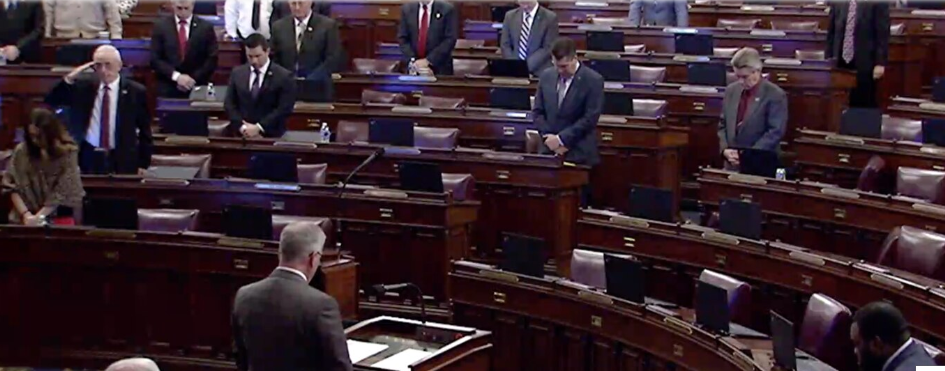
HARRISBURG — Despite emergency measures to allow lawmakers to vote remotely and avoid contact with one another, many in the state House did not heed health officials’ calls to stay home and gathered Tuesday for their first session focused on the coronavirus.
About 70 House members — about 50 Republicans and 20 Democrats, with some sitting side by side — were on the floor to consider several bills, including one to postpone Pennsylvania’s primary until June 2. A smaller number worked from their Capitol offices.
Public health officials, including Secretary of Health Rachel Levine, have urged people to stay at least six feet apart whenever possible and limit gatherings to no more than 10 people. On Monday, Gov. Tom Wolf issued a “stay-at-home” order for seven Pennsylvania counties, with an eighth added Tuesday.
Both the state House and Senate have passed temporary rules that allow members to cast their votes from home. Currently, there are 198 lawmakers serving in the 203-member House because of vacancies and one member’s serving in the military.
Only House leaders and committee chairs are required under the new rules to come to the Capitol in person, but members were not barred from attending.
Many Republicans said they felt conflicted about balancing their duties as elected officials with their responsibilities as individuals to stop the spread of the coronavirus by staying home, said Mike Straub, spokesperson for House Majority Leader Bryan Cutler (R., Lancaster).
Cutler and Speaker Mike Turzai (R., Allegheny) “made it abundantly clear” members did not need to attend in person, Straub said.
Rep. Keith Greiner (R., Lancaster) said he attended “because I have the people’s work to finish and get accomplished.” His Republican colleague Seth Grove from York County said it was “important for elected leaders to be on the forefront and show up to work.”
“We ask that of our health-care professionals, first responders,” Grove said Monday after attending a committee meeting. “I just think it’s my duty as an elected leader to physically show up for work.”
Several Democratic House members shared pictures of themselves on social media working from home, including Reps. Donna Bullock (D., Phila.) and Melissa Shusterman (D., Chester). Still, several of the Democrats present on the floor Tuesday were from Philadelphia and the surrounding counties that are under Wolf’s stay-at-home order.
EnviroPolitics Blog is working to keep you informed about all aspects of the coronavirus — the status of confirmed cases, disease spread, death toll–and also how Americans are coping. Like this story, for instance. If you like what we are doing, Click to receive free EP Blog updates and please tell your friends. https://bit.ly/3bntuB5