The NextGen Cup Consortium, an effort driven by McDonald’s and Starbucks, is debuting reusable cup pilot programs at independent coffee shops around San Francisco and Palo Alto, California this week. The consortium is managed by Closed Loop Partners’ (CLP) Center for the Circular Economy, with the World Wildlife Fund serving as an advisory partner and design firm IDEO running the pilots.
The pilot programs will see reusable cups outfitted with tracking codes and chips introduced in place of traditional disposable paper and plastic cups. Returnable packing service startups Muuse designed the cup for San Francisco while CupClub designed the model for Palo Alto.
A long-term goal is to introduce the cups into major chains. Conrad MacKerron, senior vice president for the shareholder advocacy nonprofit As You Sow, told Waste Dive the programs are “a key first step” toward shifting companies like Starbucks “away from single-use packaging and towards reusables.” He added “there will need to be a lot of market testing to study, encourage, and induce customer behavior change.”
NextGen’s Cup Challenge, launched in 2018, has focused on creating a more sustainable and economically sound alternative to traditional beverage containers. Many paper cups in particular are often a challenge to recycle, given their plastic lining.
The concepts being introduced by two different start-ups take a very different approach to what most consumers currently experience. The Muuse cups in San Francisco come with QR codes and are intended to be scanned upon pick-up and drop-off within five days, with patrons given a 25-cent discount. Failure to return the cups will result in a $15 charge. CupClub models will meanwhile have RFID tags and can be stacked at drop-off points in Palo Alto.
“In previous pilots we have achieved a 97% return rate through return incentives and product features in app,” CupClub founder and CEO Safia Qureshi told Waste Dive. “We will be keeping a close eye on these metrics during the pilot.”
Georgia Sherwin, a CLP spokesperson, told Waste Dive the Muuse cups are made from powder-coated, double-walled stainless steel, and come with a polypropylene lid and a silicone seal. The CupClub are composed of virgin polypropylene, with low-density polyethylene lids. Both programs will play out over a one-month trial period.
The pilot programs are limited to two cities, but the NextGen Cup Challenge is seeking a “moon shot” attempt to provide solutions for both hot and cold beverage containers on a larger scale. Other members include Coca-Cola, Wendy’s, Nestlé, and Yum! Brands, which owns chains such as KFC and Taco Bell.
While groups like As You Sow are supportive, MacKerron highlighted the challenges facing efforts to expand the pilot program beyond regions like the Bay Area.
“We hope there will be significant trials done in areas that aren’t typically politically progressive to understand better the challenges of making the transition there,” he said.
The Walney Extension wind farm off Britain’s east coast. New England states would have to build the equivalent several times over for decades to help meet clean energy goals, one study finds. Phil Noble/Reuters/Newscom
The Walney Extension wind farm off Britain’s east coast. New England states would have to build the equivalent several times over for decades to help meet clean energy goals, one study finds. Phil Noble/Reuters/Newscom
Nearly two dozen states and the District of Columbia have committed to slashing greenhouse gas emissions by 2050, with several planning at least an 80% cut.
Some Democratic presidential candidates are outlining goals for the majority of electricity to be decarbonized within the next two decades.
But how big a lift will that be at the state level?
State agencies and private research firms are only beginning to produce specific numbers — and fuel debate — about whether the scale of the electricity and transportation infrastructure build-out required to dramatically reduce carbon emissions across the economy by midcentury is feasible.
In the case of New England’s six states, one measure of the challenge can be counted in terms of “Walneys” and “Solar Stars.”
One refers to the Walney Extension, the largest offshore wind farm in the world, which is a forest of 87 towering turbines in the Irish Sea off England’s west coast. It opened in September 2018 with a capacity of 659 megawatts, power enough for 600,000 homes in Britain.
The biggest U.S. solar farm is Solar Star in Southern California, covering four times the size of New York’s Central Park and producing a peak output of 579 MW in full sunlight.
For all the New England states to reach targets of an 80% reduction in greenhouse gas emissions by 2050, generally from a 1990 starting point, electricity output may have to double to charge electric vehicles that must fill the streets and to replace gas heat with electric heat pumps, according to an analysis last year by the Brattle Group consultancy.
The region’s generating capacity — now just over 31,000 MW — would have to soar to 160,000 MW, mostly through wind and solar, in one of several future scenarios Brattle calculated.
That’s the equivalent of four Walneys and six Solar Star projects a year for the next 30 years in New England.
The idea of replicating those two projects again and again on an assembly line track for decades defines one view of the clean energy summit New England and the rest of the U.S. could have to scale.
Jürgen Weiss. The Brattle Group
“People completely underestimate the scale of the challenge,” said Jürgen Weiss, co-author of the Brattle Group study. “In some sense, that was a little bit of the purpose of the study.
“On the other hand — and the message we are trying to emphasize — the challenge means growing the annual deployment of wind, solar and batteries by about 10% a year,” Weiss said. That growth rate has been met globally by wind power installations and surpassed by solar investments, the study said.
“If New England keeps growing these new industries at roughly the current rate, the region may have a chance to achieve the commitments made to decarbonize our economies by 2050 and do its part to reduce the risks of catastrophic climate change. And, in the process, it will create a substantial and sustainable new green economy,” the Brattle group reported.
But the Brattle study is just one bookend in the debate surrounding the costs and infrastructure involved in decarbonizing the grid.
“I think we’re just on the cusp of a new wave of questions that are emerging that have to be answered,” said Emil Dimanchev, senior research associate at the Massachusetts Institute of Technology’s Center for Energy and Environmental Policy Research.
“How do we actually build a power system that is mostly wind and solar? We’re just starting to look at this, and there are a lot of unanswered questions about how we get there and get there cost effectively, as well,” said Dimanchev.
Another study, which focused on California, found a more economically feasible path forward, although it did not track the exact timelines and scenarios as the Brattle study.
That analysis from the Lawrence Livermore National Laboratory and the ClimateWorks Foundation last month found that California could mobilize investment, research and public support to remove increasing amounts of carbon dioxide from the atmosphere, helping create a carbon-free economy by 2045.
The cost was estimated at $8 billion a year, or nearly 4% of the proposed California budget for 2020-2021. Under less favorable assumptions, the cost could get to $30 billion annually, the study authors said.
The state would still have to add investments in new zero-carbon power plants, power transmission and distribution lines, and EV charging infrastructure.
The new plan would collect greenhouse gas emissions from landfills, dairies and wastewater treatment plants; remove hydrogen from the emissions for sale as fuel; and transport the CO2 over new pipeline networks to centralized sites for underground storage.
In addition, some of the CO2 removal would be achieved through direct air capture — pulling massive amounts of air through processing machines to chemically extract CO2.
“It was a welcome surprise to see how reasonable the costs appear compared to other studies,” said Sarah Baker, staff scientist at Lawrence Livermore and lead author of the report. “We were pleased.”
‘Urgently needed’
[+] The chart illustrates one scenario for how fast renewable generation — mostly offshore wind power and solar units — would have to grow to achieve New England’s low-carbon emissions goals for 2050, according to a Brattle Group study. Brattle Group
National polls indicate that while public concern over climate change is widely shared, an understanding of future costs of climate action is not.
Roughly half of Americans believe action is “urgently needed” in the coming decade to avoid the worst effects of climate damage, according to a Washington Post and Kaiser Family Foundation poll in November. But only four in 10 were willing to make “major sacrifices” in response.
Three-quarters of poll respondents said they would oppose a 25-cents-a-gallon tax on gasoline to combat climate change threats, only half of the tax on carbon emissions that some leading economists argue would be needed to tilt the economy away from fossil fuels toward zero-carbon alternatives. Against that background, Americans are headed into the 2020 presidential campaign with Republican and Democratic parties diametrically divided on the climate issue.
New England states and others that have aggressive clean energy goals are just starting to calculate the costs of their climate commitments and speak to ratepayers and voters about what that may mean.
In Massachusetts’ case, David Ismay, then a senior staff attorney with the Conservation Law Foundation, wrote last year, “While we know that achieving net zero by 2050 is technically possible, we also know it won’t be easy. There’s no ‘silver bullet’ policy or single program that can do it all or save us from having to make some hard decisions over the next 30 years.”
Ismay — now undersecretary for climate at the state’s Executive Office of Energy and Environmental Affairs — has the assignment of producing draft pathways this year for achieving Massachusetts’ pledge to cut carbon emissions by 80% by 2050.
“For Massachusetts, questions about costs are a year too early,” said Caitlin Peale Sloan, senior attorney at CLF and Ismay’s former colleague.
New Jersey Gov. Phil Murphy (D) issued a master plan last month intended to eliminate carbon emissions in the state’s energy sector by 2050. Estimates on the costs to ratepayers are to come later this year, officials said. Rutgers University professor Frank Felder warned that the transition would be “expensive and regressive” and predicted a “substantial increase” in residents’ energy costs (Energywire, Jan. 28).
New York’s Climate Leadership and Community Protection Act, enacted last July, requires utilities to rely on renewable energy for 70% of the electricity supply by 2030 and to eliminate greenhouse gas emissions from man-made sources in the state by 2050.
Rich Dewey, president of the New York Independent System Operator, the state’s grid operator, said the organization’s top planning priorities this year include how to meet requirements of the climate act and the prospect of a surge in power demand if a large transition to EVs and electricity-based heating happens (Energywire, Jan. 23).
Analysis Group Inc., a consulting firm, in a report last October noted that because of the newness of the act, comprehensive estimates haven’t been done. “Wind’s share of total generation rose from 1 percent in 2009 to 3 percent in 2018. This offers an important perspective on what is to come. The Act calls for unprecedented increases in renewable generation in 11 years so that renewables provide 70 percent of consumers’ needs.”
While analysts can estimate the amount of clean energy that state policies require, cost estimates are a moving target, analysts agree, because renewable energy continues to get cheaper.
In Brattle’s calculation, the annual investment in wind and solar power needed to meet New England’s goals must spurt from nearly 600 MW installed next year to six times that amount in 2030.
“This is not an easy lift by any stretch. The total dollars are quite significant,” Weiss said.
The offshore wind example
The Energy Department’s National Renewable Energy Laboratory pegs the current capital costs for offshore wind resources at between $4 million and $6 million per megawatt of capacity, including turbine, platform, electronics, transmission lines to shore and onshore costs.
If 3,000 MW of offshore wind projects were going up off New England today, with an average cost of $4 million per megawatt for a completed project, according to NREL, the cost would be $12 billion.
But NREL projects that cost per megawatt of offshore wind will drop steadily to between $2.5 million and $3 million, with the increasing size of turbines and the benefits of large-scale manufacturing providing the largest benefits.
The kites are attached to buoys out at see, and use turbines to generate power.
Google-spinoff Alphabet is ending its work on Makani, a project that tried to generate power using wind turbines attached to kites, Makani’s CEO has announced. Despite successfully demonstrating a flight off the coast of Norway last year, the CEO said that business and technology challenges meant that “the road to commercialization is longer and riskier than hoped.” Energy company Shell, which collaborated with Makani on last year’s flight, is “exploring options” to take on its tech, according to the Financial Times.
Makani is the first of Alphabet’s moonshot projects to have been shuttered since Larry Page and Sergey Brin stepped back from the business last December. Alphabet and Google CEO Sundar Pichai is under pressure to reduce Alphabet’s losses from its “Other Bets” segment.
NOTE: We’re always looking for stories that might interest our readers. If you come across something so interesting that it cries out to be shared, please send it to editor@enviropolitics.com If we agree, you’ll see it here soon.
The Financial Times notes that last year the division lost the company $4.8 billion, up from $3.4 billion the year before. The closure appears to be part of wider cost-cutting at Alphabet. Earlier this week Google announced it would be ending its work on Stations, a free Wi-Fi project aimed at developing countries.
The executive in charge of Alphabet’s X division, Astro Teller, said it’s necessary to focus Alphabet’s investments on the climate change technology that can have the “greatest impact.” Teller, who is also the chairman of Makani’s board, said that “while it’s tempting to say that all climate-related ideas deserve investment, remaining clear-eyed and directing resources to the opportunities where we think we can have the greatest impact isn’t just good business; it’s essential when it comes to a problem as urgent as the climate crisis.” The statement was reported by TechCrunch.
Makani achieved some successes during its seven years under the Alphabet umbrella. It developed its 20kW demonstrator kite into a “utility-scale” model that’s capable of generating 600kW, and which has some advantages over traditional offshore wind turbines. The kites are attached to floating buoys out at sea, and don’t need the expensive ocean platforms required by typical offshore wind farms. The design also means the turbines can be used in windy areas where the ocean is considered too deep for traditional wind farms.
However, voices both inside and outside of Alphabet raised concerns about the project’s progress. In 2018 an EU report pointed out that “the technology still has a long way to go before it can reach commercialisation,” according to the Financial Times. It said that the concept would not be viable until the team could demonstrate that it could operate reliably and autonomously.
Here’s the lineup of energy and environmental bills posted for tomorrow (2/20–one bill) and Monday (2/24) in the New Jersey Assembly
Bill: A741 Sponsors: Johnson (D37); Conaway (D7); Zwicker (D16) Summary: Establishes NJ Fuel Cell Task Force to increase use of fuel cells in State. History: 02/03/2020—Reported out of committee, 2nd reading in Assembly. Scheduled: 02/24/2020—Assembly, 11:00a Caucus; 1:00p Voting Session.
Bill: A1459 Aca (1R) Sponsors: Moriarty (D4); Johnson (D37); Benson (D14) +3 Summary: Prohibits the sale of certain children’s products containing lead, mercury, or cadmium. History: 01/27/2020—Reported out of committee with committee amendments, 2nd reading in Assembly. Scheduled: 02/24/2020—Assembly, 11:00a Caucus; 1:00p Voting Session.
Bill: A2371 Aca (1R) Sponsors: Kennedy (D22); Pinkin (D18) Summary: Requires large food waste generators to separate and recycle food waste and amends definition of “Class I renewable energy.” History: 02/03/2020—Reported out of committee with committee amendments, 2nd reading in Assembly. Scheduled:02/20/2020—Assembly Telecommunications and Utilities Committee, 10:00a, 3rd Floor, Committee Room 9, Annex. (Revised 02/14/2020)
Bill: A2775 Aca (1R) Sponsors: Houghtaling (D11) Summary: Makes pilot program for special occasion events at wineries on preserved farmland permanent program. History: 02/13/2020—Reported out of committee with committee amendments, 2nd reading in Assembly. Scheduled: 02/24/2020—Assembly, 11:00a Caucus; 1:00p Voting Session.
Bill: S232 Sponsors: Singleton (D7); Weinberg (D37) Summary: Concerns environmental permits in burdened communities. History: 01/14/2020—Introduced and referred to Senate Environment and Energy Committee. Scheduled: 02/24/2020—Senate Environment and Energy Committee, 10:00a, 1st Floor, Committee Room 6, Annex.
Bill: S331 Sponsors: Smith (D17); Codey (D27) +2 Summary: Requires environmental sustainability plan for State House Complex. History: 01/14/2020—Introduced and referred to Senate Environment and Energy Committee. Scheduled: 02/24/2020—Senate Environment and Energy Committee, 10:00a, 1st Floor, Committee Room 6, Annex.
Bill: S337 Sponsors: Smith (D17); Greenstein (D14) Summary: Authorizes NJ Infrastructure Bank to issue up to $20 million in bonds to finance cost‑effective energy efficiency improvements in State, local, and school district buildings. History: 01/14/2020—Introduced and referred to Senate Environment and Energy Committee. Scheduled: 02/24/2020—Senate Environment and Energy Committee, 10:00a, 1st Floor, Committee Room 6, Annex.
Bill: S349 Sponsors: Smith (D17) Summary: Requires developers to offer electric vehicle charging stations as an option in certain new home construction. History: 01/14/2020—Introduced and referred to Senate Environment and Energy Committee. Scheduled: 02/24/2020—Senate Environment and Energy Committee, 10:00a, 1st Floor, Committee Room 6, Annex.
Bill: S1016 Sponsors: Smith (D17) Summary: Directs DEP to classify neonicotinoid pesticides designed for outdoor use as restricted use pesticides. History: 01/30/2020—Introduced and referred to Senate Environment and Energy Committee. Scheduled: 02/24/2020—Senate Environment and Energy Committee, 10:00a, 1st Floor, Committee Room 6, Annex.
If you liked this post you’ll love our daily newsletter, EnviroPolitics.It’s packed with the latest news, commentary and legislative updates from New Jersey, Pennsylvania, New York, Delaware…and beyond. Don’t take our word for it, try it free for an entire month. No obligation.
Dandelion is investing in R&D to minimize disruption from drilling geothermal wells at homes.
Google spinout Dandelion Energy wants to push home geothermal heating to new heights in 2020.
The company, which emerged from the X “Moonshot Factory” in 2017, has grown to around 100 employees and installed hundreds of sites in New York state. It continues to refine its drilling technology to make residential drilling and heat pump installation easier and more competitive with incumbent fossil fuels. Last month, it pulled in another $12 million, bringing total investment to $35 million, and hired a new CEO to handle the growth stage while co-founder Kathy Hannun takes the president role to focus on technology development.
Installations grew nearly fivefold year-over-year in 2019, Hannun said in a recent interview, as the company dialed in on its core markets of Albany, the Hudson Valley and Westchester. Previous investors Comcast Ventures, GV, NEA and Lennar saw that progress and wanted to expand on last year’s Series A.
Dandelion is seizing on statewide trends as well. It partnered with utility Con Edison to install geothermal heat pumps in Westchester, where demand for natural gas has outstripped supply, leading to a moratorium on new hookups. The utility offers rebates of up to $5,000 for customers who switch to Dandelion’s geothermal heat pumps. And the state Public Service Commission, which regulates utilities, raised heat pump deployment targets and allocated billions in funding for it in a January 16 order.
“We’ve demonstrated that there’s a lot of demand, and we’ve demonstrated that we can install geothermal systems that customers are really happy with,” said newly appointed CEO Michael Sachse. “This year will largely be about getting all our systems in place and processes, so we can take as much complexity out of this as possible.”
The new funding provides “plenty of runway” for the foreseeable future, Sachse added.
Sachse’s appointment as CEO follows his experience at energy efficiency company Opower. He joined when Opower had about 30 employees, then served as chief marketing officer as the company went public in 2014 and was acquired by Oracle in 2016. That journey had its ups and downs — its stock price lost more than half its initial value by the time of acquisition — but the $532 million deal remains one of the biggest sales achieved by a U.S. cleantech startup.
If Dandelion makes good on its appeal to the millions of New England homes burning fuel oil to stay warm, it’ll need a leadership team that can handle big valuations.
Drill smarter, not harder
Dandelion’s technology drills a ground loop 300 to 500 feet below a house and connects it to an electric heat pump. In the winter, installations pump heat from deep underground to warm the house, cutting the need for heating fuel. In the summer, they pump heat from the house into the ground, reducing air conditioning load. Both actions help utilities stressed by peak seasonal heating and cooling needs.
Compared to the myriad companies selling home solar power, Dandelion is notable for the lack of competitors in its lane. In the fight for customers, it must outcompete the status quo — keeping the fuel-based heating system — or a number of local installers. The space hasn’t attracted much attention from venture capitalists or technology entrepreneurs.
“This is an industry that’s been served by people with no ability to invest in R&D,” Sachse said. “Our core thesis is that by investing in technology, we’ll make this product cheaper and therefore be able to bring a unique offering to the market.”
That R&D effort includes honing a next-generation heat pump and logging data on soil strata in the regions where the company drills frequently, which allows teams to prepare the best equipment for the geology they’re planning to drill in.
The company already saves customers money compared to fuel oil, Sachse said, and that advantage will only increase as innovation drives down the cost of installation.
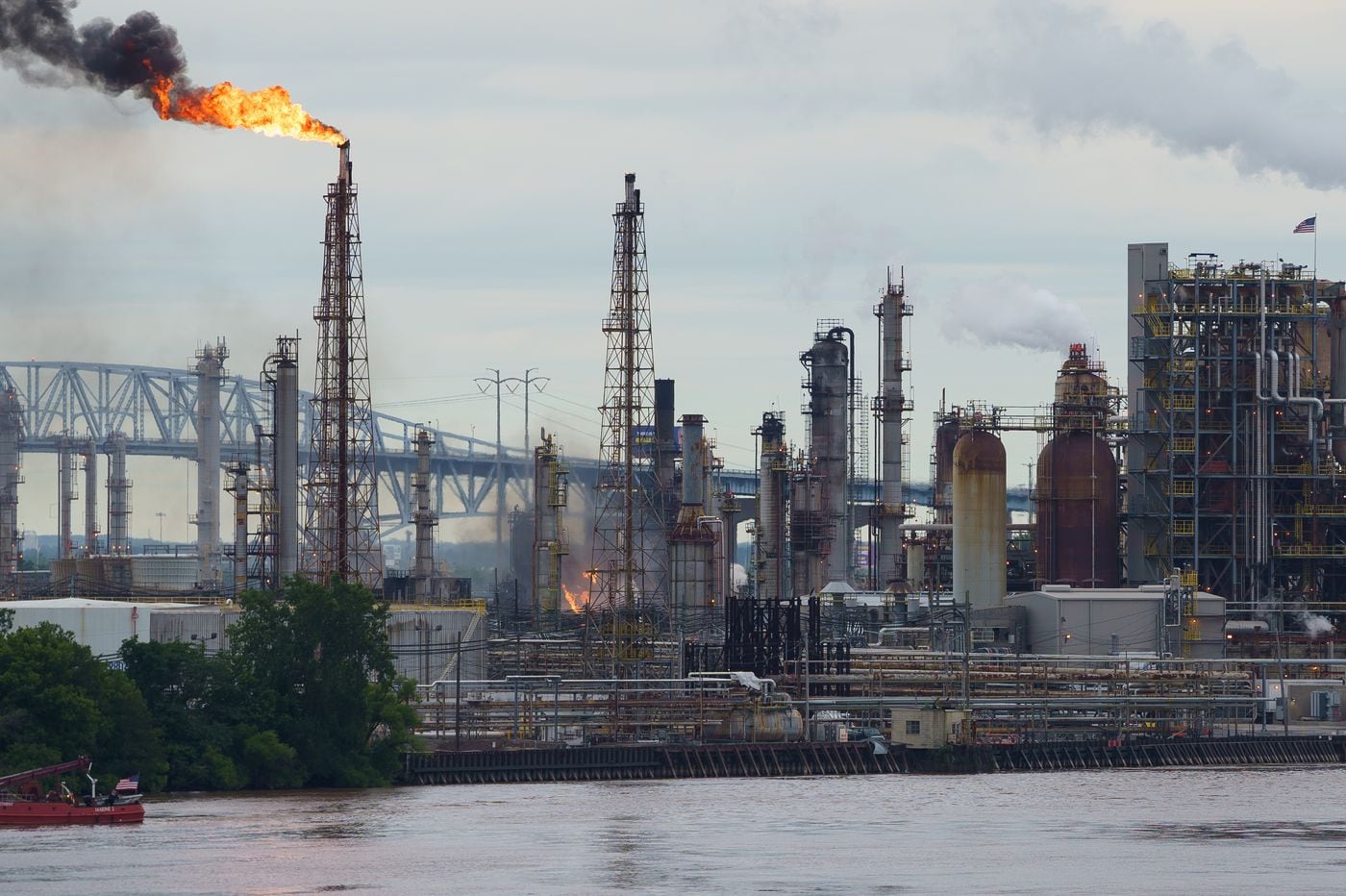
A U.S. Bankruptcy Court judge on Wednesday tentatively approved the sale of the shuttered Philadelphia Energy Solutions refinery to a Chicago firm, closing the door on more than a century of oil refining in South Philadelphia and potentially radically altering the city’s landscape. JESSICA GRIFFIN / STAFF PHOTOGRAPHER
Andrew Maykuth reports for the Philadelphia Inquirer
A U.S. Bankruptcy Court judge on Wednesday tentatively approved the sale of the shuttered Philadelphia Energy Solutions refinery to a Chicago firm, closing the door on more than a century of oil refining in South Philadelphia and potentially radically altering the city’s landscape.
Judge Kevin Gross said he was satisfied that Hilco Redevelopment Partners’ $252 million bid — boosted by $12 million in a flurry of eleventh-hour negotiations on Wednesday — was the highest and best offer for the 1,300-acre site, occupied by the East Coast’s largest oil refinery until it abruptly closed June 21 after a devastating fire.
Gross also said the decision to sell to Hilco, which has told city officials it plans to demolish the refinery and replace it with a mixed-use industrial park, was “clearly in the best interests of the community,” citing the refinery’s “numerous and repeated problems.”
Having addressed most of the objections Wednesday, the judge said he would be prepared to sign an order Thursday affirming the refinery’s bankruptcy reorganization after lawyers representing various parties had a chance to review the document overnight.
There was some urgency to complete the deal by Thursday, a deadline set by the expiration of Hilco’s offer.
“After tomorrow, Hilco disappears, the plan disappears,” Gross told the packed courtroom in Wilmington. “What’s a judge supposed to do?” Gross scheduled a hearing for 1 p.m. Thursday, in case any parties raised new objections that he had not already ruled on.
With an expected final approval Thursday, Hilco would be in charge of developing Philadelphia’s largest available commercial real estate parcel. Environmental activists have long criticized the refinery as the city’s largest stationary source of air pollution. And, community activists want the site to be used for anything but a refinery after the catastrophic explosion in June served as a dramatic reminder of the risks posed by the fuel-refining complex.
First, however, the site will need extensive environmental remediation after more than a century of oil refining there. But it’s not immediately clear when that will happen, and who will pay the bill.
On Wednesday, the Clean Air Council, a frequent legal adversary of the refinery, lauded its permanent closure.
“Hilco must work with all stakeholders to leverage this opportunity to transform the site so it protects our air, water, health, and safety while spurring economic development and high-paying union jobs,” Joseph Otis Minott, the council’s executive director, said in a statement.
Hilco’s experience in redeveloping industrial properties includes acquiring old power plant sites in Boston and New Jersey, and building warehouses on a former steel mill site in Baltimore.
Last-minute negotiations
The start of Wednesday’s hearing was delayed nearly six hours while a frantic round of closed-door negotiations took place, resulting in settlements on most of the objections raised in the last week by unsecured creditors, the United Steelworkers union, and other parties.
A rival development firm, Industrial Realty Group, made a late effort to boost its offer and to wrest the refinery away from Hilco, which was selected after a Jan. 17 auction. That apparently accounted for Hilco’s offer to boost its payment to $252 million, from $240 million agreed to earlier.
IRG had teamed up with former PES chief executive Philip Rinaldi, who wanted to restart the refinery. Rinaldi’s effort was supported by trade unions, including the United Steelworkers, which represented more than 600 of the refinery’s 1,100 workers.
Rinaldi said he was “very disappointed” with Wednesday’s outcome.
Ryan O’Callaghan, the president of Steelworkers Local 10-1 before he lost his job during mass layoffs that followed the refinery’s closure, sat glumly during Wednesday’s hearing. “It’s not good,” he said.
The Steelworkers international signed on to a revised agreement, however, after $5 million in severance was added as a payment to workers who lost their jobs. The new plan also includes guarantees from PES and Hilco that union workers would remain employed to maintain the refinery and to continue to remove remaining fuels, a process that is expected to take at least a year. Hilco also agreed to work with unions on future employment at the site.
PES and its secured lenders also agreed to set aside $20 million for unsecured trade creditors, who can opt in and immediately receive a small portion of their claims — about 10 to 12 cents on the dollar — in exchange for dropping future legal claims.
“This is far from a perfect outcome,” said Robert J. Stark, a lawyer representing the committee of unsecured creditors, which agreed to withdraw its objections to the plan. He said the result made the best of a “horrible” situation. “We did the best we could with what we had.”
Assuming that Gross approves the plan on Thursday, it could still face legal challenges, especially from ICBC Standard Bank PLC, which lent the refinery millions of dollars only days before the explosion to finance its purchases of petroleum. The bank is engaged in a bitter battle with other lenders over who has priority in $1.25 billion in insurance claims the refinery has filed, but which have not been paid. That separate litigation is expected to take a long time to settle.
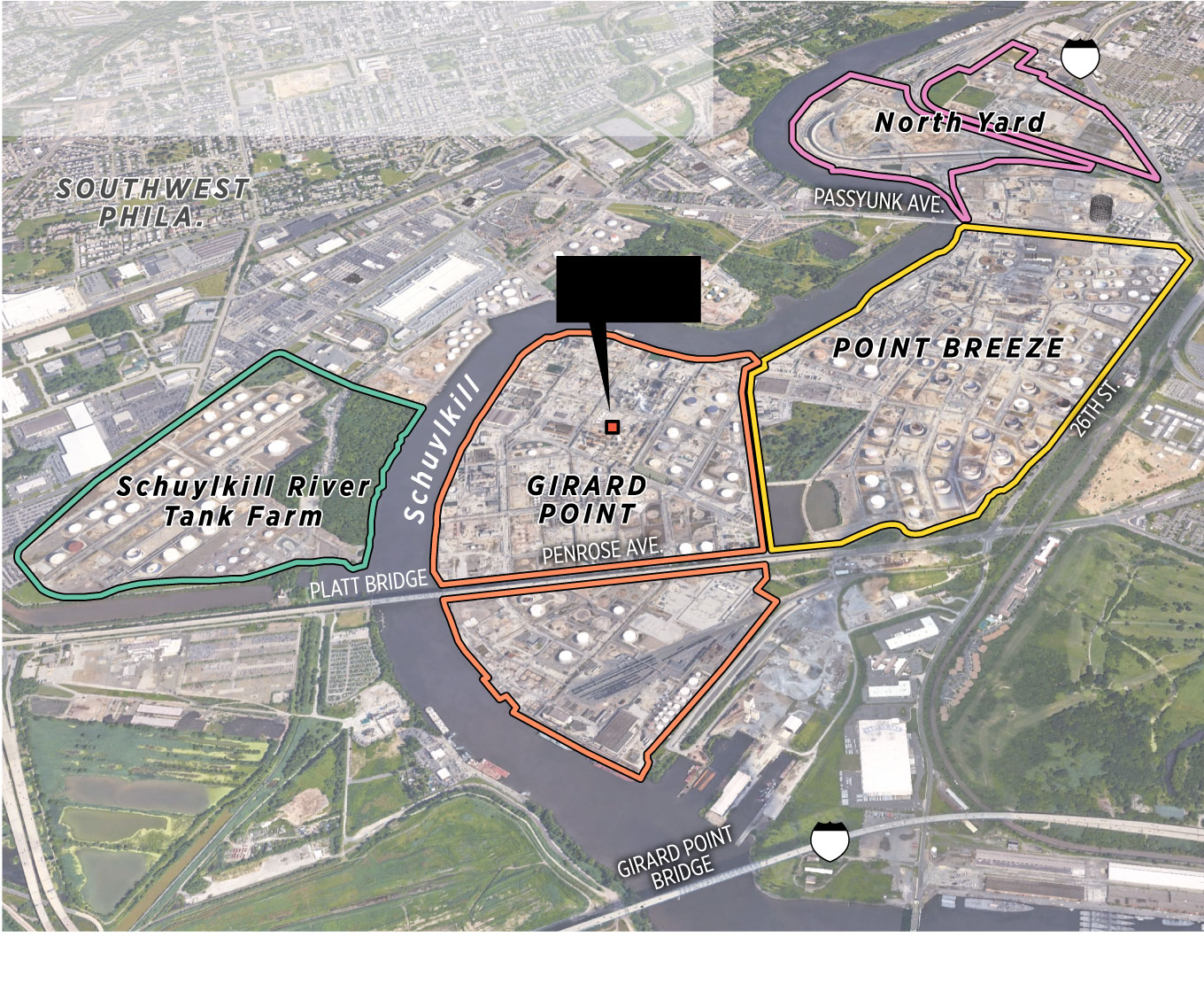
The refinery complex shut down after the June fire and a series of explosions destroyed a key unit on the Girard Point side. Girard Point is the larger of two refineries on the site.
If you liked this post you’ll love our daily newsletter, EnviroPolitics. It’s packed with the latest news, commentary and legislative updates from New Jersey, Pennsylvania, New York, Delaware…and beyond. Don’t take our word for it, try it free for an entire month. No obligation.



/cdn.vox-cdn.com/uploads/chorus_image/image/66334893/1_4.0.jpg)