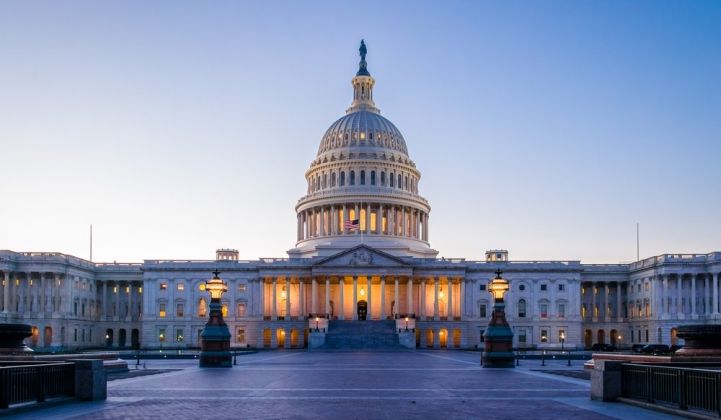
California legislature wraps session with unprecedented recycling action

Lawmakers may not have taken up a big packaging EPR bill, but they moved on others – including one focused on market development. Check out what passed and what’s next.

Credit: Flickr; John Loo

Cole Rosengren reports for WasteDive

California has a reputation for pushing the envelope on environmental issues and the 2019 legislative session that wrapped up last weekend didn’t disappoint. Longtime Sacramento observers say this was one of the biggest yet when it comes to waste and recycling issues.

Fueled by continuing repercussions from China’s scrap import restrictions, buckling bottle bill infrastructure and rising public attention to plastics, lawmakers pushed hard on bills big and small.

“This is the busiest year we’ve ever had,” Heidi Sanborn, executive director of the National Stewardship Action Council (NSAC), told Waste Dive. “We have a new political environment with a new governor and a new legislature, so that got people excited.”

Trace Onstad Bills, interim executive director of the California Resource Recovery Association (CRRA), agreed – calling it “an extremely productive year” for her group and the state legislature. Californians Against Waste, a nonprofit that works closely on these issues, described 2019 similarly.

To help keep track, Waste Dive rounded up notable bills that either passed or are likely to see action when legislators return in 2020. If we’ve missed any important legislation, please let us know at waste.dive.editors@industrydive.com.

Top three

AB 792 Recycled content requirements

While the final version may be less ambitious than an initial draft calling for 100% recycled content in plastic beverage containers by 2030, Plastics News reports this would likely still be the highest such target in the world. The final version requires containers in the state’s deposit program to reach 50% recycled content by 2030.

Similar attempts at even lower targets have faced opposition in recent years, but the shift in both public opinion and corporate sustainability pledges appears to have played a key role in changing the political landscape.

Like this? Click to receive free EnviroPolitics Blog updates

“In any other year that would be gigantic news,” CAW Director of Advocacy Nick Lapis told Waste Dive. “It was hard for them to argue against what they have already publicly committed to doing.”

The bill also had support from some in the recycling industry.

“Recovering from the recycling market crash is going to be complex, and everyone has a responsibility to help. This bill, and several other bills this session, show it is time for producers to become part of the solution,” Laura Ferrante, government affairs advocate for the California Refuse Recycling Council’s (CRRC) northern district, said in a statement.

AB 1583 California Recycling Market Development Act

The bill that received far less attention, but will have similarly notable implications for the recycling sector, is AB 1583. It was backed by CAW and Republic Services – with support from State Treasurer Fiona Ma, CRRC and others.

First, the Department of Resources Recycling and Recovery (CalRecycle) will convene a new Statewide Commission on Recycling Markets and Curbside Recycling by July 2020. This group – which will include representation from “public agencies, private solid waste enterprises, and environmental organizations with expertise in recycling” – is tasked with finalizing multiple policy recommendations by January 2021.

Priority areas will include identifying products that are widely considered recyclable or compostable in curbside programs throughout the state. The goal is to eventually create recommended guidance and educational materials, similar to what Massachusetts pursued, and encourage manufacturers to prove markets exist for their products.

AB 1583 also extends the expiration of California’s existing Recycling Market Development Revolving Loan Program from July 2021 to 2031. Sunset provisions for the California Alternative Energy and Advanced Transportation Financing Authority, a separate program that allows tax exemption for certain equipment purchases, in all sectors, are also extended to January 2026.

Finally, the bill also eliminates the requirement for plastic containers – even those that aren’t widely recyclable – to include the “chasing arrows” symbol. 

AB 827 Commercial recycling/organics access

Commercial businesses that are already required to separate recyclables and organics per state law, including most food service establishments, will now to have to offer public-facing receptacles. CalRecycle is directed to develop model signage for this purpose by July 2020. 

Others of note

AB 1162 Hospitality plastic reduction

“Lodging establishments” would be required to stop offering small plastic bottles of “personal care products” (such as shampoo) to guests. Instead, they would be encouraged to use bulk dispensers. If approved, this would apply to establishments with more than 50 rooms by January 2023 and all others by 2024.

AB 54 Bottle bill triage

California’s container deposit program has been struggling for years due to various financial and bureaucratic factors. Following the abrupt August closure of rePlanet, the state’s largest redemption center operator, the situation has only grown more dire. Legislators passed a short-term fix that provides $5 million in grants for mobile recycling pilots and gives grocery retailers relief from compliance fees until March 2020. 

Don’t miss stories like this Click to receive free updates

AB 815 Dual-stream recycling (signed by the governor)

Largely viewed as symbolic, this law will encourage municipalities to convert to dual-stream recycling and direct CalRecycle to research the prevalence of such programs throughout the state. Some California programs have explored making the switch in recent years due to market conditions.

SB 726 Household hazardous waste reuse

Sponsored by NSAC (as were the following hazardous waste and carpet bills), this legislation seeks to “reduce the unnecessary incineration and disposal of hazardous household waste products” by authorizing local reuse programs. The bill estimates up to 10% of the relevant material being disposed – including many common home and yard products – could be reused. 

AB 187 Used Mattress Recovery and Recycling Act

This bill will make multiple changes to the state’s previous statutes creating a product stewardship program for used mattresses.

AB 729 Carpet stewardship program

This bill makes numerous changes to California’s original product stewardship legislation for carpet, the first of its kind in the country, which was viewed as flawed by multiple parties for various reasons.

AB 619 Reusable containers (signed by governor)

A bill approved earlier in the summer authorizes reusable containers at food service establishments, as well as reusable service ware at temporary events. 

Next bills to watch

SB 424 Tobacco product recycling

This bill (also backed by NSAC) aims to ban the distribution of any single-use tobacco filter, related plastics devices and e-cigarettes that proponents say contribute to littering and marine pollution. It would also require a form of extended producer responsibility (EPR) for all remaining tobacco products that aren’t recyclable. SB 424 remains in play as a two-year bill.

AB 1509 Lithium-ion battery stewardship

Following a rash of battery-related fires affecting the recycling industry and consumers, supporters of AB 1509 are pushing for a system to better manage these items. Covered manufacturers would be required to achieve certain recycling targets via a stewardship organization. AB 1509 is another two-year bill that remains active.

SB 54/AB 1080 The Circular Economy and Pollution Reduction Act

The biggest of them all never came to a vote before lawmakers adjourned. The politics involved remain complex, despite opponents moving to neutral or supportive in the final days. While notable opponents are still out there, including industry giant Waste Management, supporters are ready to take this back up when legislators return in January.

“The immediacy of the plastics and waste crises, combined with the extraordinary coalition of local government, waste haulers, businesses, and environmental organizations pushing the measure would have most likely carried the day, which is why the failure to act on this crucial bill was so disheartening,” said Sen. Ben Allen, sponsor of SB 54, in a Monday statement. “We’ll be working during the interim and bring this bill back in the coming year.”

Numerous other advocacy organizations – including CAW, CRRA, NSAC and CalPIRG – have committed to doing the same. Opposition from certain manufacturers, such as Dart Container, can still be anticipated. Yet NSAC’s Sanborn is among those who believes “the patience of the public is up” when it comes to plastic waste issues.

Another powerful player that’s losing patience is Recology. The regional service provider’s president, Michael Sangiacomo, published a 2018 op-ed pledging to spend $1 million on a possible ballot initiative for European Union-style plastic policies. Recology has confirmed it’s ready to move if the state legislature is once again stymied by opposition next year.

“If they continue to try to block this stuff then we have no choice but to go to the voters,” Eric Potashner, vice president and director of strategic affairs, told Waste Dive. “I can guarantee what we end up putting in front of the voters will not be as conciliatory.”

Recommended Reading:

California legislature wraps session with unprecedented recycling action Read More »

Youth-led, Climate Strike – Final Update

Photo credit: photo: Leo Sabangan

**UPDATED – Sept. 20 , 4:23 PM, 4:35, 5:45 and Sept. 23, 12:40 AM

By Frank Brill, EnviroPolitics Editor

Students abandoned their classrooms around the world on Friday, three days before the UN Climate Summit in NYC, to participate in marches and other events drawing attention to the need for rapid action to confront the dangers presented by climate change.

We recommend the Global Climate Strike website that has live photo updates from cities around the world and other resources, including an interactive map that lets you find climate strike events near you. For example, typing in ‘New Jersey’ rewards you with a map of event locations both in the Garden State and the Philadelphia area.

For Philadelphia and PA events, check out 350 Philadelphia which has a detailed listing of strike-related events planned by local organizations

We will be updating this post as news coverage develops. Feel free to submit your strike event information and photos in the comment section below. We’re also interested in hearing from businesses that are allowing their employees to attend today’s events –FB


From the Climate Strike Website:
This week will be historic. In over 150 countries, people are stepping up to support young climate strikers and demand an end to the age of fossil fuels. The climate crisis won’t wait, so neither will we. 

Young people have woken up much of the world with their powerful Fridays For Future school strikes for the climate. Now, millions of adults are joining in a huge wave of that will kickstart renewed action all over the world. The urgency of the climate crisis requires a new approach and a just response centered on human rights, equity, and justice. Follow the actions and join the movement.
Read more in the Frequently Asked Questions.

From the Los Angeles Times:
Today, what’s expected to be one of the largest environmental protests ever is unfolding around the warming planet. A global climate strike is being led by young people with more than 5,000 demonstrations in 156 countries — including 100-plus in California alone. The demonstrations, headed by organizers including 16-year-old Swedish activist Greta Thunberg, are the start of a weeklong campaign surrounding the United Nations Climate Action Summit in New York. By organizing school walkouts, public protests and social media campaigns, young people have drawn attention to global warming in ways that decades of studies could not. Underneath the activism lies a simple truth: Many young people are incredibly scared about climate change.

CNN LIVE UPDATES

ABC News

**Most recent related news and videos:|
Climate activists plan to shut down the D.C. commute Monday W-Post
Japan’s new climate minister to make climate change fight ‘sexy’ C/Net
Friday’s global strike was likely the largest climate rally ever USA Today
Young People Take to Streets in a Global Strike (New York Times)
‘I hope the politicians hear us’ (Washington Post)
Greta Thunberg and school students lead climate protest (Guardian)
Climate strike in New York City: What you need to know (Patch)
Students worldwide demand climate action (CNN)
Young people around the world are leading climate strikes (BuzzFeed)

Aerial photo shows New York’s streets flooded with protesters

From CNN’s Alisha Ebrahimji

A photo taken from the 22nd floor of a New York City high-rise shows the immense size of the protest calling for “climate justice” to be an ethical obligation and not just an environmental issue.

Thousands of people are striking in Boston, Massachusetts

Organizers expected some 10,000 people to rally at City Hall Plaza for the Boston Climate Strike organized by youth climate activists. Boston City Councilor Michelle Wu and former Environmental Protection Agency head Gina McCarthy were among scheduled speakers, according to NBC10 Boston.

Students chant and carry signs on the Boston City Hall Plaza in Boston, Massachusetts.
Photograph: Cj Gunther/EPA

Youth-led, Climate Strike – Final Update Read More »

North America has lost 3 billion birds in 50 years

The continent has lost nearly 3 billion birds representing hundreds of species over the past five decades. (Video: Luis Velarde/Photo: Jay McGowan, Macaulay Library at Cornell Lab of Ornithology/The Washington Post)

Karin Brulliard reports for the Washington Post
September 19, 2019 at 2:00 p.m. EDT

Slowly, steadily and almost imperceptibly, North America’s bird population is dwindling.

The sparrows and finches that visit backyard feeders number fewer each year. The flutelike song of the western meadowlark — the official bird of six U.S. states — is growing more rare. The continent has lost nearly 3 billion birds representing hundreds of species over the past five decades, in an enormous loss that signals an “overlooked biodiversity crisis,” according to a study from top ornithologists and government agencies.

This is not an extinction crisis — yet. It is a more insidious decline in abundance as humans dramatically alter the landscape: There are 29 percent fewer birds in the United States and Canada today than in 1970, the study concludes. Grassland species have been hardest hit, probably because of agricultural intensification that has engulfed habitats and spread pesticides that kill the insects many birds eat. But the victims include warblers, thrushes, swallows and other familiar birds.

“That’s really what was so staggering about this,” said lead author Ken Rosenberg, a senior scientist at the Cornell Lab of Ornithology and American Bird Conservancy. “The generalist, adaptable, so-called common species were not compensating for the losses, and in fact they were experiencing losses themselves. This major loss was pervasive across all the bird groups.”

The study’s authors, who include scientists from Canada’s environment agency and the U.S. Geological Survey, were able to put a number on the decline because birds are probably the best-monitored animals on Earth. Decades of standardized, on-the-ground tallies carried out by ordinary bird enthusiasts — including the annual North American Breeding Bird Survey and the Christmas Bird Count — provided a wealth of data that the researchers compiled and compared.

They then cross-referenced that with data from a very different, nonhuman source: 143 weather radars that are designed to detect rain but also capture “biomass” flying through the skies, as hundreds of migratory bird species do every fall and spring. Birds look “sort of like big blobs” in radar imagery, said co-author Adriaan Dokter, a migration ecologist at the Cornell Lab. Measurements of the blobs’ size and movements showed that the volume of spring migration dropped 14 percent in the past decade, according to the study, published Thursday in Science.

Earlier research has documented several threats that could be responsible for the large-scale bird decline. Agriculture and habitat loss are thought to be the primary drivers, with other factors such as light pollution (which disorients birds), buildings (which they crash into) and roaming cats (which kill them) amounting to “death by a thousand cuts,” Rosenberg said.

Birds, because they are so well-monitored, should be viewed as canaries in coal mines, the authors argue — harbingers of a wider environmental malaise at a time when other creatures, including insects, are also thought to be fading but are more challenging to count.

“Studies like this do suggest the potential of a systems collapse,” said Richard Gregory, head of monitoring conservation science at the Royal Society for the Protection of Birds and a professor at University College London. “These birds are an indicator of ecosystem health. And that, ultimately, may be linked to the productivity and sustainability of agricultural systems.”

Gregory, who was not involved in the study, called its scale “impressive” and said the “picture of decline and general methodology is compelling and first-rate.”

D.C. birdwatching enthusiasts use the eBird smartphone app to add their spring sightings to a national database.  (Bill OLeary/The Washington Post)
D.C. birdwatching enthusiasts use the eBird smartphone app to add their spring sightings to a national database. (Bill OLeary/The Washington Post)

The study is the largest effort yet to document a bird decline that has been detected in previous studies in Europe and elsewhere. In 2014, Gregory and colleagues reported a loss of 421 million birds in Europe for over 30 years. Scientists in Germany reported this month that Lake Constance, at the border of Germany and Switzerland, had lost 25 percent of its birds in three decades.

A recent United Nations report warned that 1 million animal and plant species are at risk of extinction as people log, farm and mine the natural world and as the climate warms. But in the case of most dwindling bird species, the problem is not that they are in immediate danger of vanishing.

Instead, the authors say, bird populations are shrinking at rates we do not see, and so do not act upon. Conservationists refer to this as “shrinking baseline syndrome,” and it can have devastating effects: Passenger pigeons were once so abundant that their massive flocks darkened U.S. skies. They were driven to extinction in just a few decades.

“Birds are not dropping out of the sky,” said Cagan Sekercioglu, a University of Utah ornithologist who was not involved in the new report, which he described as a “landmark” study. “When you are young, that’s your baseline. The problem is, the next generation, their baseline is lower. But they don’t know what they’re missing.”

Losing birds is not just about no longer seeing their vast array of shapes and hues or hearing their dizzying repertoires of songs and sounds. They provide essential “services” to ecosystems, the study said.

Some are “seed dispersers” — they eat seeds from tree fruits and then spread them across wide areas through defecation, helping create new trees; when they’re not around, “seed predators,” such as rodents, consume seeds from fallen fruits but crack them open, rendering them unable to grow, said Sekercioglu, who has studied birds’ roles in ecosystems. He cited studies finding that birds save conifer farms in the Pacific Northwest many hundreds of dollars per hectare by eating harmful insects and help Jamaican coffee farmers reduce the use of pesticides.

Some birds are pollinators. Some are predators, and some are prey.

“They’re integral to the system. It’s like a very large corporation in a marketplace — they’re diversified across all areas,” said co-author Mike Parr, president of the American Bird Conservancy. “If that corporation starts to have problems, then it starts showing up everywhere.”

Ducks, which are among the birds whose populations are increasing, float near Theodore Roosevelt Island during the Christmas Bird Count. 
 (Carolyn Van Houten/The Washington Post)
Ducks, which are among the birds whose populations are increasing, float near Theodore Roosevelt Island during the Christmas Bird Count. (Carolyn Van Houten/The Washington Post)

The study notes some bright spots. On the rise are wetland birds such as ducks and geese, which have benefited from conservation efforts by hunting groups. Also increasing are raptors such as bald eagles, which were close to extinction before the prohibition of the insecticide DDT. Endangered species protections helped them rebound, and they remain protected under other federal laws.

Those examples show that conservation policies and protections can work, the authors say. But sparrows and meadowlarks may be trickier: There’s no hunting constituency to rally behind them, and their numbers aren’t low enough to warrant federal protection.

Still, Rosenberg said, these birds can be helped. Sustainable agricultural practices that depend less on pesticides and programs that offer farmers incentives to set aside land for wildlife should expand, he said.

“We’re seeing this steady intensification of agriculture and pastureland being converted to pure corn … squeezing out every last bit of that habitat, getting rid of hedgerows, trees, grassy margins where these birds used to thrive,” Rosenberg said. “But we know of lots of examples where sustainable agriculture systems can produce the food we need.”

Parr said more conservation funding should be directed to the Central and South American nations where many of North America’s birds spend most of their lives, in cooler months. Ordinary people can aid birds by keeping cats indoors, turning off outdoor lights during spring and fall migrations, and reducing the use of pesticides.

“If you’ve got this rapid decline in 50 years, what’s it going to be in 1,000 years? We need to design a planet for the future, and we’re not doing that,” Parr said. “I really hope this can be a wake-up call.”

Read more:

We’re losing birds at an alarming rate. We can do something about it.

One million species face extinction, U.N. report says. And humans will suffer as a result.

Nigel, the world’s loneliest bird, was no victim. He was a hero.

Here’s the deal with all those turkeys terrorizing the suburbs

Many people flee hurricanes. Some birdwatchers flock to them.

Like this? Click to receive free EnviroPolitics Blog updates

North America has lost 3 billion birds in 50 years Read More »

How to save taxes in New Jersey? Start a farm

Goats at Trump National Golf Club which qualified for a New Jersey farmland assessment tax break

New Jersey’s Farmland Assessment program, first enacted more than 50 years ago, was intended to preserve farmland and discourage overdevelopment — essentially keeping the garden in the Garden State. But what makes a farm in New Jersey does not always mean neat rows of corn, a barn, and a rooster. Ted Sherman reports for NJ.com

How to save taxes in New Jersey? Start a farm Read More »

Floating power plants to support NYC’s high-peak energy needs

Reported in T&D World

Floating power plants to support New York’s energy needs

Astoria Generating Co. and Siemens signed a contract for the turnkey construction of two SeaFloat power barges to be equipped with eight Siemens SGT-A65 gas turbines. The barges will replace four existing power barges located at Gowanus Generating Station in the Upper Bay of Brooklyn, New York City, resulting in cleaner, more efficient energy production.

Siemens will preinstall the high-efficiency power generating facilities on two newly constructed floating barges with a generation capacity of about 300 MW each. Retrofitting the station with SGT-A65 gas turbines and generators will improve the plants’ power generating efficiency by nearly 50% while significantly reducing potential emissions of pollutants like carbon dioxide and monoxide — all while using the existing gas infrastructure.

New York’s Demanding Energy Market

As New York’s energy market changes, transitioning to more intermittent energy sources, New York City needs to maintain the reliability of its power supply while reducing potential emissions. The city — with more than 8.5 million inhabitants — is moving to obtain 70% of its energy from renewable sources by 2030. When solar and wind power can’t meet the need, quick-start peaking units like the Gowanus Generating Station will become even more important, especially in congested areas like Southwest Brooklyn. The new units will provide that reliability while reducing emissions and offering the flexibility to move the barges as needed.

Don’t miss stories like this Click to receive free updates

The four-barge Gowanus Station, with a current generation capacity of 640 MW, was originally installed in the early 1970s and is approaching the end of its service life. By replacing these barges with two modern floating power barges provided by Siemens, Astoria Generating Co. will be able to retire the existing barges — reducing the total number of barges from four to two — and also retire two barges at the nearby Narrows Generating Station. Siemens will deliver eight SGT-A65 gas turbine generating sets — four on each barge — along with a Siemens control system. The turbines will run on natural gas as their primary fuel.

Siemens and Astoria also signed a contract for a 20-year long-term service agreement that will help support the gas turbines’ and generators’ optimal operating efficiency. The contract includes service on parts, repairs, field services, program management, and offerings from Siemens’ Omnivise Digital Services portfolio, including remote monitoring and diagnostics.

“As a holistic solution, the new SeaFloat power barges will help reduce potential emissions in New York City and provide a reliable power supply by helping keep the local grid stable,” said Karim Amin, CEO of power generation at Siemens Gas and Power. “SeaFloat combines the advantages of our high-quality proven power plant technology with the mobility and flexibility that’s required in peak consumption periods.”

Like this? Click to receive free EnviroPolitics Blog updates

Floating power plants to support NYC’s high-peak energy needs Read More »

Your free copy of EnviroPolitics for September 25, 2019. Enjoy!

Page 1 of 2

Our daily subscription newsletter is read by leading environmental attorneys, engineers, consultants, business leaders, organizations and people like you who want to stay current with everything that’s happening in energy and environmental issues at the local, state and federal levels.

Click for your free copy of today’s issue — September 25, 2019

If you like what you see, take advantage of a very special offeran entire month of EnviroPolitics absolutely free.

Click here to start your free trial subscription. No obligation.

Let us know what you think in the comment box.

Your free copy of EnviroPolitics for September 25, 2019. Enjoy! Read More »