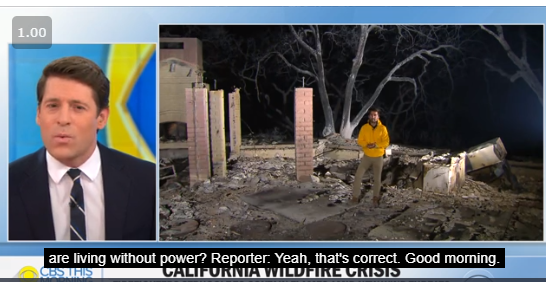
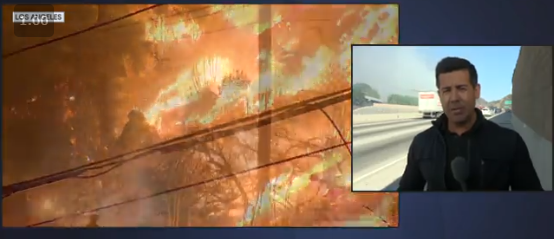
Latest update: California Wildfires, fanned by strong winds, continue to rage
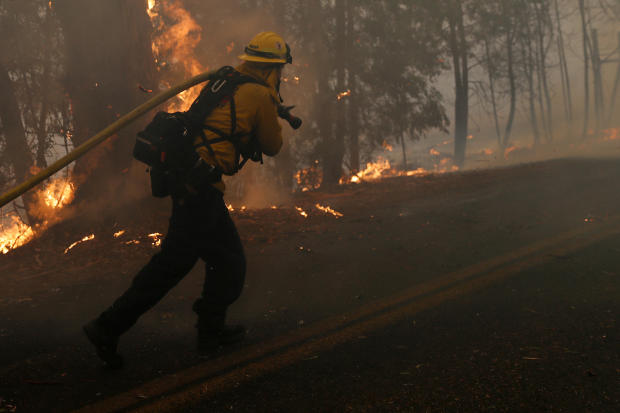
As the weather worsens on Tuesday, the Kincade and Getty fires are straining the resources of fire departments across the state.
Julie Turkewitz reports for the New York Times
Here’s what you need to know:
- Forecasters warn of hurricane-strength winds.
- Maps show where the fires are burning now.
- The Getty fire was caused by an ‘act of God.’
- PG&E will compensate customers for an earlier blackout.
- After the Tubbs fire, ‘a lot of us still had PTSD.’
- Firefighters mustered for a ‘max effort day.’
- Cowboy 911 rescues livestock and other animals.
Forecasters warn of hurricane-strength winds.
The worst kind of weather for wildfires — strong, gusty winds and very low humidity — is returning on Tuesday after a relative respite on Monday, the National Weather Service said, raising the prospect of more fire outbreaks and rapid growth of the blazes that are already burning.
The agency has posted “red flag” warnings for most of Northern California and much of Southern California, taking effect at various times on Tuesday.
Forecasters are predicting winds between 50 m.p.h. and 70 m.p.h. in Los Angeles County and Ventura County starting late Tuesday and continuing on Wednesday and Thursday, with some gusts up to 80 m.p.h. in the mountainous areas of Los Angeles County, the National Weather Service said. The scale for Category 1 hurricanes begins at 74 m.p.h.
[Natural disasters are another prism through which California’s vast income inequalities can be viewed.]
Winds gusts of up to 60 miles an hour could be expected beginning in the morning over a vast stretch of the state from the Sierras to the Pacific and from the southern fringes of the Bay Area north nearly to the Oregon border, except for coastal areas north of Sonoma County.
The winds, known as Santa Anas in the southern part of the state and Diablos in the north, arrive regularly in the fall. Recent research suggests that as the climate warms, Santa Ana winds may become less frequent. Coupled with precipitation changes, that could mean more intense fires later in the year.
Red-flag weather has played an important role in driving the growth of the Kincade, Getty and other fires, and has prompted pre-emptive blackouts by utility companies hoping to keep wind-damaged power lines and equipment from touching off more blazes.
[The New York Times has photographers on the ground, documenting the California wildfires and the battle to contain them. Follow their work here.]
The Kincade, which has been active for five days, has burned through 75,000 acres and is 15 percent contained on Tuesday afternoon, officials said. Two firefighters were injured while battling the blaze, one of whom was airlifted to the University of California, Davis hospital for treatment of serious burns. The firefighter was in stable condition, the authorities said.
Evacuees and residents will also have to face freezing temperatures overnight Tuesday in the inland valleys, the National Weather Service said.
Maps show where the fires are burning now.
We’re continuing to update our page of maps showing the extent of the fires, power outages and evacuation zones. Data from Cal Fire shows how the Kincade fire in Northern California has spread and where it is burning most intensely. Satellite images pinpoint the Getty and Tick fires and affected areas nearby.
Maps: Kincade and Getty Fires, Evacuation Zones and Power OutagesDetailed maps show the current fire extents, power outage zones and areas under evacuation orders.
The Getty fire was caused by an ‘act of God.’
The Getty fire, which has prompted the evacuation of more than 7,000 homes in Southern California, started when a branch broke off a tree and hit nearby power lines — an accident that Mayor Eric Garcetti of Los Angeles called an “act of God.”
The power lines began to spark and ignited nearby brush, Mr. Garcetti said at a news conference on Tuesday afternoon. He said investigators have not found any evidence that faulty equipment started the fire.
The fire has burned at least 650 acres and was 15 percent contained, broke out shortly after 1:30 a.m. Monday along the major freeway known as the 405, near the Getty Center. It quickly spread through neighborhoods north of Brentwood, destroying 12 homes and damaging five more.
The authorities determined the cause in part after seeing dashcam footage that showed an explosion on the side of the road early Monday morning, Mr. Garcetti said.
Earlier Tuesday, Mr. Garcetti thanked residents who had remained away from their homes in the evacuation area. He said that firefighters had extinguished some flare-ups, and he warned that higher winds expected in the evening could pick up embers from the fire and deposit them on houses in the evacuation area, possibly igniting them while residents who did not evacuate were sleeping.
That danger was reiterated by Fire Chief Ralph M. Terrazas, who said that hot embers have been known to carry for miles on the wind. “Our goal today is to increase containment as much as possible,” he said, adding that he was “very concerned about tonight’s wind event.”
PG&E will compensate customers for an earlier blackout.
Pacific Gas and Electric said on Tuesday that it would issue rebates to customers affected by the intentional blackout that began Oct. 9, addressing a request made repeatedly by Gov. Gavin Newsom.
The rebate, $100 for residential customers and $250 for small businesses, is a one-time adjustment tied to the power cutoff, which was carried out as a fire-prevention measure and left 738,000 customers in the dark.
No decision has been made about rebates for subsequent outages, including one imposed over the weekend and another wave that began Tuesday morning.
Bill Johnson, PG&E Corporation’s chief executive officer, said the utility recognized that mistakes were made during the intentional blackouts that began Oct. 9 and decided to accept the governor’s request to issue the rebates after “we finally had enough time to think about it with our board.” He said they are reviewing how they will handle issuing the rebates.
Mr. Johnson said he currently has power but that some executives and employees do not.
“The large-scale shut-offs are not the way we want to serve customers,” Mr. Johnson said. “We know this disrupts people’s routines and ways of life. But losses from catastrophic wildfires are forever.”
On Saturday, PG&E cut power to 970,000 customers — the equivalent of almost three million people — as high winds blew across Northern and Central California, with gusts in some places reaching 102 miles per hour. Of those customers, the company said, about 400,000 remained without power on Tuesday and may not regain it before the new round of blackouts hits their areas.
PG&E said about 597,000 customers would be affected by the outage that began Tuesday as more fierce winds moved through the state. The conditions were expected to continue through midday Wednesday.
Overall, PG&E had restored power to 650,000 customers by 5:30 p.m. on Tuesday. About 435,000 customers remained without power, including 16,000 from weather-related outages.
Even with the power cutoffs this month, the utility’s equipment is a suspected cause at least four wildfires, including the Kincade fire in Sonoma County.

After the Tubbs fire, ‘a lot of us still had PTSD.’
Karen Orlando, a real estate agent, said the evacuations and blackouts prompted by the Kincade fire have startled residents in Sonoma County who are still working to rebuild after the Tubbs fire in 2017.
“It was really traumatizing, what happened in 2017, and that scar was just starting to heal. Now it’s been completely reopened,” Ms. Orlando said.
Unprecedented extreme red flag warning issued for Los Angeles area
From The Guardian
- New round of power outages begins near San Francisco
- Kincade wildfire in northern California doubles in size
- News: fierce winds may spread more fires in California
Vivian Ho in Oakland and Sam Levin in Los Angeles
- 3h ago Getty fire sparked by tree branch falling on power lines
- 8h ago Wedding photo amid wildfire goes viral
- 9h ago New round of PG&E shutoffs begins
- 10h ago How the Getty Center protects its art
- 10h ago Fires have caused bad air quality across California
- 10h ago Kincade fire update: 90,000 structures threatened
- 10h ago Latest blackout to affect 1.5 million people
Evening summary
- Investigators believe they know what caused the Getty fire: video shows a eucalyptus branch falling on a power line operated by the Los Angeles Department of Water and Power.
- As a reminder, the Los Angeles Department of Water and Power DOES NOT shut off power during heavy wind events like Pacific Gas & Electric and Southern California Edison.
- Officials downgraded a mandatory evacuation order issued to a small portion affected by the Kincade fire to just an evacuation warning.
- The National Weather Service issued a new warning today: the Extreme Red Flag Warning, for a high-wind event taking place in much of Los Angeles and Ventura counties through Thursday evening.
Unlike many news organizations, we chose an approach that means all our reporting is free and available for everyone. We need your support to keep delivering quality journalism, to maintain our openness and to protect our precious independence. Every reader contribution, big or small, is so valuable. For as little as $1 you can support us – and it only takes a minute. Thank you. Make a contribution – The Guardian
Residents near California wildfire urged to be ready to “go at a moment’s notice”
CBS News reports:
Latest updates:
- Kincade Fire: 76,138 acres burned; 15% contained
- Getty Fire: 656 acres burned; 15% contained
- A major wind event is expected at 11 p.m. local time Tuesday night, which could spark new fires or hamper existing suppression efforts
- PG&E President & CEO Bill Johnson said PG&E workers have faced verbal and physical attacks
People in Northern California’s wine country were warned Tuesday they may need to leave “at a moment’s notice” as powerful winds threaten to bring more devastation to areas already ravaged by wildfires. Crews battling the massive Kincade Fire fear the wind could fan the flames.
The wildfire has burned an area more than twice the size of San Francisco and destroyed nearly 60 homes. Six days after the fire first ignited, firefighters were scrambling to put out hot spots in hopes of getting an upper hand before wind gusts reaching as high as 50 mph kick up again.
In Southern California, where high winds fueled the Getty Fire in the early morning hours, authorities are manning their fire lines with additional personnel. Gusts are predicted to reach up to 80 mph Tuesday night.
Three reports of looting in Northern California as Kincade Fire grows
Officials in Northern California have received three additional reports of looting as the Kincade Fire rages, Sonoma County Sheriff Mark Essick said at a Tuesday press conference. The looting was discovered when residents returned to their homes and businesses and found items missing. No arrests have been made.
“The Sheriff’s Office is doing everything we can to get you back into your homes,” Essick said. “We realize the anxiety there.”
Three people were arrested earlier in the week for unauthorized entry into evacuation zones.
The Kincade Fire grew to 76,138 acres by 6:30 p.m. local time, said Cal Fire representative Jonathan Cox. Some 189 structures were destroyed, 86 of which were single-family homes.
The blaze was still only 15% contained. Cox said that after the major wind event predicted for Tuesday night subsides, he expects containment to rise.
PG&E workers facing threats, assault during fire prevention efforts
PG&E employees have been subject to verbal and physical assaults while working to prevent wildfires, PG&E president and CEO Bill Johnson said at a press conference Tuesday.
“Our employees in the field have repeatedly been the targets of misguided attacks, verbal abuse, threats, physical assault, and even weapons,” Johnson said. “Today, one of our PG&E employees, driving a PG&E vehicle, was intentionally run off the road by an angry motorist.”
“The men and women of PG&E you see in your community are there for a single reason, and that is to help you,” Johnson added.
The company announced Tuesday that it is launching another preventative blackout ahead of a major wind event expected to begin Tuesday night. The blackout will impact an estimated 597,000 customers.
At the press conference, PG&E chief meteorologist Scott Strenfel warned residents about the expected high winds and low humidity.
“These are conditions that yield dangerous fire weather and potential for significant fires,” Strenfel said.
Getty Fire caused by tree branch hitting power line
The Getty Fire began when a tree branch was blown into a power line, Los Angeles Mayor Eric Garcetti said at a Tuesday afternoon press conference. Garcetti emphasized that the fire was accidental, and not caused by faulty equipment.
“We have concluded … that this fire started when a tree branch fell on power lines, causing them to spark and begin this fire,” Garcetti said. Garcetti added that he saw dashcam footage showing what he believes to be the moment the fire began.
“This was, simply put, in plain parlance, an act of God,” Garcetti said. “The wind broke off the tree branch, threw that tree branch, because of the strong winds, far enough to cause a spark off a line that’s still intact there.”
Investigators from the Los Angeles Fire Department’s (LAFD) Arson-Counterterrorism Section analyzed burn patterns, interviewed witnesses, and gathered physical evidence. The group determined that the fire likely originated on the 1800 block of North Sepulveda Boulevard, although it’s unclear who owns the property where the fire began.
LeBron James, Guy Fieri, and John Cena pitch in to help first responders
Celebrities including LeBron James, John Cena, and Guy Fieri have pitched in to help the first responders battling the blazes across California.
After the Getty Fire forced LeBron James to evacuate, the Lakers star sent a taco truck to feed first responders in Los Angeles, according to Mayor Eric Garcetti.
In Northern California, celebrity chef Guy Fieri served up lunch and dinner for Sonoma County firefighters, County Supervisor James Gore said on Facebook.
And on Monday, John Cena tweeted a video in which he pledged to donate $500,000 to a charity that will benefit first responders.
“This is the right thing to do and I am doing my part to help the cause,” Cena said in the video. “I wish everyone the best of luck, please stay safe and you are our heroes.”
If you liked this post you’ll love our daily newsletter, EnviroPolitics.
It’s packed with the latest news, commentary and legislative updates from New Jersey, Pennsylvania, New York, Delaware…and beyond.
Don’t take our word for it, try it free for an entire month. No obligation.
Latest update: California Wildfires, fanned by strong winds, continue to rage Read More »