It’s often our duty to report bleak news on climate and the environment. But let’s not skimp on the good news—like the continued momentum of clean energy
After years of promise and halting progress, wind and solar energy have simply, undeniably, irrefutably arrived.
A report from the Rocky Mountain Institute foresees a world that, by the year 2035, has wind and solar energy positively crushing the reigning champ, natural gas. Touted as a “bridge fuel,” advocates of gas—and of the hydraulic fracturing used to extract it—have told us that fracked natural gas, while still a fossil fuel, is measurably cleaner than oil or coal.
The reality is that fracking has brought us previously-unheard-of problems with methane releases, not to mention rampant use of water, sand, and a mix of chemicals and real estate shenanigans similar to a 19th Century gold rush.
A bridge fuel it’s not. Fracking has also vaulted the U.S. into the world leadership of oil and gas production, according to the U.S. Energy Information Administration.
Cheap, abundant natural gas has largely priced coal and nuclear out of the electricity market. So, fracking’s got that going for it, which is nice. Nevertheless, the RMI “bridge backward” study, if validated, can move markets and bring investment in new natural gas plants to a halt, and turn the controversial buildout of gas pipelines into a costly bust.
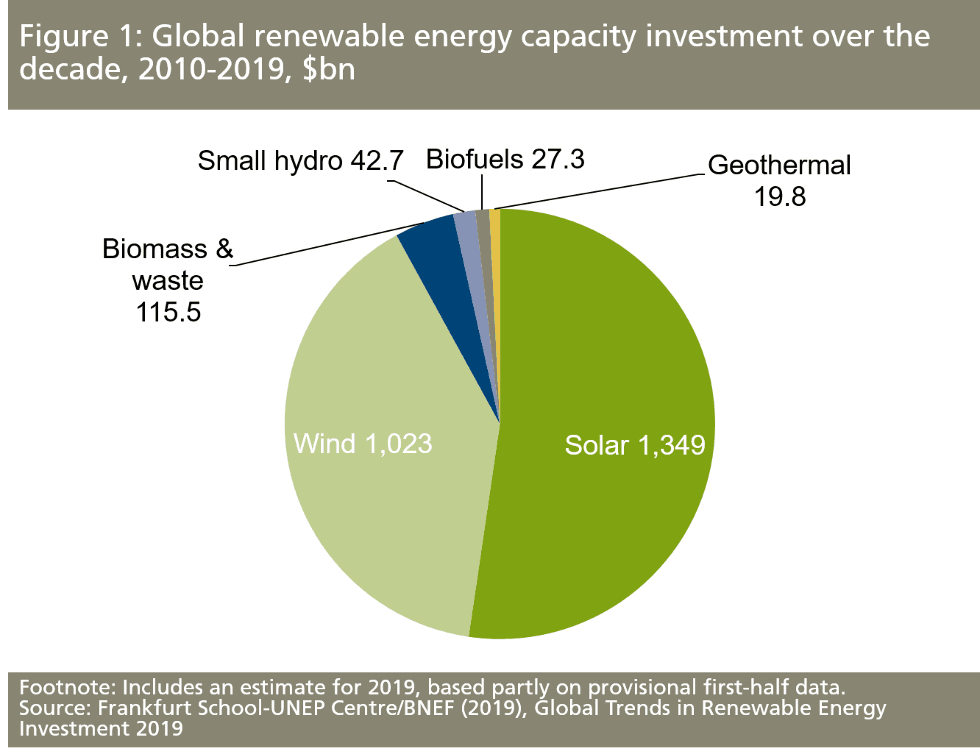
Not that the markets aren’t already moving: Another report, released last week by the UN Environment Programme, charted a quadrupling of clean energy investment in the past decade. China leads the world in such investment, with the U.S. a distant second.
When an idea moves from visionaries, entrepreneurs and advocates to investors, it has indeed arrived.
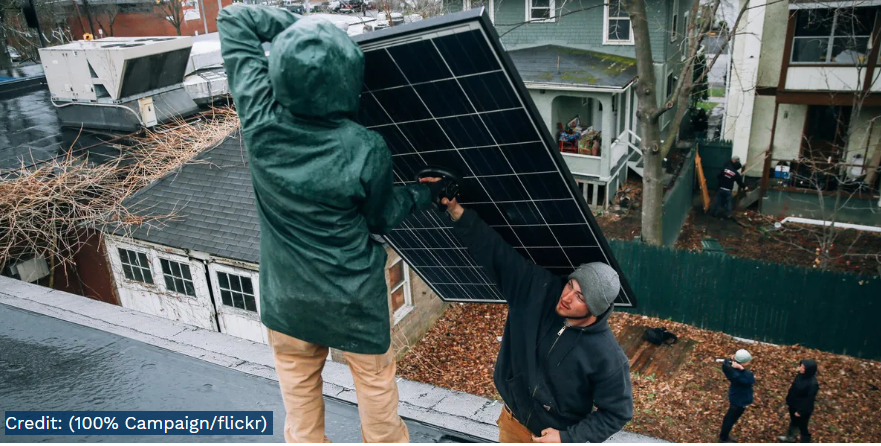
Solar arrays are covering Carolina farmland. After years’ worth of delays, offshore windmills are taking root, or are poised to jump off the drawing boards.
It’s all within reach. If you don’t believe me, believe the parting speech of the most recent Governor of Texas: “You can be proud that Texas produces more energy from wind turbines than all but five countries.”
Well, that 2015 speech was from Governor Rick Perry. Since he became Trump’s obedient Secretary of Energy, we don’t hear such encouraging words. But the wind power success remains.
Solar isn’t far behind, with some of the gaudiest progress happening on the vast roofs of big box stores, of all places.
These are victories, but they’re not even a small fraction of what’s needed for humanity to get a grip on itself. Avoiding a beef burger, taking public transit, buying a Prius, planting a few trees – these may do as much to assuage our eco-guilt as they do to fix what’s broken.
It’s late in the game. Wind, solar, storage batteries, carbon-free energy and dozens of other ideas, virtues, policies, and gadgets all need to show up – and soon.
Finally, we need to run those who deny science and block policy implications out of office and far from influence. There will be a time to engage them, and a time to ignore. A time to inform, and a time to ridicule.
Bills were closely watched amid a growing global problem
Recently retired U.S. Border Patrol Agent Christopher Harris stands next to a pit of plastic debris that got washed into an area neat Imperial Beach in San Diego on Monday, Mar 12, 2018. He says the area was recently cleaned. (Photo by Mindy Schauer, Orange County Register/SCNG)
In a setback for environmental groups, California lawmakers early Saturday morning ended the 2019 legislative session without passing two bills that would have been the most ambitious effort in the nation to reduce the massive amounts of plastic pollution that are washing into oceans, rivers and lakes around the world.
The bills, which each cleared one house but not both chambers as required, would have required companies that sell products widely found in grocery stores and fast-food restaurants to reduce plastic pollution 75% by 2030. That could have come through recycling, composting or reduction in the amount of packaging.
In addition, the bills would have required that starting in 2030, all single-use packaging and food products — including plates, straws, forks, spoons, knives, cups and bowls that are offered for sale, sold, or imported into California — would have had to be recyclable or made of materials that decompose when composted.
“It’s very disappointing that with such a clear crisis facing our oceans, the environment and the recycling infrastructure, that the governor and Legislature couldn’t get a solution past the interests of the plastics industry,” said Mark Murray, executive director of Californians Against Waste, a non-profit advocacy group. SKIP AD
Lawmakers did send a third plastics recycling bill to the governor, AB 792, by Assemblyman Phil Ting, D-San Francisco.
If signed by Gov. Gavin Newsom, that measure will require plastic beverage containers sold in California to contain 10% recycled plastic by 2021, 25% recycled plastic by 2025, and 50% recycled plastic by 2030.
“This is the most aggressive recycled-content mandate not only in the United States but in the world,” said Assemblywoman Jacqui Irwin, D-Thousand Oaks.
But the two other recycling bills, Assembly Bill 1080, by Assemblywoman Lorena Gonzalez, D-San Diego, and Senate Bill 54, by state Sen. Ben Allen, D-Santa Monica, never came up for a vote before the Senate and Assembly adjourned for the year around 3 a.m.
The bills, which were among the most high-profile environmental measures in California’s state capitol in 2019, are eligible to be considered again next year.
“We weren’t able to get the votes necessary this late hour,” said Assembly Majority Leader Ian Calderon, D-Whittier, in a tweet at 3 a.m. Saturday. “But rest assured, we will be back in January.”
Exactly why the bills’ backers couldn’t secure the votes for a landmark environmental law in a Democratic-controlled Legislature with a history of passing major environmental laws was not clear early Saturday.
Several politically prominent groups, including the wine industry, opposed the bills, saying they would have given too much power to state bureaucrats at CalRecycle, the agency that would have been charged with writing specific rules to implement the law by 2024.
Other opposition in recent weeks came from Waste Management and recycling and refuse industry companies and trade groups, particularly in Southern California, who worried that if the packaging industry was forced to create a broad new recycling system, it could cut into their businesses.
Among the supporters of the bills were most of California’s major environmental groups, including the Sierra Club, Audubon California, Natural Resources Defense Council and Oceana. The proposals also were endorsed by the California Coastal Commission, the Monterey Bay Aquarium and numerous cities, including Los Angeles, San Diego, Half Moon Bay, Alameda, and others.
Opponents included the California Chamber of Commerce, the Chemical Industry Council of California, the Grocery Manufacturers Association, the Plastic Shipping Container Institute, and other industry groups.
Critics said many of the large companies already are working toward the bills’ goals. They also called the measures overly broad and potentially costly. Eighty percent of the 25 largest consumer packaging companies have committed to making 100 percent of their packaging recyclable or compostable by 2030, industry officials noted, including the five largest — Nestle, Procter & Gamble, PepsiCo, Unilever and Anheuser Busch — which have set 2025 as their target date.
Amid the political stalemate, a relentless number of scientific studies and news accounts have established plastic pollution as a growing and serious environmental problem.
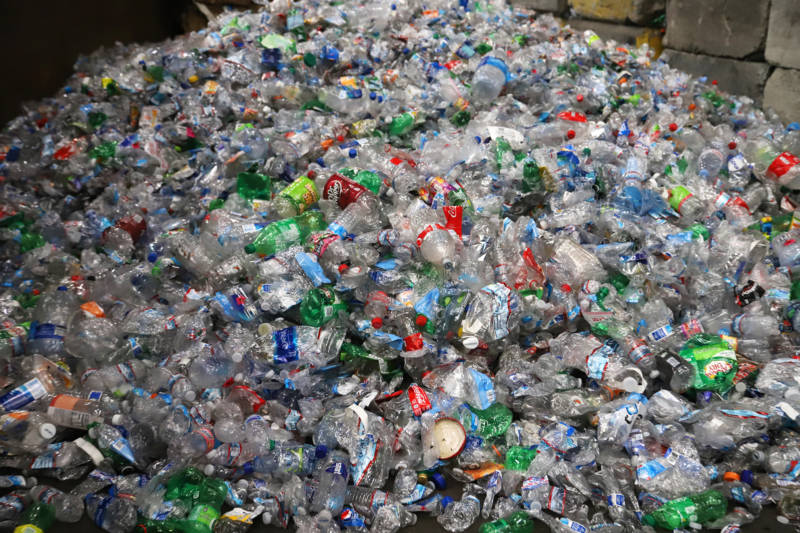
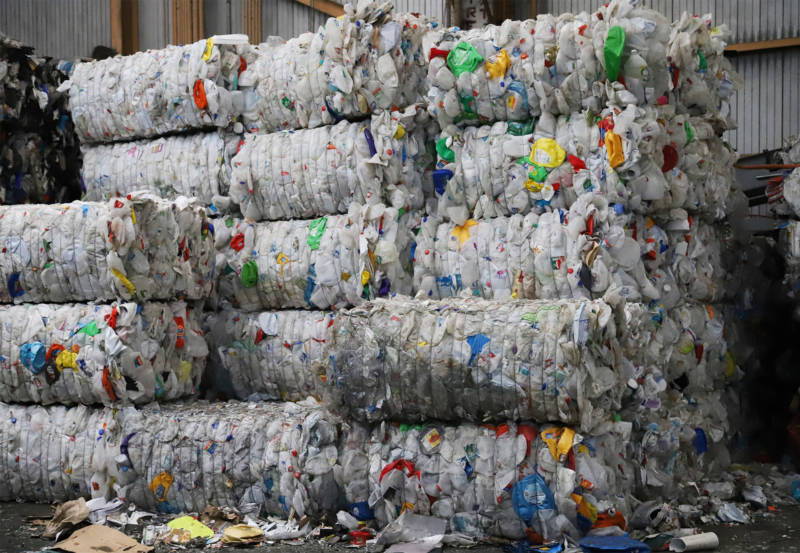
Sorted cubes of recyclable plastics numbers 3,4, 6 and 7 at Republic Services in Anaheim, CA, on Friday, May 17, 2019. The cubes of plastic will be sent to the landfill since China no longer buys this type of material. (Photo by Jeff Gritchen, Orange County Register/SCNG)
The facts are daunting. Half the plastic that has ever existed on Earth was made in the last 13 years. Only 9% of the plastic sold every year in the United States is recycled, according to the U.S. Environmental Protection Agency.
Up to 13 million metric tons of it ends up in the world’s ocean each year — the equivalent of a garbage truck-full being dumped into the sea every minute — where it kills fish, birds, sea turtles, whales and dolphins that eat it or become entangled by it.
Because plastic, which is made by petroleum products, lasts hundreds of years, it does not decompose, but instead breaks down into trillions of tiny pieces, some microscopic. Studies have shown they end up in fish, in rain, and in food that humans are consuming, including fish.
A study published in 2015 by the non-profit San Francisco Estuary Institute found that at least 3.9 million pieces of plastic pour into the bay every day from eight large sewage treatment plants — leaving the bay with higher concentration than the Great Lakes, Chesapeake Bay and other major U.S. bodies of water.
Another study published last month by the Desert Research Institute in Reno found for the first time the existence of microplastics in Lake Tahoe’s famed blue waters, with many pieces so small they are barely visible. Scientists said they don’t know for sure how the plastic particles got into the lake. But they noted it comes from synthetic clothing, Styrofoam packaging, food containers and other litter, which once broken down can be moved miles by wind, rain and snow.
In California, plastics that once were recycled now are not.
Last year, China announced that it would no longer accept large amounts of plastic and other materials recycled in the United States for processing.
That caused a huge glut of waste plastic and other materials in California and other states. A few other Asian countries began buying more, but overall prices fell. With fewer markets, some cities that collect plastic in blue recycling bins at the curb have had to pay to get rid of it. Others have put the materials into landfills.
In August, rePlanet, one of California’s largest recycling businesses, closed 284 collection centers across the state.
In this 2015 photo, plastic debris is strewn on the beach on Henderson Island in the South Pacific. (Jennifer Lavers via AP)
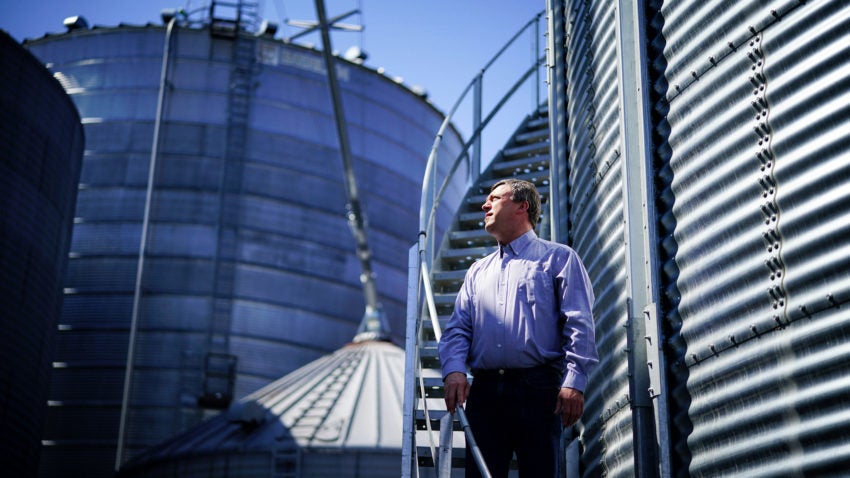
Brian Thalmann, photographed at his Plato, Minn., farm, has been selling corn for ethanol for two decades. In that time he has never seen an attack on renewable fuel like the one currently underway by Scott Pruitt, the man President Donald Trump placed in charge of the U.S. Environmental Protection Agency. –Glen Stubbe/Minneapolis Star Tribune/TNS
By Jennifer A. Dlouhy and Mario Parker, Bloomberg News September 13, 2019
WASHINGTON — President Donald Trump, seeking to tamp down political fallout in U.S. farm states essential to his re-election, has ordered federal agencies to shift course on relieving some oil refineries of requirements to use biofuel such as corn-based ethanol.
Trump and top cabinet leaders decided late Thursday they wouldn’t make changes to just-issued waivers that allow small refineries to ignore the mandates, but agreed to start boosting biofuel-blending quotas to make up for expected exemptions beginning in 2021. The outcome was described by people familiar with the matter who asked not to be named before a formal announcement could be made.
The decision was reached after a flurry of White House meetings this week on the issue, which divides two of Trump’s top political constituencies: rural Americans and the oil industry. With the move, Trump is largely siding with farmers, ethanol producers and political leaders in Iowa that have accused the president of turning his back on the industry. But the administration’s shift risks blowback in Pennsylvania and other battleground states, where blue-collar refinery workers have held rallies to push for relief from U.S. biofuel quotas they say are too expensive.
Representatives of the White House press office did not have an immediate comment.
Encouraging E15
Administration officials agreed to the broad contours of a renewable fuel plan, including further moves to encourage the use of E15 gasoline containing 15% ethanol, beyond the 10% variety common across the U.S.
Under the tentative plan, the Environmental Protection Agency will also give a 500 million gallon boost to the amount of conventional renewable fuel, such as ethanol, that must be used in 2020. A separate quota for biodiesel, typically made from soybeans, would get a 250 million gallon increase.
The EPA has drawn intense criticism for its Aug. 9 decision to exempt 31 refineries from 2018 biofuel-blending requirements. Although federal law authorizes the waivers for small refineries facing an economic hardship, the number of those exemptions has surged during the Trump administration, and biofuel producers say they are being handed out too freely.
Iowa Backlash
The backlash has been most severe in Iowa, the nation’s top producer of ethanol and the corn used in its manufacture. It is also critical for Trump’s re-election; the state twice voted for Barack Obama before voting to send Trump to the White House in 2016.
Trump’s Democratic challengers have seized on the issue, with frontrunner Joe Biden accusing the president of lying to Iowa farmers and abandoning a campaign promise to “unleash ethanol.”
However, EPA officials and oil industry leaders say the waivers haven’t harmed domestic ethanol demand and blame a glut of the product for suppressing prices. Trump’s trade war with China has exacerbated the industry’s economic challenges. As with U.S.-grown agricultural products including soybeans, ethanol also faces retaliatory tariffs in China.
Agriculture Secretary Sonny Perdue had urged the White House to rescind some of the recently issued waivers — at least those for refineries tied to “big” oil companies, according to an Aug. 20 memo obtained by Bloomberg. But EPA officials successfully argued that would be illegal.
Instead, Trump directed the agency to increase biofuel quotas to make up for the exemptions, a move that will effectively boost the burden for larger refineries that are not eligible to win waivers. The EPA will start incorporating expected exemptions into annual biofuel quotas beginning with 2021.
The blending requirements are typically set by Nov. 30 of the preceding year, except for biodiesel quotas that are set two years in advance.
As soon as this week, California lawmakers could vote on legislation aimed at dramatically reducing plastic pollution from common manufactured goods like utensils, packaging and beverage lids.
The proposed legislation, companion bills AB 1080 and SB 54, is a first-in-the-nation attempt at requiring plastic manufacturers to take responsibility for the fate of their single-use products, many of which end up in landfills and oceans. ‘The plastics industry is going to go down swinging, for sure. ‘Jennie Romer, Surfrider Foundation
The rules could have dramatic implications for the plastic industry. If the legislation passes as written, companies would need to ensure that their products are recyclable or else face having them potentially banned.
The bill is being fiercely opposed by industry groups, which see a threat to their bottom line. The industry is arguing that complying with the legislation would be unfeasible and end up as an added cost to consumers.
The proposed rules set a deadline of 2030 for several new requirements on manufacturers. First, all of California’s plastic forks, bowls and other utensils that are routinely used once and discarded must be recyclable or compostable; companies must reduce waste from plastic packaging by 75%, and single-use products made from unrecyclable material will be banned.
With recycling centers closing across the state and China no longer accepting soiled plastic from the U.S., the bill signals a growing recognition from lawmakers that California faces a recycling crisis and pervasive plastic pollution. The Legislature is also considering another plastics bill, AB 792, that would establish a minimum recycled content level in plastic bottles.
Julia Stein, a supervising attorney with UCLA’s environmental law clinic, said AB 1080 and SB 54 are attempts to comprehensively address plastic pollution, and that industry groups are concerned California could be a bellwether. “That’s what is spurring the industry opposition to this bill,” Stein said.
Business lobbying has already resulted in changes. Two of the bills’ authors, Assemblymember Lorena Gonzalez, D-San Diego, and Sen. Ben Allen, D-Santa Monica, released amendments last week meant to appease critics and reluctant lawmakers who worried the state’s recycling infrastructure could not support the additional materials resulting from the new rules, and who were concerned about a shortage of food-safe plastic.
Originally, the bill automatically banned a product if a company couldn’t show that the material met the recycling requirements. Now, CalRecycle, the state agency that will administer the new rules, must initiate a review process before a product is disallowed. The agency can also issue a penalty of up to $50,000 per day, but can give a company as long as two years to meet the regulations.
Mark Murray, executive director of the environmental advocacy organization Californians Against Waste, which lobbied for the bill, acknowledged the changes were necessary to secure votes.
“We feel really feel good about the current administration and the current department, but it does add an additional step, which will add time,” Murray said.
Plenty of Opposition
After the bills’ authors amended the legislation, the California Grocers Association dropped its opposition, the Los Angeles Times reported Friday.
Recently, a separate organization, the Grocery Manufacturers Association, signaled it was open to a compromise.
Harder plastics like milk and detergent containers are sorted, crushed and separated into bales at the Recology recycling center in San Francisco. Photo from Sept. 6, 2019 (Lindsey Moore/KQED)
The group supports recycling goals, Gruber said, “but there needs to be more discussion of California’s broken recycling system, and that needs to be fixed.”
The bill is drawing a lot of attention from outside the state, says Jennie Romer, an attorney with the Surfrider Foundation’s Plastic Pollution Initiative.
“The whole country is looking at California to see whether this is going to pass, and there’s a lot riding on it right now,” she said. “The plastic industry is going to go down swinging, for sure.”
But Mike Gruber, vice president of government affairs for the group, said it’s unhappy with the recent changes and opposes the bill. “The size and the scope of the bill have dramatically increased,” he said. “We have major concerns about the state’s ability to implement it.”
The list of the bill’s supporters includes Sierra Club California, Natural Resources Defense Council, SEIU, Ocean Conservancy, and many other public advocacy groups, as well as city agencies and governmental bodies like the San Francisco Department of the Environment and the Los Angeles City Council.
Supporters say the plastic industry isn’t always arguing in good faith, and that some groups are being deceptive.
Murray, of Californians Against Waste, called out one industry-backed organization with a disingenuous name as an example.
In recent months, Californians for Recycling and the Environment has circulated social media posts with links to a web page promoting the idea that the legislation “threatens to negatively impact the availability, affordability, and quality of many products California families rely on for our health and well-being.” The web page includes graphics of baby and pet food.
“That’s a bridge too far,” Murray said. “In terms of trying to make an argument. Were we unsafe before we didn’t have all this plastic packaging?”
The group’s state lobbying records names its president as Philip Rozenski, who is also the vice president of public affairs for Novolex, a U.S. manufacturer of plastic packaging.
Rozenski also served as the policy lead for another industry-backed group with a name connoting sustainability. The American Progressive Bag Alliance raised $6.1 million in an unsuccessful fight against a California ban on plastic bags in 2016, according to the Sacramento Bee.
An email request to Novolex to speak with Rozenski was answered by a spokesperson for Californians for Recycling and the Environment. Micah Grant said the bill’s recycling targets are “simply infeasible” and that the Legislature should “hit the pause button.”
Grant also referred KQED to a member of the group, William Smart, president of the Southern California Chapter of the Southern Christian Leadership Conference.
Smart said lawmakers should “slow down” and examine the impacts of the regulations on communities of color.
“African Americans use a lot of these products, and we want to make sure good alternatives are in place,” he said.
Eric Potashner, director of strategic affairs for Recology, a San Francisco-based waste management company, which lobbied for the legislation, said the plastics industry was “throwing a lot of spaghetti at the wall and seeing what sticks.”
Plastic Pollution
The plastic problem extends well beyond the state. Right now, 335 million tons — that’s 670 billion pounds — of plastic are produced each year, and only about 9% is recycled, according to sources compiled in the bill.
A UC Santa Barbara study conducted in 2017 found that half of all the plastic ever produced was manufactured in the previous 13 years.
Plastic is an incredibly durable material. A plastic fork, for example, that makes its way into the ocean will break down over time into bits of confetti-sized-or-smaller scraps of plastic. This microplastic can eventually make its way into the food chain.
More than a million seabirds and 100,000 dolphins, seals and other marine mammals are killed every year due to plastic debris in the ocean, according to the United Nations.
This year, researchers found Monterey Bay, long considered to be an environmental success story, full of microplastic. Researchers also found scraps of the stuff in Lake Tahoe.
And according to one study, the average person in the U.S. consumes between 74,000 and 121,000 particles of plastic contained in food and beverages every year.
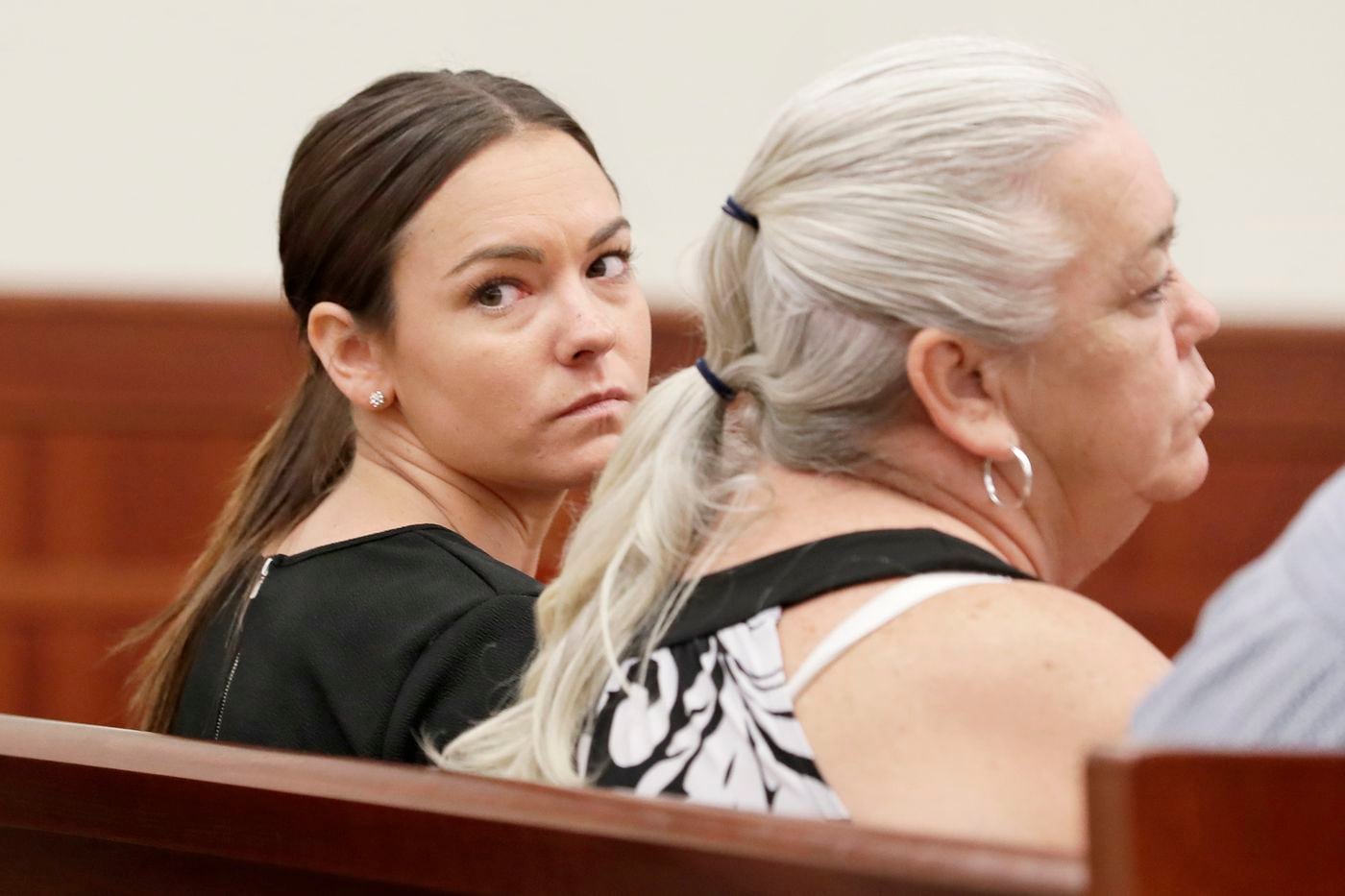
Nora Kenney appears in Sea Isle City municipal court. Nora Kenney, the daughter of Philadelphia Mayor Jim Kenney, and Tara Tolomeo, the daughter of North Wildwood councilwoman Kellyann Tolomeo both plead guilty to the charge of creating a disturbance. ELIZABETH ROBERTSON / STAFF PHOTOGRAPHER
Amy S. Rosenberg, reports for the Philadelphia Inquirer Updated: September 12, 2019- 6:20 PM
SEA ISLE CITY, N.J. — Nora Kenney, daughter of Philadelphia Mayor Jim Kenney, and Tara Tolomeo, daughter of North Wildwood Councilwoman Kellyann Tolomeo, pleaded guilty Thursday to creating a disturbance during a fight on a North Wildwood street corner last month.
The two women were each fined $200 plus $33 in court costs by Sea Isle City Municipal Judge Vincent Morrison.
The case was moved out of North Wildwood because of the conflict with Tolomeo’s mother, who accompanied her daughter to court Thursday.
Kenney was not represented by an attorney and was accompanied by her mother, Maureen, and by Marty O’Rourke, a Philadelphia media consultant who is a spokesperson for her father’s campaigns. He said he was there as “a family friend.”
“She’s sorry,” O’Rourke said before the hearing, sitting with Kenney in the back row. “It’s an unfortunate incident.”
Their pleas were to offenses that were reduced from the original complaint of disorderly conduct, the prosecutor, Tom Rossi, said.
Kenney, 25, had also filed a related complaint against a third woman, Mary Pat Parson. That complaint was dismissed by the judge after Kenney declined to continue with the complaint and Parson agreed not to have any further contact with Kenney. Rossi said Parson’s involvement in the dispute was basically that she “had to put her two cents in.”
Tolomeo, 27, was represented by an attorney, Scott DeWeese, who declined any comment, as did Tolomeo and her mother.
ELIZABETH ROBERTSON / STAFF PHOTOGRAPHERTara Tolomeo (left) and her mother, North Wildwood councilwoman Kellyann Tolomeo, look around as they wait to appear in Sea Isle City municipal court. Nora Kenney, the daughter of Philadelphia Mayor Jim Kenney, and Tara Tolomeo, the daughter of North Wildwood Councilwoman Kellyann Tolomeo both plead guilty to the charge of creating a disturbance.
The judge ordered the fines paid in North Wildwood by Monday.
The fight happened around 1:40 a.m. Sunday, Aug. 11, in a busy nightclub district of North Wildwood and was witnessed by two local police officers, who were also present in Sea Isle for the hearing. Police body camera footage shows the aftermath of the fight, as both women, in handcuffs, separately express concern about their politician parents.
“My mom’s gonna freak,” Tolomeo says.
“Listen, I can’t let people see my face,” Kenney says as Officer Victor Rossi leads her in handcuffs down a crowded sidewalk. “My dad is the mayor of Philadelphia.”
NJ Transit’s board of directors awarded more than $50 million in contracts Thursday to help implement a rail-safety system, as environmental advocates pressed them for a commitment to totally transform the agency’s bus fleet to electric power.
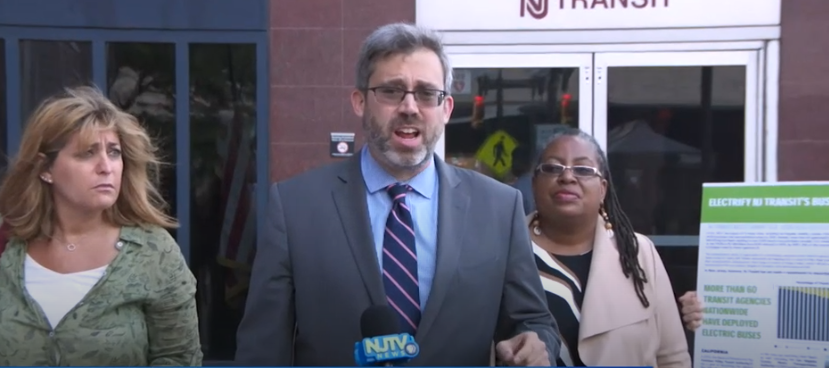
“It is loud, it is dirty, and it is unhealthy,” said Doug O’Malley, director of Environment NJ, of the agency’s existing fleet of buses, mostly powered by diesel engines. “And the reason we are joined here today is cause we are calling on NJ Transit to join the rest of the country to make a commitment to electrify its full bus fleet by 2040. This is a goal more than 60 other transit agencies have started to take.”
Buses roared past as the critics stood on the corner next to agency’s headquarters at Penn Plaza for a press conference before heading inside for the public portion of the meeting. They noted vehicles are responsible for nearly half of greenhouse-gas pollution in New Jersey, and that Newark is a city where a federal study showed one in four kids suffers from asthma.
“And it’s quite unfortunate that NJ Transit does not understand the importance of ensuring that they electrify their buses,” said Kim Gaddy of Clean Water Action. “We need immediate action now. This is an environmental justice health crisis.”
NJ Transit is buying eight electric buses for a Camden pilot program in 2021, the agency says, noting that electric vehicles costs roughly $700,000 more than a diesel bus. Advocates say the state would reap savings in maintenance and health-care costs.
NJ Transit’s current capital budget includes $100 million to buy several hundred buses, as it updates its fleet of 1,200 vehicles.
CEO Kevin Corbett says he supports going electric in concept, but he’s unsure about charging an entire fleet.
“It’s one thing if it’s in your garage — it’s when you’re talking up to 500 buses at a depot that’s an incredible electric load, [when] you look at the charging times, etc,” he said.
State Sen. Loretta Weinberg said she supports the call for an all-electric bus fleet, and said NJ Transit should be able to complete the changeover by 2040. But she said the agency had to make an increased commitment to buy electric buses in the near future. She also noted that mass-transit agencies elsewhere in the country have a shorter timeline.
The contracts awarded by the board Thursday were for its Positive Train Control safety system, which must be in place by a 2020 deadline set by the federal government. NJ Transit has spent $302 million on the system thus far.
Transit advocates demanded more transparency about the process.
“What are we getting? What’s been done?” said Steve Thorpe. “Since the new administration has taken over, it has become more and more opaque here. So opaque here that I feel like my cataract surgery never helped me. It’s really bad.”
Others made note of the approaching federal deadline to get the safety system up and running.
“But the clock is ticking,” said Randy Glucksman, a member of the Permanent Citizens Advisory Committee of New York’s Metropolitan Transportation Authority. “You have only 15 and a half months to get the job completely done or else the agency will face the potential of massive fines.”
Riders also complained to board members about trains still out of service — mainly due to a chronic lack of engineers. NJ Transit has recruited about 100 new engineers and has seven training classes running concurrently. Experts say the courses are extremely difficult, and the drop-out rate usually runs high.
“You’re talking about probably 1,000 pages that [have] to be digested, in some cases memorized and clearly understood by every locomotive engineer in order to operate safely,” said Michael Weinman, managing director of PTSI Transportation.
Critics have accused NJ Transit of letting struggling students stay in the program despite multiple test failures, because of the dire need for more engineers.
Corbett says that’s not the case.
“We’re taking, what I view as, a more progressive approach — without any way lowering the standards,” he said. “That once we get them in, we screen them, we want to see.”
Corbett maintained that the testing for an engineer is more complicated than that for an airline pilot, and that the agency is helping the trainees meet the standards.
“So we anticipate a certain amount of fallout from a class,” he said. “But in no ways are we cutting, compromising the standards. We do want to help those who are as they go along, to get the coaching that they need to make sure they do pass.”
NJ Transit says it hopes to graduate the new engineering classes within the next four months, which will be the key to lowering the number of train cancellations.