Major development planned for 100 acres around Philadelphia Union Stadium

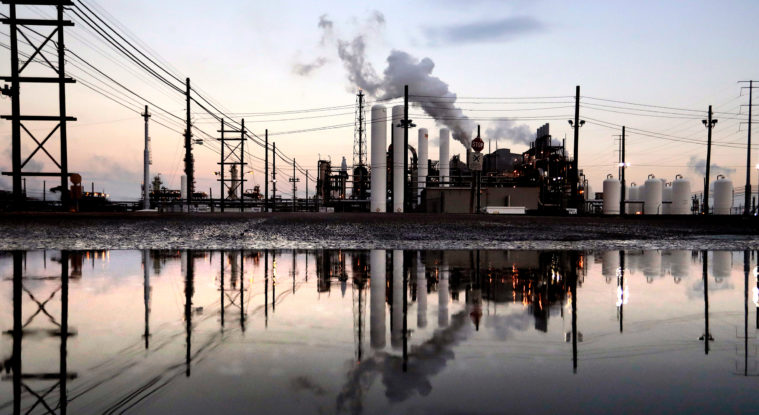
The Riverfront Alliance of Delaware County is reviewing proposals to develop the land around Talen Energy Stadium in Chester, Pa.
The Riverfront Alliance of Delaware County is reviewing proposals to develop the land around Talen Energy Stadium in Chester, Pa. JOHN GEORGE

John George and Natalie Kostelni Philadelphia Business Journal
May 2, 2019

A renewed effort to liven up the area around Talen Energy Stadium in Chester is underway.

The Riverfront Alliance of Delaware County, working with the Philadelphia Union soccer club that calls the stadium home, sent out a request for proposals to about two dozen qualified consultants asking them to prepare a master plan for more than 100 acres of the Delaware River’s Chester waterfront. 

Tom Shoemaker, president of the Riverfront Alliance and market president for TD Bank, said it received proposals from 10. Shoemaker said those proposals are now being reviewed, and a smaller group of finalists will be invited back to make more formal proposals.

Like this? Click to receive free updates

“These are national firms that have developed the areas around stadiums in Baltimore, Pittsburgh, Brooklyn and Wilmington,” he said. “We’re very excited. This time is right for something like this, for creating a 365-day-a-year destination along the waterfront. It can be done. It’s been done all over the country. The assets we have are as good or better than most of the other places where a project like this has been done.… By the end of the summer we hope to have our proposals in hand from the finalists.”

About half of the 100 acres to be developed are owned or controlled by Keystone Sports and Entertainment, the parent company for the Philadelphia Union, which has spent the past few years acquiring about a mile of waterfront property around its stadium.

“No other sports team in the Philadelphia area has that,” said Tim McDermott, the Philadelphia Union’s chief business officer. “It gives us the opportunity to do something really unique to transform Chester.”

McDermott said the Union’s vision is create a sports and entertainment complex around the soccer stadium that could include a multi-sports facility with indoor and outdoor fields, an amphitheater, a rock climbing wall and possibly a venue for esports. That, he said, could lead to new commercial and residential development in the area.

The goal of the Union and the Riverfront Alliance is to make the area, which includes the 18,500-seat soccer stadium and 400,000-square-foot Wharf office building recently acquired by Keystone Sports, more than just a place to watch a soccer match or go to work.

Talen Energy Stadium, previously known as PPL Park when its opened in June 2010, cost $122 million to build. Part of the stadium’s development was covered by public funds with $87 million allocated by the state, county, city of Chester, and the Delaware River Port Authority to support what was envisioned as a major economic revitalization effort for Chester.

In addition to the soccer stadium, the original plans also called for 180 townhouses, 225 apartments, 42,000 square feet of retail space, a 200,000-square-foot convention center, 435,000 square feet of new office space and structured parking for 1,350 vehicles. With the exception of the soccer stadium, none of the other components of the plan ever materialized as a result of the prolonged recession and economic downturn that began in late 2007.

Read the full story

Major development planned for 100 acres around Philadelphia Union Stadium Read More »

Baltimore’s 51st mayor spends his first full day on the job 527 miles away


Yvonne Wenger Contact Reporter  The Baltimore Sun

DETROIT — Mayor Bernard C. “Jack” Young’s phone rang over and over at breakfast Friday — his first full day as Baltimore’s chief executive — with calls from the city’s ministers, offering him prayers and words of encouragement and looking for reassurance he won’t change in the face of power and pressure.

“I am going to continue to respond,” Young, 64, told an East Baltimore minister, pledging that his leadership style as the city’s 51st mayor will be the same as it has been for the last decade as City Council president.

“I probably can’t answer all the phone calls that come through, but I will continue to respond and do what I can do. That’s not going to stop. I am God’s man; you’re right,” he told the pastor.

The kind words from Baltimore reached Young at an economic development conference in Detroit, where others attending the National Organization of Black County Officials event greeted Young with applause and handshakes when he was introduced at a morning session as Baltimore’s new mayor. Conference organizers speedily updated his nametag.

Helen Holton, a former Democratic councilwoman from West Baltimore and director of the National Organization of Black County Officials, said at the conference that Young will be a stabilizing force.

“We don’t always agree, but in the end we still get along because of what we hold in common: a better Baltimore,” Holton said. “What do we have to do to move Baltimore forward? We’re the kind of people, we don’t care what the world says about Baltimore, because we know a different Baltimore.

“And Jack Young at the helm as mayor is probably the best news we can get right about now.”

Full coverage: Baltimore Mayor Pugh’s scandal over ‘Healthy Holly’ books »

Young reiterated that he will only be mayor until the 2020 election, in which he will run for his former job as council president.

While in the city’s top job, Young said he wants to chart a course for the Baltimore Police Department that leads to fewer killings, carjackings, robberies and less violent crime all around. Last year, 309 people were killed in the city.

The new mayor said he supports Police Commissioner Michael Harrison, who relocated from New Orleans this year. He is waiting for Harrison to finish building his leadership team and finalize his strategy for the job, but Young said he knows Harrison’s success will rest on the public’s willingness to break with Baltimore’s “stop snitching” culture. Young said he wants to see whether the city and police can do more to protect witnesses and allay their fears.

“Every citizen in Baltimore has to make sure when crime is happening in their neighborhoods that they report it,” Young said. “I do understand some of the frustrations. People really do want to come forward, but they’re saying, ‘What happens to me and my family if we come forward? Who is going to protect us?’”

Read the full story

Related news story:
Baltimore Mayor Catherine Pugh resigns amid book scandal, health problems 

Baltimore’s 51st mayor spends his first full day on the job 527 miles away Read More »

International Compost Awareness Week! -Cool the Climate!


Creating community compost piles

From the NY Solid Waste & Recycling Newsletter

International Compost Awareness Week! -Cool the Climate!

May 5 to May 11, 2019
Join the NY State Department of Environmental Conservation as we highlight the importance of compost for soil health and climate resiliency.

Compost returns organic matter and nutrients to the soil, increases water holding capacity and provides resistance to drought and disease, among many other benefits.

Composting at Home Making compost takes some care; add greens, browns, water and air. Composting at home allows you to manage your organic material (yard trimmings and food scraps) right in your own backyard. Composting at home is as easy as building your own composting bin, buying one, or composting inside with a worm bin. Use your homemade compost to add valuable nutrients to your garden beds.

Learn more about home composting

If you’re interested in composting your food scraps, but don’t have the space or desire to do it yourself, look for an organics collection service or food scraps drop-off spots in your community.

Find a Home Composting Workshop Near You!
The New York State Association for Reduction, Reuse and Recycling’s Organics Council is promoting a series of events that will help you reduce wasted food and start composting at home.
 Find a home composting workshop near you!

What is New York doing?
Governor Cuomo declared the week of May 5 – May 11 as
New York State Compost Awareness Week. |

New York State recently passed Food Donation and Food Scraps Recycling Legislation. Starting January 1, 2022, large generators of food scraps (generating an annual average of two tons per week or more) must separate and donate edible food and recycle all remaining food scraps if within 25 miles of an organics recycler. Composting helps achieve New York’s progressive waste reduction goals as outlined in the New York State Solid Waste Management Plan, Beyond Waste

There are more than 190 regulated compost facilities in NYS creating jobs, business opportunities and healthy local soils.

Young Professional Webinar Series – The New Composter

There is a groundswell of young entrepreneurs tackling the collection and recycling of food scraps. In the first of a two part webinar series, join the U.S. Composting Council May 7 from 4 p.m. to 4:45 p.m. to hear from Susan Thoman (Compost Manufacturers Alliance) and Gary Nihart
(Atlas Organics) on their journey, advice and lessons on starting a business and finding your place in the market for success. Register Now!

International Compost Awareness Week! -Cool the Climate! Read More »

Maine becomes first in the nation to enact statewide foam ban

Cody Ellis reports for WasteDive

With Gov. Janet Mills’ Tuesday signature, Maine became the first state in the nation to legislate a statewide ban on polystyrene foam containers. LD 289 prohibits the sale of polystyrene foam in the state effective Jan. 1, 2021.

The ban includes packages and service ware wholly or partially made of polystyrene foam. It does not grant exemptions for meat or egg containers, but does include an exemption for containers designed to process or ship seafood. The ban also includes plastic beverage stirrers served at “a facility or function” of the state or “political subdivisions” in Maine.

The law covers businesses and restaurants but includes exemptions for hospitals and “meals on wheels” type operations. The ban is punishable by a civil violation with a fine not to exceed $100.

Maine is one of the only states to impose statewide bans on any single-use item — California, New York, and Hawaii (at the county level) also have statewide bans on single-use plastic bags. While some municipalities and counties have enacted bans on polystyrene foam and plastic bags, few states have successfully taken up the mantle.

However, that could change. Many states — including MassachusettsColoradoMarylandHawaii, and Oregon — are looking at bans on polystyrene foam, all in various stages of approval and debate.

Both houses of the Maryland legislature, which has finished its 90-day regular session, approved a statewide foam ban, but Gov. Larry Hogan has not committed to signing the bill. Hogan has two more bill signings scheduled for May but has not yet confirmed what legislation will be included.

Read the full story

Maine becomes first in the nation to enact statewide foam ban Read More »

Government funding for more efficient home and building technologies

News release from the Department of Energy

WASHINGTON, D.C. – Today, the U.S. Department of Energy (DOE) announced up to $33.5 million for early-stage research and development of advanced building construction techniques to reduce energy bills.  

Together, America’s 118 million homes and 5.6 million commercial buildings account for approximately 40% of the nation’s total energy demand and use 75% of its electricity. Furthermore, about half of America’s homes and commercial buildings were built before 1980 when most of today’s more efficient products and building construction practices did not yet exist.

The Advanced Building Construction with Energy-Efficient Technologies & Practices (ABC) Funding Opportunity Announcement (FOA) aims to develop deep energy retrofit and new construction technologies that tackle a combination of envelope, heating, cooling, water heating, and ventilation issues.

The FOA addresses three areas:

  • Topic 1 – Integrated Building Retrofits: Focuses on integrating technologies to achieve more affordable, deep energy savings in existing buildings (e.g. light and durable highly insulated panels, combined heating and cooling, and hot water systems). Up to 75% energy reduction is sought for major building loads such a space heating and cooling, water heating, and ventilation.  
  • Topic 2 – New Construction Technologies: Focuses on building design, construction, and installation (e.g., off-site manufacturing, robotics, digitization, automation, and improved modeling) to improve affordability, scalability, and performance of energy efficient building systems and methods. The topic seeks solutions that lead to construction of homes and buildings that are 50% more efficient compared to current code. This topic has a special emphasis to make mobile homes significantly more efficient while keeping the same initial cost.
  • Topic 3 – Advanced Technology Integration: Focuses on field validation of new innovative technologies and building practices, workforce training, and service delivery methods suited to regional and/or local needs, including those related to building stock, regional climates and grid characteristics.

Concept papers are due on June 10, 2019 by 5:00 p.m. ET to be eligible to submit a full application. For more information on this FOA please visit HERE. Questions regarding the content of this FOA must be submitted to ABC2019FOA@ee.doe.gov. For more information on the Office of Energy Efficiency and Renewable Energy’s Building Technologies Office visit the website HERE.

Government funding for more efficient home and building technologies Read More »

Enviros say pipeline through Raritan Bay would prolong fossil fuel use, discourage cleaner energy sources

New York’s and New Jersey’s permitting agencies are scrutinizing a project that would bring a 26-mile gas pipeline through the state and into Raritan Bay. (Russ DeSantis photo for NJ.com )

By Michele Langa – Star Ledger guest columnist

As New Jersey prudently shifts energy policy to focus on renewable sources like wind and solar, and away from less healthy fossil fuels, proposals still come forward to build “pipelines to the past” that serve no good purpose and take vital dollars away from infrastructure investments in today’s emerging energy sources.

One example is the proposed Northeast Supply Enhancement (NESE) Project being pushed by Williams-Transco, an Oklahoma-based gas pipeline company. The project would ultimately cross Raritan Bay on the way to providing New York City with twice as much natural gas as it could possibly use.

In an unsurprising development, the Federal Energy Regulatory Commission (FERC) on Jan. 25 issued a final Environmental Impact Statement for the NESE project that repeats the unfounded conclusions of an earlier draft. FERC is known for rubber-stamping gas pipeline applications, so there was no reason to expect the agency would do anything other than take Williams-Transco’s word that proposed mitigation activities would avoid the possibility of significant adverse environmental impacts.

The reality is that these 26 miles of pipeline and a new compressor station in New Jersey threaten water, wildlife and the safety and health of communities – concerns raised by elected officials, federal and state agencies, scientists and residents in comments to the federal agency. All this, for a pipeline that a new report by an independent New York energy expert states, “is completely unnecessary and would unwisely lock the State of New York into a pipeline gas market expansion plan that is not in the State’s best interest.”

Meanwhile, New York’s and New Jersey’s permitting agencies are scrutinizing the project. Gov. Andrew Cuomo, in his State of the State address, committed to a Green New Deal for New York – 100 percent carbon-free energy by 2040. Gov. Phil Murphy has committed New Jersey to 100 percent clean energy by 2050.

How the states’ permitting agencies decide on the NESE project will affect the ability to reach these clean energy goals. A decision by New York and New Jersey agencies to reject the NESE permit applications by holding Williams fully accountable to New York and New Jersey’s strict environmental standards is an important step toward fulfilling both states’ commitments to a carbon-free future.

Read the full story

Enviros say pipeline through Raritan Bay would prolong fossil fuel use, discourage cleaner energy sources Read More »