A firefighter is seen dousing the facade of the Notre-Dame de Paris Cathedral April 15, 2019, in Paris.Photographer: Stephane de Sakutin/AFP/Getty Images
Bryce Baschuk for Bloomberg Environment
International chemical regulators unanimously approved a global ban on the use of perfluorooctanoic acid (PFOA), a toxic chemical used to manufacture nonstick and stain-resistant coatings in clothing, fast-food wrappers, carpets, and other consumer and industrial products.
Participating governments in the Stockholm Convention on Persistent Organic Pollutants agreed to list the chemical in Annex A of the treaty during this week’s United Nations Conference of the Parties meeting in Geneva.
“It’s probably the biggest Stockholm listing for ages,” said Charlie Avis, spokesman for the Basel, Rotterdam, and Stockholm Conventions in Geneva.
Under Annex A of the Stockholm Convention, governments must take measures to “eliminate the production and use” of PFOA, which is linked to diseases, including kidney cancer, testicular cancer, thyroid disease, ulcerative colitis, and pregnancy-induced hypertension.
The majority of the countries that approved the May 3 decision have 12 months to fully implement the ban. Some members of the Stockholm Convention are permitted to have a longer implementation time frame to complete their domestic ratification process.
Attorney Greg Gianforcaro said he will release the list Monday at an afternoon press conference where he will announce that an unnamed victim of sexual abuse is filing a lawsuit against New Jersey’s five Catholic dioceses alleging they created a “public hazard” by not naming all accused priests.
Gianforcaro, who has represented multiple alleged priest abuse victims, said he will release a report with the 300 priests and their histories at a 1 p.m. press conference in Elizabeth.
“I think the public was shocked by the prior list of 188 priests and I think they should have been shocked,” Gianforcaro said. “That list was woefully inadequate.”
Last month, Gianforcaro and the Minnesota-based law firm Jeff Anderson & Associates, teamed up to release the names of 52 former Boy Scout leaders from New Jersey who allegedly sexually abused boys and were included in the organization’s so-called “Perversion Files.”
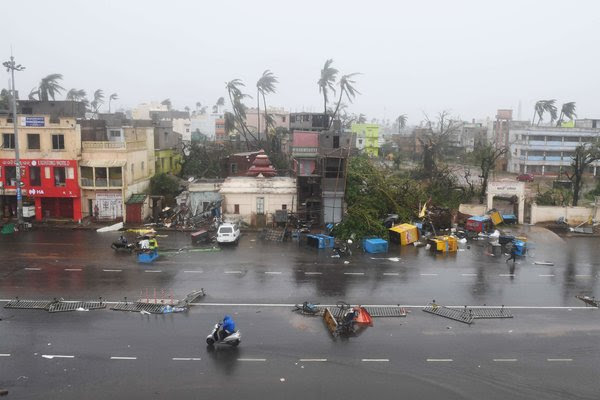
The storm washed out countless homes and farms, but by Saturday evening local time, fewer than 20 deaths had been reported in India. Above, destruction in Puri, India. That’s because India and neighboring Bangladesh embarked on a massive evacuation, whisking more than a million people to safety in each country. It was a meticulous plan that they had been perfecting for 20 years.
A renewed effort to liven up the area around Talen Energy Stadium in Chester is underway.
The Riverfront Alliance of Delaware County, working with the Philadelphia Union soccer club that calls the stadium home, sent out a request for proposals to about two dozen qualified consultants asking them to prepare a master plan for more than 100 acres of the Delaware River’s Chester waterfront.
Tom Shoemaker, president of the Riverfront Alliance and market president for TD Bank, said it received proposals from 10. Shoemaker said those proposals are now being reviewed, and a smaller group of finalists will be invited back to make more formal proposals.
“These are national firms that have developed the areas around stadiums in Baltimore, Pittsburgh, Brooklyn and Wilmington,” he said. “We’re very excited. This time is right for something like this, for creating a 365-day-a-year destination along the waterfront. It can be done. It’s been done all over the country. The assets we have are as good or better than most of the other places where a project like this has been done.… By the end of the summer we hope to have our proposals in hand from the finalists.”
About half of the 100 acres to be developed are owned or controlled by Keystone Sports and Entertainment, the parent company for the Philadelphia Union, which has spent the past few years acquiring about a mile of waterfront property around its stadium.
“No other sports team in the Philadelphia area has that,” said Tim McDermott, the Philadelphia Union’s chief business officer. “It gives us the opportunity to do something really unique to transform Chester.”
McDermott said the Union’s vision is create a sports and entertainment complex around the soccer stadium that could include a multi-sports facility with indoor and outdoor fields, an amphitheater, a rock climbing wall and possibly a venue for esports. That, he said, could lead to new commercial and residential development in the area.
The goal of the Union and the Riverfront Alliance is to make the area, which includes the 18,500-seat soccer stadium and 400,000-square-foot Wharf office building recently acquired by Keystone Sports, more than just a place to watch a soccer match or go to work.
Talen Energy Stadium, previously known as PPL Park when its opened in June 2010, cost $122 million to build. Part of the stadium’s development was covered by public funds with $87 million allocated by the state, county, city of Chester, and the Delaware River Port Authority to support what was envisioned as a major economic revitalization effort for Chester.
In addition to the soccer stadium, the original plans also called for 180 townhouses, 225 apartments, 42,000 square feet of retail space, a 200,000-square-foot convention center, 435,000 square feet of new office space and structured parking for 1,350 vehicles. With the exception of the soccer stadium, none of the other components of the plan ever materialized as a result of the prolonged recession and economic downturn that began in late 2007.
DETROIT — Mayor Bernard C. “Jack” Young’s phone rang over and over at breakfast Friday — his first full day as Baltimore’s chief executive — with calls from the city’s ministers, offering him prayers and words of encouragement and looking for reassurance he won’t change in the face of power and pressure.
“I am going to continue to respond,” Young, 64, told an East Baltimore minister, pledging that his leadership style as the city’s 51st mayor will be the same as it has been for the last decade as City Council president.
“I probably can’t answer all the phone calls that come through, but I will continue to respond and do what I can do. That’s not going to stop. I am God’s man; you’re right,” he told the pastor.
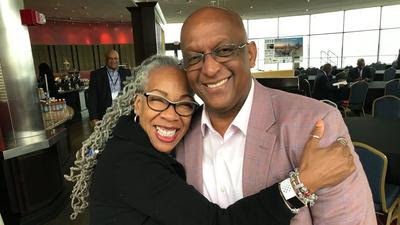
The kind words from Baltimore reached Young at an economic development conference in Detroit, where others attending the National Organization of Black County Officials event greeted Young with applause and handshakes when he was introduced at a morning session as Baltimore’s new mayor. Conference organizers speedily updated his nametag.
Helen Holton, a former Democratic councilwoman from West Baltimore and director of the National Organization of Black County Officials, said at the conference that Young will be a stabilizing force.
“We don’t always agree, but in the end we still get along because of what we hold in common: a better Baltimore,” Holton said. “What do we have to do to move Baltimore forward? We’re the kind of people, we don’t care what the world says about Baltimore, because we know a different Baltimore.
“And Jack Young at the helm as mayor is probably the best news we can get right about now.”
The new mayor said he supports Police Commissioner Michael Harrison, who relocated from New Orleans this year. He is waiting for Harrison to finish building his leadership team and finalize his strategy for the job, but Young said he knows Harrison’s success will rest on the public’s willingness to break with Baltimore’s “stop snitching” culture. Young said he wants to see whether the city and police can do more to protect witnesses and allay their fears.
“Every citizen in Baltimore has to make sure when crime is happening in their neighborhoods that they report it,” Young said. “I do understand some of the frustrations. People really do want to come forward, but they’re saying, ‘What happens to me and my family if we come forward? Who is going to protect us?’”