Will Bredderman reports for Crain’s New York Business
The ritual struggle over the state’s fiscal plan ended this weekend—with a $175 billion result.
Who budged on the budget, and who’s in the money? Read on.
WINNERS
1. Campaign consultants: That giant “cha-ching” heard Sunday morning from Buffalo to Montauk was the sound of dollar signs popping into the eyes of political strategists, pollsters and palm-card wizards. The budget committed $100 million annually toward public financing of state elections, devolving responsibility for designing such a system on an as-yet unnamed commission. Presumably the panel will create something like the city’s program, which matches every dollar from small contributors with $8 from taxpayers.
The argument for matching funds is that it reduces the influence of the rich and allows for outsiders to upset the status quo. What it seems to actually do is encourage hopeless or spurious candidacies and enrich political professionals without shaking the power of entrenched incumbents.
Recall this year’s 17-candidate dogpile of public advocate hopefuls. No more than four contenders were viable; the remainder were vanity campaigns or opportunities for the ambitious to build name recognition for future races at public expense. The Campaign Finance Board ladled out $7.1 million in matching funds, much of which fed the lobbyist-consultant-adviser-strategist complex that operates out of the average voter’s sight.ADVERTISING
The all-but lawless state races are nobody’s democratic ideal, but last year saw more than a dozen legislators defeated in either primary or general elections. By contrast, in 2017—when every city office went up for bid—just one sitting official lost her job to an upstart challenger. It seems the public finance system does not compensate for the structural advantages of incumbency.
It’s possible matching funds have reduced the influence of deep-pocketed interests. But the past decade of city politics has also witnessed the astounding expansion of independent expenditures, which let unions and business interests spend unlimited amounts on materials promoting the candidate of their choosing. These IEs too require an internal infrastructure of experts and advisers, and thus also help pay for the summer homes and college savings accounts of the consultant class.
By Gianluca Mezzofiore, CNN Updated 0954 GMT (1754 HKT) April 1, 2019
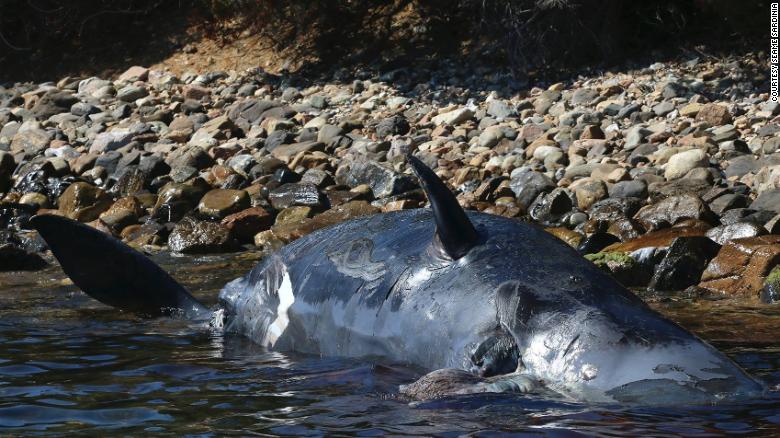
(CNN)The carcass of a pregnant sperm whale that washed up in Sardinia, Italy, last week had 22 kilograms (49 pounds) of plastic in its stomach, and was carrying a dead fetus, the country’s environment minister and a marine life non-profit organization said.Luca Bittau, president of the SeaMe group, told CNN the beached mammal’s remains contained “garbage bags … fishing nets, lines, tubes, the bag of a washing machine liquid still identifiable, with brand and barcode … and other objects no longer identifiable.“
“She was pregnant and had almost certainly aborted before (she) beached,” he said. “The fetus was in an advanced state of composition.”
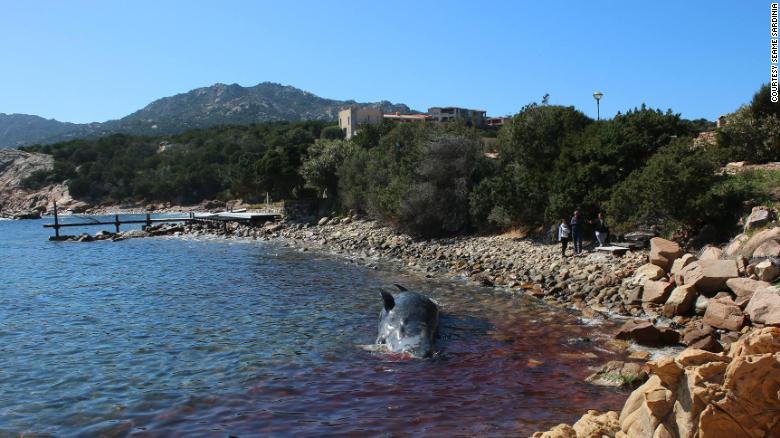
The whale had 22 kilograms (49 pounds) of plastic in its stomach.The dead animal, which was eight meters (26 feet) long, washed up on a beach in the Sardinian tourist hotspot of Porto Cervo.Bittau said the cause of death would be known after histological and toxicological examinations carried out by veterinarians in Padua, northern Italy.
Sergio Costa, Italy’s environment minister, said in a Facebook post: “Are there still people who say these are not important problems? For me they are, and they are priorities.”
The dead animal was found in waters off the Sardinian tourist hotspot of Porto Cervo.
“We’ve used the ‘comfort’ of disposable objects in a lighthearted way in the past years and now we are paying the consequences. Indeed the animals, above all, are the ones paying them,” he continued.
The ruling restores Obama’s orders putting large parts of the Arctic off-limits to offshore drilling and throws Trump’s oil and gas lease sale plans into question.
Environmental lawyers are challenging several Trump administration efforts to expand oil and gas drilling, especially in the Arctic. Many of those involve concerns about climate change. Credit: Sergey Anisimov/Anadolu Agency/Getty Images
The government’s pell-mell race to open up new areas for oil and gas drilling on public lands and waters is running into legal obstacles mounted by conservationists and climate advocates.
Through litigation and procedural maneuvers, opponents of fossil fuel expansion are hoping to overturn key elements of the no-holds-barred oil and gas boom that President Donald Trump and his cabinet have pressed for from the moment they took office.
In the latest case, a federal judge in Alaska sided with environmental groups in a lawsuit over offshore drilling late Friday. The Arctic offshore areas in question—parts of the Outer Continental Shelf in the Beaufort and Chukchi seas—had been protected from fossil fuel drilling by an executive order issued by President Barack Obama. Trump had overturned that order in 2017, and the administration was hurtling toward a lease sale there that it hoped to hold later this year.
The judge determined that Trump didn’t have the authority to revoke Obama’s decisions to withdraw those areas from leasing, or an area of canyons Obama withdrew from leasing in the Atlantic Ocean. That would require action by Congress, the judge wrote.
The ruling restores Obama’s orders putting large parts of the Arctic off-limits to offshore drilling and throws Trump’s oil and gas lease sale plans into question.
Environmental lawyers are challenging several Trump administration efforts to expand oil and gas drilling, especially in the Arctic. Many of those involve concerns about climate change. Credit: Sergey Anisimov/Anadolu Agency/Getty Images
The government’s pell-mell race to open up new areas for oil and gas drilling on public lands and waters is running into legal obstacles mounted by conservationists and climate advocates.
Through litigation and procedural maneuvers, opponents of fossil fuel expansion are hoping to overturn key elements of the no-holds-barred oil and gas boom that President Donald Trump and his cabinet have pressed for from the moment they took office.
In the latest case, a federal judge in Alaska sided with environmental groups in a lawsuit over offshore drilling late Friday. The Arctic offshore areas in question—parts of the Outer Continental Shelf in the Beaufort and Chukchi seas—had been protected from fossil fuel drilling by an executive order issued by President Barack Obama. Trump had overturned that order in 2017, and the administration was hurtling toward a lease sale there that it hoped to hold later this year.
The judge determined that Trump didn’t have the authority to revoke Obama’s decisions to withdraw those areas from leasing, or an area of canyons Obama withdrew from leasing in the Atlantic Ocean. That would require action by Congress, the judge wrote.
The New York state legislature passed multiple waste-related policy changes in its $175.5 billion FY20 budget deal over the weekend.
A proposal from Gov. Andrew Cuomo to expand the list of accepted products in the state’s container deposit program wasn’t among them, but two other key items moved after years of effort.
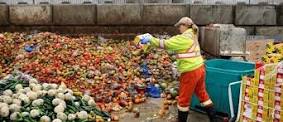
Effective January 2022, any establishment that generates more than two tons of food waste per week must separate material for donation and arrange for inedible scraps to be taken to an organics recycler within 25 miles. Temporary waivers will be granted by the state based on factors such as cost and distance.
Effective March 2020, the state will prohibit distribution of any “plastic carryout bag” (with some exemptions) and allow cities or counties to implement their own five-cent fees on paper bags. New York City, among other local governments, is now expected to take that step.
The last days of the budget season in Albany are often hectic, with many policies getting added or dropped, and this year’s negotiations were no exception. As details emerged into the weekend and final votes were taken on Sunday, it became clear legislators had made multiple significant changes to environmental policy. Some attribute this to the fact that the New York Senate is now controlled by Democrats for the first time in multiple years.
While the plastic bag ban has been getting most of the attention, the organics mandate is arguably an even bigger change. Once enacted, New York will become the sixth state to pass some version of an organics diversion mandate – following California, Connecticut, Massachusetts, Rhode Island and Vermont.
Similar versions of this proposal have been backed by Cuomo and other state lawmakers for multiple years, but repeatedly got cut from final budget deals and weren’t taken up separately in prior legislative sessions. If the policy works as intended, it will put a notable dent in waste volumes for areas of the state that don’t already have commercial diversion mandates in place — all but New York City — and encourage the development of more regional processing infrastructure. Currently, much of the city’s organic material is traveling to other Northeast states.
The policy’s passage also comes with some compromise. The required distance between covered generators and organics recyclers (which will also include animal feed) has been reduced from previous lengths of 50 and 40 miles down to 25. Hospitals, nursing homes, adult care facilities and grade schools are also exempted from complying at all. Ongoing opposition from the healthcare industry was said to be a key issue in 2018. Next, the state’s Department of Environmental Conservation is required to determine if sufficient capacity exists by June 2021 before covered establishments are expected to make arrangements for compliance.
That said, the plastic bag news is also notable. Following a 2016 ballot referendum in California, and a de facto ban in Hawaii across every county, New York is the only other state to enact such a policy to date. After the back-and-forth drama that involved New York City passing its own plastic ban/paper fee in 2016, the state legislature overriding that in 2017 and a Cuomo-appointed task force yielding minimal results in 2018, this move is seen as a long time coming. Supporters believe it will lead to a broader culture change around reusable bags, especially if the New York City Council can seal the deal with its own paper bag fee.
As for Cuomo’s pitch to expand New York’s bottle bill for the inclusion of non-alcoholic beverage containers such as juice, tea-based beverages and sports drinks, there has been little attention given to its demise. Stiff and concerted lobbying pressure from the NWRA, every major recycler in the state, multiple counties and even some environmental groups — all concerned about losing valuable local revenue on PET bottles and aluminum cans — appears to have been successful.