Denmark will help NY plan to add offshore wind energy

New York will work with Danish energy experts on its $2.1 billion plan to add offshore wind power to the state’s energy grid


Thomas C. Zambito reports for LoHud.com


New York will work with offshore wind experts from Denmark as it pushes ahead with its multi-billion dollar plan to add renewable sources of power to the state’s energy grid.


The New York State Energy Research and Development Authority announced Thursday it has agreed to work with the Danish Ministry of Energy, Utilities and Climate to come up with cost-saving strategies for developing offshore wind energy off the Atlantic coast of Long Island and the Rockaways.


The agreement with the Danish Ministry, known as a memorandum of understanding, will allow state officials to tap into the expertise of the world’s third largest producer of offshore wind energy.


“In our experience, offshore wind provides affordable, reliable and clean energy, while creating scores of jobs and growing the economy,” said Lars Christian Lilleholt, Denmark’s minister of Energy, Utilities and Climate. “I hope that our collaboration will help New York to develop its abundant offshore wind energy resources.”


The $2.1 billion tab for the offshore wind plan will be picked up by ratepayers across the state, while most of the energy produced will remain on Long Island. Residential customers could see increases of as much as 76 cents a month in their electric bills by 2020.


Denmark will help NY plan to add offshore wind energy Read More »

NJ enviros forego bird-in-hand plastic bag fee bill for harder-to-pass ban that adds Styrofoam and straws

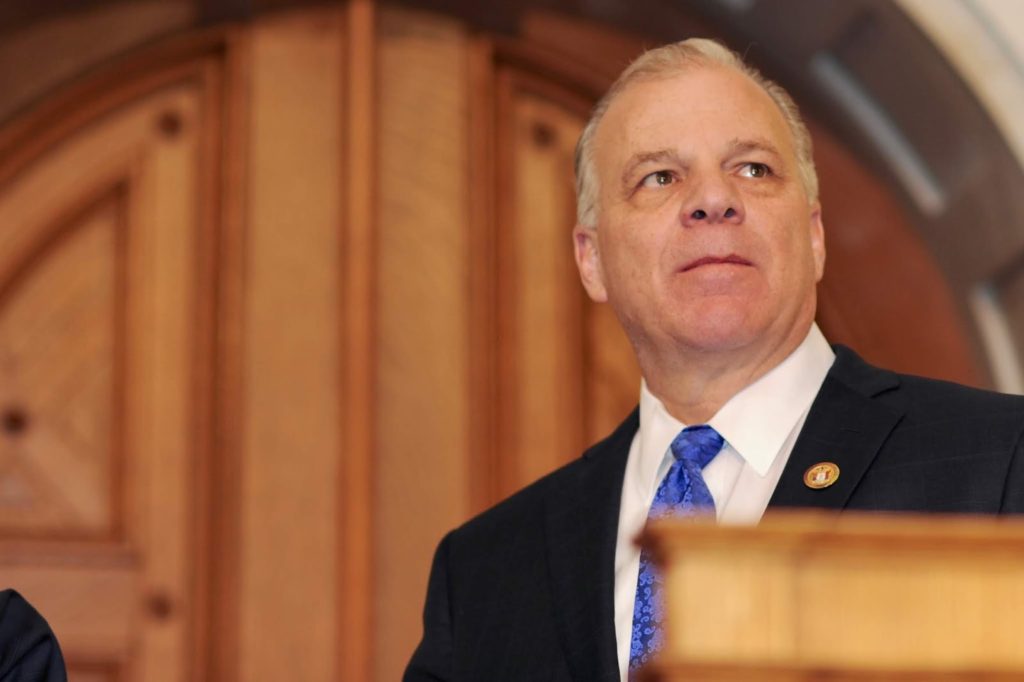
NJ State Senator Bob Smith (center) encourages colleagues to support a ban on plastic bags,

By Frank Brill, EnviroPolitics Editor 

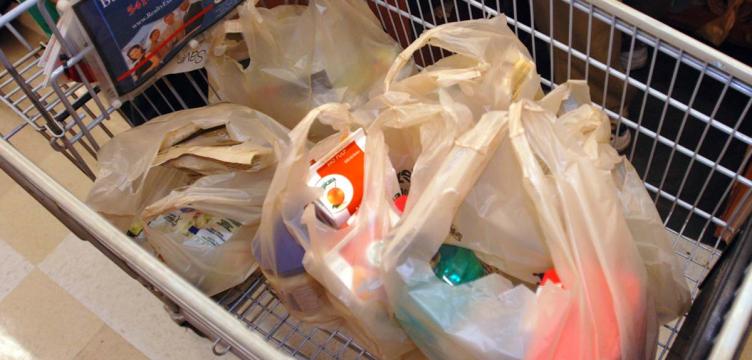
A month ago, New Jersey’s environmental community was split over legislation that sought to wean shoppers off single-use, plastic, grocery-store bags by charging a 5-cent fee per bag. 


Bill supporters hoped the fee would convince consumers to opt for reusable, heavy-duty plastic or cloth bags that many stores offer for $1. 

Environmentalists who preferred legislation banning the sale of single-use bags said their more dramatic approach was needed to respond faster and more effectively to plastics’ growing environmental threat.
  
The goal of both the fee and ban camps was to reduce the disposal of plastic bags that litter neighborhoods, show up on state beaches, in highway drains, streams, and in the ocean, too, where they are ingested by fish and contaminate the food chain.

Like this? Click to receive free updates

When a fee bill landed on Gov. Phi Murphy’s desk in June, he was lobbied by environmentalists on both sides. Those favoring the fee approach believed that half a loaf was better than none. They recognized that the fee bill had passed the Legislature in part because the influential grocery store lobby (New Jersey Food Council) had dropped its long-standing opposition to a bag fee in return for a guarantee that the legislation would prohibit, town-by-town fees or bans. 

Murphy eventually vetoed the fee bill and signaled that a more comprehensive approach was needed. By default, that meant that he would entertain legislation banning the bags.

Proponents of a bag fee had feared that an outright ban might lose the grocers’ support and trigger wider opposition from the business community. They were right. 

At a three-hour committee meeting Thursday in Trenton, members of the Senate Environment and Energy Committee were besieged with arguments against–and for–an outright sales ban on plastic bags. The sponsor of that approach, committee chairman Bob Smith, had posted his bill, S-2776, which not only would ban single-use plastic bags but also the sale of plastic straws and Styrofoam.
 

***Related news coverage***

Ban bags and straws? N.J. proposal would be the strictest in the nation 
NJ takes the first step toward nation’s strongest plastics ban 

NJ plastics ban could be one of the toughest in the nation


Smith said an aggressive approach was necessary to curb additional environmental damage. He cited statistics from recent studies that found an alarming increase in plastic products and plastic microbodies in the Passaic and Raritan rivers, as well as plastics counted during the annual Beach Sweeps conducted by Clean Ocean Action.

He called on his legislative colleagues to respond to this “serious environmental and public health crisis.”

A small sample of the testimony


NJ Sierra Club’s Jeff Tittel (click arrow above for video) gave the legislation rare high praise and predicted that it will encourage other states to follow. 


Mark Daniels of Novolex, however, told committee members that  S2776 could jeopardize a $70 million investment that his company is contemplating for their plastics and paper factories in Elizabeth and Logan Township. 

The NJ Food Council’s Mary Ellen Peppard said her members appreciate that the bill would prohibit individual municipalities from establishing plastic bag fees or bans. She asked for clarification on several provisions in the legislation. When Chairman Smith asked if New Jersey grocers would support the bill if their recommendations were met, she diplomatically did not provide a direct yes or no.   


What’s next?
The bill was released on a 4-1 vote with Kip Bateman providing the one Republican vote necessary. It now goes to the Senate Budget Committee which is not as green-leaning as Smith’s. In casting the get-out-of committee vote, Bateman (perhaps anticipating an eventual party-line decision) said he might go the other way if the measure gets to the Senate floor. 

One thing is sure. Senator Smith will have to make changes in order to lighten the collective weight of the bill’s current opponents. That’s common for bills as ambitious as this. 

You can expect to see a lot of events at which bill supporters will work to increase public awareness. Opponents will work behind the scenes, reminding lawmakers of the state’s troublesome business climate. 

Where they line up on S2776:

Support
Association of New Jersey Environmental Commissions
Association of New Jersey Recyclers

Environment New Jersey
Clean Ocean Action
Clean Water Action

Food and Water Watch
Humane Society of the United States
New Jersey Environmental Lobby
New Jersey League of Conservation Voters
New Jersey Audubon
Raritan Headwaters
Rutgers University

Sierra Club

Opposed
Alliance Center for Independence
Americans for Tax Reform

American Progressive Bag Alliance
Asian American Retailers Association
Chemistry Council of New Jersey
Commerce and Industry Association of New Jersey
Dart Container Corporation
National Federation of Independent Businesses
New Jersey Gasoline, Convenience Store Association
New Jersey Retail Merchants Association
Novolex


Seeking Amendments
New Jersey Business and Industry Association
New Jersey Farm Bureau
New Jersey Food Council
New Jersey Restaurant and Hospitality Association
New Jersey State Chamber of Commerce


Like this? Click to receive free updates


NJ enviros forego bird-in-hand plastic bag fee bill for harder-to-pass ban that adds Styrofoam and straws Read More »

NJ takes first step toward nation’s strongest plastics ban


Scott Fallon reports for the North Jersey Record:

A bill that would impose the strongest statewide ban on everyday plastic products in the nation was approved by a Senate committee on Thursday.

The measure – S2776 – would ban plastic grocery store bags, Styrofoam food containers and plastic straws, all of which are often found in beach and riverfront cleanups across the state. It would also impose a 10-cent fee on paper bags at grocery stores.

“It requires New Jersey citizens to change their lifestyle,” said Bob Smith, D-Middlesex, the sponsor of the bill and chairman of the Senate environment committee.

The bill was moved forward by 4-to-1 vote. It is the first legislative move on the bill. It will go to the Senate Appropriations Committee and eventually to Senate President Steve Sweeney for consideration for a full house vote. It still needs to be heard in the Assembly.

The bill was hailed by environmentalists during a three-hour hearing Thursday who say it will significantly reduce plastic pollution in New Jersey.

Plastics have made up the vast majority of trash picked up each year from New Jersey’s beaches by the advocacy group Clean Ocean Action. A 2016 report by NY/NJ Baykeeper estimated that about 165 million pieces of plastic float at any one time from Sandy Hook to the Tappan Zee Bridge along with several other waterways that make up the NY/NJ Harbor Estuary.

Like this? Click to receive free updates


Business groups oppose the bill, saying it will hurt their members and consumers. Dennis Hart of the Chemical Council of New Jersey said the bill would especially hurt restaurateurs, who would eventually have to pay more for plastic alternatives.

The move on Thursday comes a month after Gov. Phil Murphy vetoed a bill that would have placed a 5-cent fee on plastic grocery store bags, signaling his support for an outright ban. More than a dozen municipalities, including Jersey City and Hoboken, have passed local plastic bag bans this year that will soon go into effect despite heavy lobbying efforts against a statewide ban.

California and Hawaii have bans on plastic bags. Some cities and counties across the country have banned straws and Styrofoam containers. New York City’s Styrofoam container ban goes into effect Jan.1.

Like this? Click to receive free updates


But New Jersey’s bill goes much further targeting three products.

The bill would allow restaurants to give plastic straws to people with disabilities, but advocates for that community says it needs to be made stronger. Smith said he’s willing to strengthen that part.

Smith also said he wants a small business exemption that would allow small grocers to apply for a year exemption to the bans if they can’t find any alternatives. Senator Kip Bateman, R-Somerset, suggested the 10-cent paper bag fee be phased in after the plastic bag ban goes into effect to lessen the sudden change to businesses.


NJ takes first step toward nation’s strongest plastics ban Read More »

Electric car makers turn to Congress as tax credits dry up

Electric carmakers turn to Congress as tax credits dry up
Miranda Green reports for The Hill:
The future of electric cars is in Congress’s hands, with lawmakers divided over whether to extend a popular tax credit.
Electric car manufacturers are only allowed to offer a federal tax break on their first 200,000 vehicles sold under a 2009 law, and many are now hitting that cap, most notably Tesla.
That’s setting off a fight in Congress, where Democrats are eager to extend the breaks and help the growing electric car industry but Republicans hope to end what they see as an unnecessary subsidy.
“It’s crazy that we might allow the electric vehicle tax credit to run out just as the American electric vehicle market is starting to gain a foothold,” said Sen. Jeff Merkley (D-Ore.), who leads a group
    of senators who introduced a bill last week that would lift the cap.

The bill, called the Electric Cars Act of 2018, is backed by Sens. Martin Heinrich (D-N.M.), Catherine Cortez Masto (D-Nev.), Kamala Harris(D-Calif.) and Cory Booker (D-N.J.), among other Democrats.
It would extend the 2009 tax credit that helped popularize plug-in electric cars in their nascent days until December 2028.
Lawmakers are feeling intense pressure from the electric car industry to extend the 2009 tax credit.
Tesla and General Motors (GM), who are front-runners in the U.S. electric car manufacturing industry with their Model S and Chevrolet Volt vehicles, respectively, are already feeling the constraints of the cap.
Tesla announced in July that it hit its 200,000-car threshold and will start phasing back the $7,500 federal tax credit it can offer to buyers. It’s reported that GM will also hit the cap by the end of this year.
“There are projected to be over 7 million electric vehicles on our roads by 2025, and I will keep fighting in Congress to promote electric vehicles and other innovative technologies that reduce the impact of global warming and strengthen our economy,” Cortez Masto said in a statement.
A similar bill was introduced in the House in June by Reps. Peter Welch (D-Vt.) and Jackie Rosen (D-Nev.) and backed by 14 other Democrats.
Most supporters of the two bills hail from California, a state that is both Tesla’s hub and on the front lines of promoting renewable energy.
The bills to extend the tax credit also have broad support among electric car manufacturers. Automakers new to the electric car industry, like BMW and Mercedes-Benz, are poised to benefit in the short-term with Tesla and GM running out of credits. But overall there is a belief that the industry needs the tax breaks extended to keep growing.
“Electrified vehicles are a small but growing segment of our business in the U.S. so, yes, BMW does support the legislation,” said Kenn Sparks, a company spokesman.
“Electro-mobility will continue to grow in significance. In the next seven years, by 2025, BMW Group will offer 25 fully-electric and plug-in hybrid models in our worldwide lineup.”
Neither bill, though, has a Republican co-sponsor.

Read the full story

Electric car makers turn to Congress as tax credits dry up


Electric car makers turn to Congress as tax credits dry up Read More »

With plastic bag fee vetoed, NJ lawmakers now seek a ban


Tom Johnson reports for NJ Spotlight:

The state is looking to adopt one of the nation’s most far-reaching bills to address pollution caused from plastic waste.

New Jersey lawmakers have drafted a bill to ban single-use carryout plastic bags but now want to extend the prohibition to plastic straws and polystyrene food containers.
The legislation, up for consideration in committee tomorrow, also will impose a 10-cent fee on paper bags. That step, in concert with the ban on plastic bags, will encourage consumers to switch to reusable bags and more environmentally friendly alternatives, according to proponents.
The fee on paper bags is double what shoppers would have had to pay under a bill vetoed last month by Gov. Phil Murphy. That measure would have imposed a nickel fee on both plastic and paper single-use bags.
In rejecting the legislation, Murphy said it did not go far enough in addressing the threats posed by plastic bags, which frequently litter the landscape, harm wildlife, and foul state waterways.
The proposal reflects versions of several bills pending in the Legislature for months, which emerged from a legislative hearing this summer on pollution problems caused by the proliferation of plastics. The imposition of a 10-cent fee on paper bags has made bans on plastic bags more effective where they have been imposed, according to Jeff Tittel, director of the New Jersey Sierra Club.
California and Hawaii have imposed statewide bans on plastic bags; some cities in the Garden State have banned them as well, including Jersey City and Hoboken.
“If this bill passes, it would be the most comprehensive in the nation,’’ said Kelly Mooij, a vice president of New Jersey Audubon. “In one fell swoop, we would be addressing all the major causes of plastic pollution.’’

With plastic bag fee vetoed, NJ lawmakers now seek a ban Read More »

Bordentown’s corrosive water, a link to lead levels?

Experts and documents point toward the corrosivity of Bordentown’s water, potentially contributing to its recent
lead in water issues
water from faucet to glass blue background
Kyle Bagenstose reports for the Burlington County Times: In July 2017, the Bordentown City Water Department, which serves approximately 15,000 people in the city and neighboring Bordentown Township, made a big switch.It began pumping water from a newly drilled well near the Crosswicks Creek, and by the next month the well was supplying the majority of the water in the system, which totals about 1.5 million gallons a day.The change was a major part of a years-long, multi-million dollar effort by the city to address high levels of radionuclides in its drinking water. Since 2009, radium — a naturally occurring contaminant — had been found several times in the city’s drinking water above safety standards put in place by the federal Environmental Protection Agency. The new well is deeper, and lower in radionuclides.But within months of making the water change last year, the city had a new problem on its hands: the toxic metal lead. Water samples taken in November 2017 from 74 homes across the two towns showed that 16 of them, or 21 percent, had lead levels above the EPA’s 15 parts per billion action (ppb) level. The overall rating was 30 ppb, double the EPA’s limit.The system tested again in the first half of 2018, and found 11 of 63 homes above the action level. The overall rating was 43 ppb, or nearly triple the EPA limit.Yet a year earlier, Bordentown didn’t have a lead issue. In the fall of 2016, 30 homes were tested, and none came back above even 5 ppb. The highest amount found was just 1.6 ppb in a home on West Constitution Drive in Bordentown Township. The home was tested again in November 2017 and 3 ppb were found. By May 2018, however, lead in the home’s water increased to 15.4 ppb.Read the full storyLike this? Click to receive free updates

Bordentown’s corrosive water, a link to lead levels? Read More »