Exxon challenges NY to ‘put up or shut up’ in climate case

exxon mobil

Bloomberg News reports:
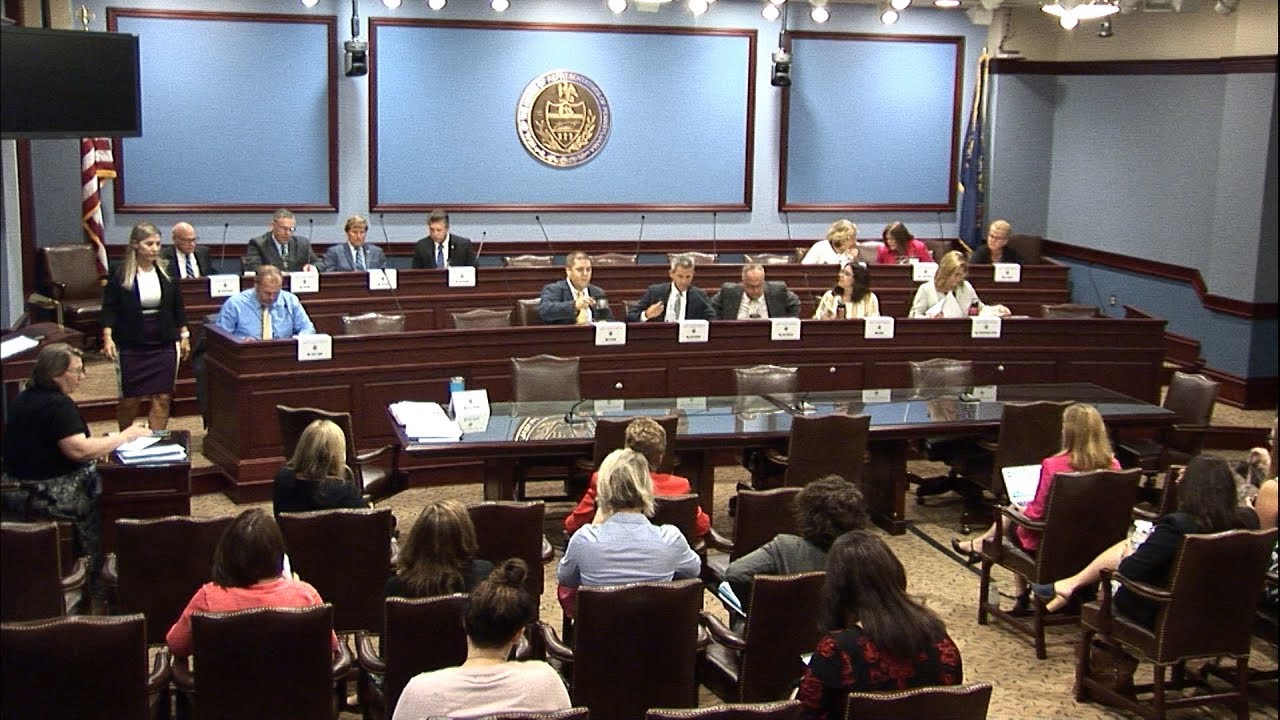
Exxon Mobil Corp. told a judge that New York’s attorney general should either sue the company for misleading investors about the financial impact of climate change, or close its probe and move on.
“They should put up or shut up,” Exxon’s lawyer, Theodore Wells, said at a hearing Wednesday in New York state court in Manhattan. “We are ready to confront any complaint.”


The remark was part of a heated exchange between lawyers for Exxon and New York Attorney General Barbara Underwood about the production of internal corporate documents sought by the state, pertaining to a variety of exploration and chemical projects.

New York argues there’s evidence that Exxon for years used two sets of numbers — one public, one private — to calculate the future financial impact of climate change, with investors given the rosier figures.


This cannot go on interminably,” Justice Barry Ostrager told the attorney general’s lawyers at the start of the hearing. “You’ve been investigating for two years, so either you’re going to file a case, or you’re not going to file a case.”

“We are coming to an end in our investigation,” Manisha Sheth, a top lawyer for Underwood’s office, responded. Underwood’s office has repeatedly argued that Exxon’s tactics have delayed the probe.

Like this? Click to receive free updates


Ostrager ordered Exxon to turn over as many as 14 cash-flow spreadsheets detailing the finances of various global projects as well as any documents the company turned over to the Securities and Exchange Commission as part of a related investigation, but that haven’t already been given to New York.

There’s “smoking gun” evidence, Sheth said, that justifies the continued digging for Exxon documents before a decision is made on whether to sue. She said there’s evidence suggesting former Exxon Chief Executive Officer Rex Tillerson was aware of the discrepancy in the so-called proxy cost numbers, and that he “seemed happy” with it.

The Irving, Texas-based company has long argued the case was politically motivated, having been coordinated behind the scenes with other Democratic-led states and environmental groups hostile to Exxon. Wells made that point again Wednesday.

“They brought this case for political reasons and now they’re backed into a corner,” he said.

Like this? Click to receive free updates

Exxon challenges NY to ‘put up or shut up’ in climate case Read More »

Largest Artificial Reef Expansion in New York State History


Expansion of State’s Network of Artificial Reefs Will Provide
New Marine Habitats, Promote Biodiversity and Restore Fishery Resources


New York State Department of Environmental Conservation (DEC) Commissioner Basil Seggos today announced the deployment of materials to create a new marine habitat at Moriches Reef as part of the state’s ongoing efforts to develop a stronger, more diverse marine ecosystem and provide shelter for fish and other marine life off New York’s shores.


Moriches Reef is a 14-acre site located in the Atlantic Ocean 2.4 nautical miles south of Moriches Inlet.


Through the largest artificial reef expansion in state history, this milestone supports Governor Andrew M. Cuomo’s efforts to bolster Long Island’s tourism and fishing industries.


DEC Commissioner Seggos said, “Long Island’s coastal communities, anglers, and our natural environment all stand to benefit from Governor Cuomo’s work to expand New York’s network of artificial reefs. This innovative initiative benefits fish and fishermen and women alike, recognizing that our environment and economy can both thrive and work together toward a common goal.”


As directed by Governor Cuomo in April, and with unprecedented, multi-agency coordination, recycled materials from the State Department of Transportation, Canal Corporation, and the Thruway Authority are being put to new use and helping to develop New York’s artificial reef sites, including Moriches Reef. Materials deployed today on the Moriches Reef include concrete and steel material being recycled from demolition of the Tappan Zee Bridge. The deployment marked a significant milestone as part of the state’s historic artificial reef expansion initiative.


Construction of New York’s first artificial reef dates back to 1949, and the Governor’s expansion initiative is the state’s first coordinated effort to stimulate the full environmental and economic benefits of artificial reefs.


The artificial reef expansion will increase the variety of reef habitat on this site, expand the biodiversity of fish and crustacea, promote environmental sustainability, and boost Long Island’s recreational fishing, sport fishing, and diving industries.


DEC manages the state’s 12 artificial reefs, which include two reefs in Long Island Sound, two in the Great South Bay, and eight in the Atlantic Ocean.


In May, the Governor announced the inaugural deployment at Shinnecock Reef,which included recycled materials from the Tappan Zee Bridge project, DOT, and Canal Corporation. State agencies began deploying barges of Tappan Zee Bridge recycled materials and decommissioned vessels that have been cleaned of contaminants. Earlier in July, deployments were made at Smithtown and Rockaway reefs and deployments were made on Hempstead Reef in early August. Fire island Reef is also expected to receive material this summer.


The deployment of materials at Moriches reef will enhance the aquatic ecosystem along the shores of the Atlantic Ocean, provide new habitats for marine life, and expand recreational fishing and diving opportunities for generations of New Yorkers.


Materials used for the reef expansion are being strategically placed and are built out of hard, durable structures such as rock, concrete, and steel, and usually in the form of surplus or scrap materials that are cleaned of contaminants before being recycled on the reef sites. Once materials settle to the sea floor, larger fish like blackfish, black seabass, cod, and summer flounder, move in to utilize the habitat, and encrusting organisms such as barnacles, sponges, anemones, corals, and mussels cling to and cover the material. Over time, these recycled structures will become habitat similar to a natural reef.


Like this? Click to receive free updates


New York’s marine resources are critical to the state’s economy, supporting nearly 350,000 jobs and generating billions of dollars through tourism, fishing and other industries. More than 500,000 anglers in the region will reap the benefits of the Governor’s initiative, supporting the region’s growing marine economy which accounts for approximately 9.7 percent of Long Island’s total GDP.


Artificial reef construction is part of Governor Cuomo’s NY Open for Fishing and Hunting Initiative, an effort to improve recreational activities for in-state and out-of-state sportsmen and sportswomen and to boost tourism opportunities throughout the state. Visit DEC’s website for more information about the Artificial Reef Program.


The Governor’s Artificial Reef initiative builds on the state’s record $300 million Environmental Protection Fund investment, $2.5 billion Clean Water Infrastructure Act, more than $2 million to NY Sea Grant to support the Ocean Action Plan Research Fund, and actions to ban offshore drilling along New York’s coastline.


A map, site coordinates and additional information on New York State’s Artificial Reefs (PDF, 914 KB) are available to plan trips to a New York State reef site. Before visiting one of New York’s artificial reefs, please be familiar with the current NYS Recreational Saltwater Fishing Regulations.View DEC’s artificial reef building video on YouTube and learn more about our volunteer observation program.
http://www.dec.ny.gov/press/press.html

Like this? Click to receive free updates

Largest Artificial Reef Expansion in New York State History Read More »

NRDC, others sue Newark over lack of action on lead pipes

Lead corrosion in water pipes


An environmental group suing the city of Newark over alleged systemic violations of clean water rules wants to force the city to take immediate measures while the lawsuit proceeds.


David Porter reports for the Associated Press:

An environmental group suing the city of Newark over alleged systemic violations of clean water rules filed a motion Friday to force the city to take immediate measures while the lawsuit proceeds.
In a filing in federal court, the Natural Resources Defense Council asked a judge to order the city to provide alternate water supplies for vulnerable residents and provide free testing for all residents, conduct a public awareness campaign and “establish drinking water resource centers, where residents may pick up water bottles, filters, and drinking water testing kits, and may drop off completed testing kits for lab analysis.”
The NRDC and the Newark Education Workers Caucus, an association of educators who work in the city, sued in June alleging the city hasn’t adequately monitored and tested a water system it said contains “dangerously high” levels of lead.
The lawsuit contends Newark has minimized the problem by telling residents the water is safe to drink and that the problem is confined to a limited number of homes with private service lines, the suit alleges.
Prolonged exposure in children to low levels of lead has been linked to nervous system damage, learning disabilities and impaired formation of blood cells
At the time the lawsuit was filed, the city called the allegations “outrageously false” and said the water complies with state and federal regulations. In response to Friday’s motion for a preliminary injunction, Andrea Adebowale, Newark’s director of water and sewer utilities, said in an email that excessive lead levels are caused by privately owned lead service lines, which are the responsibility of homeowners.
Adebowale added that Newark “is already implementing a plan to help property owners replace the approximately 15,000 lead service lines in the city at an estimated cost of $75 million,” aided by funding from the state.
“Contrary to the false allegations of the NRDC, the city has conducted an extensive public information campaign to inform residents of the lead service line problem,” Adebowale wrote.

NRDC, others sue Newark over lack of action on lead pipes Read More »

Residential lead water line replacement bill signed in NJ

(TRENTON) – Legislation authorizing municipalities to levy special assessments, and issue bonds, to replace certain lead-contaminated water service lines, has been signed into law by New Jersey Gov. Phil Murphy.


The bill (A4120was sponsored by sponsored by Assembly Democrats Eliana Pintor Marin, Cleopatra Tucker and Wayne DeAngelo 


“This law will put us one step closer to ensuring that our drinking water is safer to drink and lead-free,” said Pintor Marin (D-Essex). “In Newark alone, there are approximately 15,000 homes in which the water service lines connecting the property to the city’s main water line are lead. This can lead to contaminated home drinking water.”

“Clean drinking water is essential,” said DeAngelo (D-Mercer / Middlesex). “This will help municipalities finance projects that will help replace lead-contaminated pipes to ensure the quality and safety of our drinking water.”

Under current law (R.S.40:56-1), if a municipality engages in a project that is categorized as a “local improvement,” the municipality may assess the cost of the project on local property owners in the vicinity who benefit from the project. 

The new law adjusts language in R.S.40:56-1 to ensure that the replacement of certain lead-contaminated home service connections fall within this category, allowing those projects to be assessed as local improvements. 


Like this? Click to receive free updates


The law also amends a section of the local bond law to allow municipalities and counties to issue 30-year bonds to fund the replacement of lead-contaminated house connections to publicly-owned water systems. Specifically, these bonds will fund replacement of lead-contaminated house connections from the distribution main onto privately-owned real property, and into the privately-owned structure.

The law also amends the County and Municipal Water Supply Act, and the municipal and county utility authorities law to provide that the public entities operating under those laws are not prevented from undertaking projects to replace lead-contaminated service connections, regardless of possible private service connection ownership.

 The provisions of this law will only apply to service line replacement projects that are: (1) undertaken as environmental infrastructure projects; and (2) funded either by loans from the New Jersey Infrastructure Bank, or by loans issued through the Department of Environmental Protection.


Like this? Click to receive free updates


Residential lead water line replacement bill signed in NJ Read More »

Energy companies are turning the law against protesters


In at least 31 states, legislators and governors have introduced bills and orders since Standing Rock  that target protests, particularly opposition to pipelines


Nicholas Kusnetz reports for Inside Climate News:


The activists were ready for a fight. An oil pipeline was slated to cross tribal lands in eastern Oklahoma, and Native American leaders would resist. The Sierra Club and Black Lives Matter pledged support.

The groups announced their plans at a press conference in January 2017 at the State Capitol. Ashley McCray, a member of a local Shawnee tribe, stood in front of a blue “Water is Life” banner, her hair tied back with an ornate clip, and told reporters that organizers were forming a coalition to protect native lands.

They would establish a rural encampment, like the one that had drawn thousands of people to Standing Rock in North Dakota the previous year to resist the Dakota Access Pipeline.

The following week, an Oklahoma state lawmaker introduced a bill to stiffen penalties for interfering with pipelines and other “critical infrastructure.” It would impose punishments of up to 10 years in prison and $100,000 in fines—and up to $1 million in penalties for any organization “found to be a conspirator” in violating the new law. Republican Rep. Scott Biggs, the bill’s sponsor, said he was responding to those same Dakota Access Pipeline protests.

The activists established the camp in March, and within weeks the federal Department of Homeland Security and state law enforcement wrote a field analysis identifying “environmental rights extremists” as the top domestic terrorist threat to the Diamond Pipeline, planned to run from Oklahoma to Tennessee. The analysis said protesters could spark “criminal trespassing events resulting in violence.” It told authorities to watch for people dressed in black.


Energy companies are turning the law against protesters Read More »

Dramatic news break during NJ hearing on plastic bag bills

At a public hearing on plastic bags, Senator Bob Smith makes a dramatic announcement. (Frank Brill photo)


By Frank Brill, EnviroPolitics Editor


In the middle of hours of testimony yesterday on what the New Jersey Legislature should do to curb environmental damage from throwaway plastic shopping bags, Styrofoam cups, and soda straws, Senator Bob Smith interrupted the testimony to deliver a news flash.

Gov. Phil Murphy, he was just informed, has decided to veto a bill (A-3267/S-2600) that would impose a 5-cent fee on plastic grocery bags. It had been, until that moment, the Legislature’s preferred solution to the problem of plastics.

The audience at an Aug. 23, 2018, legislative hearing on plastics n Toms River, NJ.  (Frank Brill photo).

The announcement resulted in applause from dozens of environmentalists who packed the meeting with signs and costumes and murmuring from a cadre of lobbyists for business trade associations and chemical and related industries.


** Video interviews below**Murphy’s decision had turned the plastics debate upside down. Bills to limit the disposal of plastic bags by charging consumers to use them were dead and the momentum immediately swung to bills that would outlaw them.

Smith, the author of the primary Senate ‘ban’ bill, S-2776, pounced on the opportunity, announcing that his committee would hold a hearing on his legislation in September and vote on the measure in October. Smith is chairman of the Senate Environment and Energy Committee.  


An identical bill, A-4330, is sponsored by Nancy Pinkin who chairs the Assembly Environment and Solid Waste Committee.


Like this? Click to receive free updates


The ‘fee bill’ that’s been sitting on Murphy’s desk for weeks, was heavily lobbied but made it through both houses. A ban bill might be a tougher sell since political heavyweights like the NJ Chemistry Council, the Business and Industry Association, NJ Chamber of Commerce, and some retailers, are likely to join in opposing it.


It’s too early to predict the outcome, but plastics surely will be a hot topic when the legislature returns from its summer recess.


After yesterday’s joint hearing in Toms River by the environmental committees of both houses, we spoke with Amy Goldsmith, state director of Clean Water Action, an environmental group that favors an outright ban on plastic bags. (The state’s enviro-organizations have been fractured on the choice between fee and ban bills). 

We also interviewed Assemblywoman Valerie Vainieri Huttle who sponsored the about-to-be vetoed fee bill.


Related news coverage:

Is 5-cent fee for plastic bags headed for the trash? 

Murphy signals intent to veto proposed plastic bag fee 

News of pending bag tax veto hailed (Video)

What do YOU think?  Click on over to our Facebook page where we welcome your comments not only on plastic bag fees vs. bans but on the wider issue of plastic packaging.


Like this? Click to receive free updates

Dramatic news break during NJ hearing on plastic bag bills Read More »