Controversial landlord sells 118 buildings for $327.8M

Adrienne Romero reports for the Jersey Journal:

A real estate management company that has drawn harsh criticism from tenants in Jersey City has sold more than 100 buildings in Hudson County for more than $325 million to four different investors.

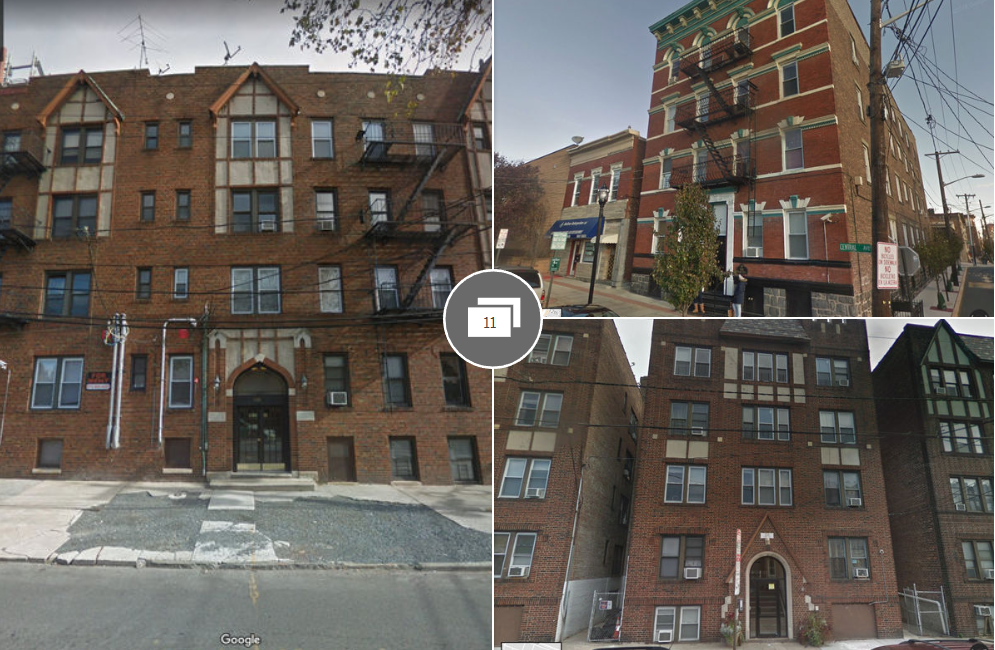
The sale of 118 buildings owned by Trendy Management, formerly Riverside Management, was completed in six separate packages. With a total of 2,137 units, the portfolio’s official sale price was $327.8 million.
In March 2017 the Clifton-based mega-landlord was hit with more than 100 violations at Jersey City buildings. The company was also hit with dozens of violations in 2015 after residents trying to escape a fire at 500 Garfield Ave. fell through the rotting fire escape.
The buildings in the portfolio are located throughout Jersey City, West New York, North Bergen, Guttenberg, and Union City.
The largest of the six packages involved 67 buildings sold for $190.65 million — with 993 units in 47 buildings in West New York, 175 units in 12 buildings in Jersey City, 76 units in six buildings in North Bergen and 28 units in two buildings in Guttenberg. This package averaged $150,000 per unit.
Meanwhile, the second largest package averaged a $165,000 per-unit price, selling for $97 million. This included 35 buildings, consisting of 588 units, throughout Jersey City’s Journal Square and Heights neighborhoods.

Controversial landlord sells 118 buildings for $327.8M Read More »

Another thing to like about millennials: They’re into bees

Beekeeper Sam Torres checks on his apiary at Glen Foerd in Philadelphia. Photo: David Maialetti


Bethany Ao reports for Philly.com:

Every few days, Sam Torres heads to Glen Foerd in Northeast Philadelphia to check his beehives. He gets there about 8 a.m. because bees get up with the sun, and goes through the hives carefully to make sure his “girls” — beehives are a bona fide matriarchy at 85 to 90 percent female — are doing just fine. Smoker in hand, Torres looks at how many cells the bees have capped with wax, meaning that they’ve filled them with honey, and observes the larvae that will eventually grow into worker bees that clean and forage for the hive.

During one of these checks on a sunny Friday morning, Torres glanced up at the clear blue skies as he popped open one of the six hives he keeps at Glen Foerd. The beekeeper also works as the gardener at the estate, and in exchange he’s allowed to keep hives on the property. Each of the hives has 30,000 to 50,000 bees, producing 65 to 70 pounds of honey a year, on average.

“I don’t usually wear a beekeeping suit anymore,” said Torres, who has been beekeeping for five years after taking a class on it at Temple University. “Only when the bees get anxious because there’s a barometric pressure drop, which means that rain is coming. Rain means that they can’t work, and they basically exist just to work.”

Torres, 27, sells his honey and provides beekeeping consulting services under the name Keystone Colonies. He is part of a growing group in the Philadelphia beekeeping community: millennials. According to Michael Gonzales, a board member of the Philadelphia Beekeepers Guild, the organization has recently experienced an influx of younger, tattooed and smartphone-wielding members. Although there are no regulations prohibiting beekeeping in Philadelphia, apiaries must be registered with the Department of Agriculture.


Another thing to like about millennials: They’re into bees Read More »

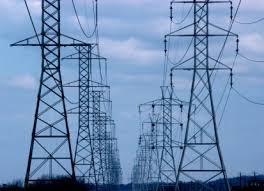
Is NJ ready to pull a ‘Brexit’ from the PJM energy grid?


Board of Public Utilities president unhappy with ‘lip service’ and decisions that lead to NJ customers paying more for electricity

Tom Johnson reports for NJ Spotlight:

Is New Jersey pulling out of the PJM Interconnection, the regional operator of the nation’s largest power grid?
“We’re looking at a number of options and that is one of them,’’ said Board of Public Utilities president Joseph Fiordaliso, who first raised the issue last week at a conference of state utility commissioners in Hershey, Pa.
Fiordaliso, as well as other BPU commissioners, have long been frustrated with certain PJM decisions, actions which he believes have boosted what customers in New Jersey end up paying on their electric bills.
PJM oversees a transmission system for 13 states and the District of Columbia. In that role, it has presided over a huge modernization of the system amid a rapid transformation of the energy sector. Its decisions have riled states beyond New Jersey as it seeks to maintain the reliability of a system serving 65 million customers.
New Jersey has taken issue with many of PJM’s decisions, often ending up on the losing end. Most recently, the state was unhappy with the Federal Energy Regulatory Commission’s decision to side with PJM and others on the allocation of the costs of a $1.2 transmission upgrade.
“Sometimes, PJM just gives us lip service,’’ said Fiordaliso, citing the FERC decision that he said unfairly saddled New Jersey ratepayers with the costs of the project.

Short end of stick for NJ ratepayers

Fiordaliso, who said his biggest beef with PJM is a lack of communication, argued the grid operator fails to take into account the effect its decisions are going to have on New Jersey ratepayers.
“We don’t want our ratepayers unjustly penalized,’’ the BPU president said. His agency also has opposed initiatives by PJM dealing with the grid operator’s capacity auction, which is designed to ensure reliability by making sure suppliers hold enough power in reserve to meet times of peak demand.
Susan Buehler, chief communications officer, said PJM “certainly values’’ New Jersey as well as its relationship with the state. As far as costs go, Buehler said wholesale electric rates have fallen by 40 percent to the lowest they have been since 2008.
“We sometimes make important decisions about reliability, and sometimes it is not exactly what a state wants us to do,’’ she said.

Is NJ ready to pull a ‘Brexit’ from the PJM energy grid? Read More »

If you like EnviroPolitics Blog, you’ll love our newsletter


Many of the topics you read about on this blog come out of our daily EnviroPolitics newsletter.

Unlike this blog, the newsletter is not free (except for YOU
for 30 days). Quick signup here


But with dozens of targeted energy and environment stories discovered and delivered to your mailbox every day–and legislation-tracking, too–you will find it indispensable.

Those who sign up never look back. (The fact that it costs less than a decent cup of daily coffee doesn’t hurt either).

We won’t try to convince you. Your 30 days of reading will.   

Give it a shot. One full month. No charge. No obligation. No automatic sign-up. No risk. No fooling. 

Sign up here

Questions? Leave a message at 609-577-9017
We’ll call you back.


If you like EnviroPolitics Blog, you’ll love our newsletter Read More »

‘Within this city…there is this beautiful river.’ South Jersey canoe program aims to expand horizons

Canoe on Cooper River - Photo by Maggie Loesch
Philadelphia’s
skyline is visible over trees from the Cooper River in Camden, NJ, on the
afternoon of Friday, June 29, 2018. Students enrolled in the UrbanTrekkers
program through Urban Promise Academy in Camden, NJ, led the canoe trip on the
river. These teens are employed as RiverGuides for the summer and are trained
in the ecology and history of the river, as well as canoe safety. (Maggie Loesch photo)
Will Feuer reports for Philly.comDestiny Wilson spent the other day drifting down the languid Cooper River away from Camden, toward the Delaware, in a canoe that she built with her own hands. Excitedly, she identified a double-crested cormorant, then a bald eagle and a few blue herons as they dozed in the shade or soared above.It’s difficult to imagine that growing up in East Camden, Wilson, 18, once knew the Cooper River only in passing, her imagination stifled for years by Camden’s concrete confines. These days she’s something of an expert on the water, but her aspirations don’t end at the Delaware.“I always wanted to go places when I was a kid, but I just never put in the work to get there,” she said. Today Wilson talks seriously about traveling beyond the city of her birth to far-flung places like Greece and Switzerland. First her sights are set on college. If all goes according to plan, she said she’ll be her family’s first college graduate. She wants to study environmental science.Wilson is one of five Camden high school students who are spending the summer as “river guides” for the nonprofit RiverGuides program sponsored by UrbanPromise Ministries, a nonprofit that works with the city’s young people.Founded three years ago through a grant from the William Penn Foundation, the RiverGuides program pays students like Wilson to guide folks through the river. Camden residents paddle free of charge. Others must pay a small fee. Throughout the trip, the young guides narrate the local history of landmarks on the river and present ecological findings from their own researchRead the full storyLike this? Click to receive free updates

‘Within this city…there is this beautiful river.’ South Jersey canoe program aims to expand horizons Read More »

NJDEP issues first permits for Meadowlands power plant

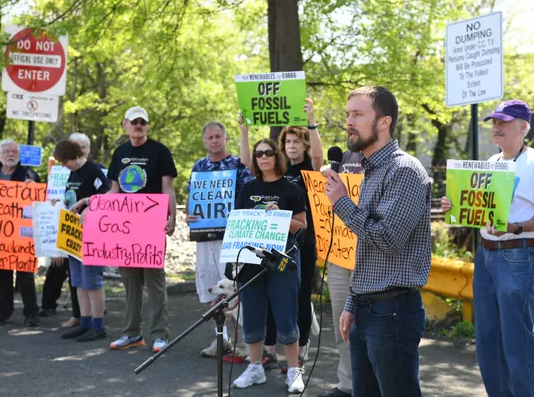
Groups from across New Jersey protest plans for the North Bergen Liberty Generating Project , a proposed 1,200-megawatt gas-fired power plant from being built on a tract of land adjacent to protected wetlands in the New Jersey Meadowlands District on Tuesday, May 8, 2018. Matt Smith, of Food & Water Watch, speaks during the protest.  (Photo: Michael Karas/NorthJersey.com)

James M. O’Neil reports for NorthJersey.com:


The Murphy Administration approved the first in a series of state permits needed by a company that wants to build a gas-fired power plant in the Meadowlands to provide energy to New York City.

The state Department of Environmental Protection approved freshwater wetlands, flood hazard area and waterfront permits for North Bergen Liberty Generating to build the power plant, and an underground cable line from the plant to the Hudson River and under the river to New York.

The company still needs to secure air quality and other permits, and approval from other agencies, including the U.S. Army Corps of Engineers and the New Jersey Sports and Exposition Authority, for the controversial project to proceed.

The first series of permits were approved June 26 and signed by Christopher Jones, manager in the DEP’s division of land use regulation.

A DEP spokesman was not immediately available to comment on the permit approvals.

The approvals generated angry comments from at least one environmental advocate.


“This is a big DEP misstep,” said Jeff Tittel, head of the New Jersey Sierra Club. “This means this project is really heating up and the DEP is moving along with individual permits and not stepping back to ask the larger question of whether there should be a big power plant in the Meadowlands in the first place.”

Among other things, the initial permits allow the company to temporarily disturb nearly a half acre and permanently disturb a tenth of an acre of wetlands vegetation to build two stormwater outfall structures at the site of the new power plant in North Bergen.

It also gives the company the right to disturb a small area of vegetation to install underground cable lines in Edgewater.


NJDEP issues first permits for Meadowlands power plant Read More »