Inhofe’s climate-denial gang now in control of the EPA

Inhofe’s climate-denial gang now in control of the EPA Read More »

Inhofe’s climate-denial gang now in control of the EPA Read More »
![]() |
But Charles M. Hallinan, 77, of Villanova, remained unrepentant in the face of a prison term that his lawyers said might as well be a “death sentence” given his age and rapidly declining health.
Hallinan said nothing when given the chance to address U.S. District Judge Eduardo Robreno before his punishment was imposed. In interviews with probation officers before Friday’s hearing in Philadelphia, he said he was “exactly the opposite” of contrite.
Perhaps that was to be expected from a man whose colleagues dubbed him “the godfather of payday lending.” But it only cemented the judge’s decision to strip Hallinan of his vast financial holdings and freedom during the final years of his life.
“It would be a miscarriage of justice to impose a sentence that would not reflect the seriousness of this case,” Robreno said. “The sentence here should send a message that criminal conduct like [this] will not pay.”
Hallinan’s sentence came seven months after a jury convicted him of 17 counts including racketeering, international money laundering, and fraud in a case that cast doubt on the legality of many of the business tactics that have turned the payday-lending industry into a multibillion-dollar-a-year financial juggernaut.
“We encourage nominations that recognize people and organizations that make recycling a priority and are committed to keeping our environment clean and healthy,” stated Assistant Commissioner for Air Quality, Energy and Sustainability Paul Baldauf. “The results of their efforts should be highlighted to demonstrate to others how they are making a difference across the state.”
Nominations may be submitted in 10 categories:

July 27 Deadline for 2018 NJDEP Recycling Award Entries Read More »
The Associated Press reports:The New Jersey shore community of Spring Lake has banned all weddings and celebrations from its boardwalk and beach, citing congestion and related issues.Spring Lake Borough Council recently enacted the ban that takes effect Nov. 1. Weddings planned before then will be allowed to proceed.The town’s previous policy allowed weddings to take place on the beach with no permit, though the wedding party and guests couldn’t kick other people out of gazebos or put up decorations. The frequent parties made it harder for other beachgoers to enjoy their visits, town officials said. On hot days in particular, beachgoers were seeking out gazebos for shade at the same time brides were arriving to meet their grooms.The gazebos, on Washington and Newark avenues, hold about 30 people, and overflow crowds would back up on the boardwalk, clogging the walkway.”The issue really was the boardwalk is so narrow, and it is so overcrowded when they were having weddings at 12 p.m. or 2 p.m.,” Borough Administrator Bryan Dempsey told the Asbury Park Press .
Thou shall not wed on this New Jersey beach Read More »
Three individuals and one organization received Sustainable Raritan River Awards at the 10th Annual Sustainable Raritan Conference and Awards Ceremony at Rutgers’ Kathleen G. Ludwig Global Village Learning Center on Friday, June 8, 2018.

The annual awards recognize outstanding achievements in efforts to revitalize, restore and protect the Raritan resources and promote the area as a premiere place to live, work and raise a family.
“It has been tremendously gratifying over the course of the last decade to have the opportunity to recognize local individuals and organizations who make a difference every day in the quality of life and the condition of our environment here in the Raritan Watershed. These awards are a chance to acknowledge and thank these quiet heroes as they inspire all of us to do what we can to protect the Queen of Rivers” stated Michael Catania of Duke Farms, one of the judges for these awards.
The Sustainable Raritan Awards, established in 2010, promote innovation and energize local efforts to restore and protect the rivers, streams and habitat of the Raritan River and Bay. The awards highlight extraordinary accomplishments and inspire other groups and individuals across the watershed to achieve comparable levels of excellence.
“It is wonderful to see such an abundant and diverse range of conservation activities throughout the length of the Raritan River being undertaken by so many. On the Lower Raritan both ecosystem and economic progress hinges on forcing polluters to clean contaminated sediments,” said Greg Remaud, Baykeeper and Chief Executive Officer, NY/NJ Baykeeper, also a member of the Awards Committee.
This year’s recipients (pictured at the top of the newsletter) are:
Descriptions of their accomplishments as well as past award recipients can be found on our website at http://raritan.rutgers.edu/events/raritan-awards/
The Awards Committee for this year’s awards included, Michael Catania, Executive Director of the Duke Farms Foundation, William Kibler, Director of Policy for the Raritan Headwaters, and Greg Remaud, Baykeeper and Chief Executive Officer of NY/NJ Baykeeper. All three of the organizations that they represent are members of the Sustainable Raritan River Collaborative, a growing network of over 130 organizations, governmental entities and businesses in the Raritan River region working together to balance social, economic and environmental objectives towards the common goal of restoring the Raritan River, its tributaries and its estuary for current and future generations.
Award nominations are accepted throughout the year. To learn more about the Awards, the Sustainable Raritan River Collaborative, or Rutgers’ Sustainable Raritan River Initiative, visit www.raritan.rutgers.edu.
2018 Sustainable Raritan River Awards Presented Read More »
![]() |
| Kelly Mooij, NJ Audubon Society |
This opinion piece by Kelly Mooij of the NJ Audubon Society appeared in today’s Asbury Park Press:
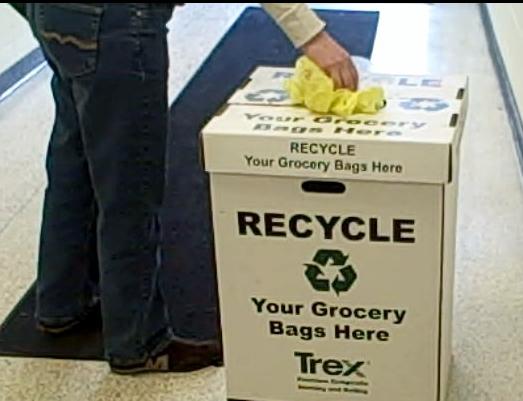
Consider this: Plastic carryout bags are used for an average of just 12 minutes but live on in our environment for hundreds of years. Created from oil, plastic bags are non-biodegradable, harm wildlife, debilitate recycling facilities and pose threats to public health.
At least 600 species of wildlife have been harmed by plastic pollution, according to the U.S. Environmental Protection Agency. Seabird species such as ospreys and cormorants are particularly vulnerable to the effects of ingesting plastic particles, leading to intestinal blockage and reproductive failure. To paint an even bigger picture, projections warn that by 2050 there will be more plastic than fish in our oceans.
In a state where residents use approximately 4.4 billion bags each year, it’s clear that we don’t have any time to waste to bag up this mess. The good news is that the wheels are in motion.
A bill that would impose a 5-cent fee on carryout bags currently awaits Gov. Phil Murphy’s pen, but it needs some work. NJ Audubon is urging the governor to conditionally veto A3267/S2600 to close significant loopholes that would exclude certain populations and stores from complying, allow stores to provide thicker plastic bags to customers free of charge, and preempt municipalities from passing their own bag laws.
This is not a bad bill, and a bag fee will certainly not be bad for our environment as some reports have claimed. Rather, it’s an excellent first step to curb the use of plastic bags through behavior change that can be made significantly stronger with a few amendments.
Fees across the U.S. have dramatically reduced and prevented plastics from entering our environment. Washington, D.C.’s 2010 implementation of a 5-cent bag fee resulted in a 60 percent reduction in plastic waste. Six months after Boulder, Colorado implemented a 10-cent bag fee, use of single-use bags declined 68 percent.
Completely eliminating plastic bags is a goal shared by many. However, reducing plastic bag use by more than half within months of enactment cannot be called anything but progress. The current bill grandfathers in all cities and counties that pass ban ordinances before the governor signs the bill. Jersey City, the second largest city in the state, is the latest to act to ban bags. If the governor strengthens the bill on his desk, hundreds of thousands of New Jerseyans will be covered under a bag ban and the rest of the state will comply with a fee, reducing bag pollution significantly in the near term.
This is a first step, not the end of the discussion. A hybrid structure, popularly demonstrated in California, is ideal and consists of a ban on plastic bags and a fee on all other bags. We look forward to working toward a hybrid model in New Jersey as well as addressing other sources of plastic pollution such as straws and polystyrene, but immediate action is needed now.
A strengthened version of the bill on Murphy’s desk will move our state forward. This bill represents real action to deal with a problem we’ve been talking about for years. We can’t afford to miss this opportunity to break the plastic habit. Our waterways and wildlife will thank us.
New Jersey Audubon weighs in on plastic bag fee vs. ban Read More »