Does pollution from Fort Dix threaten downstream water?


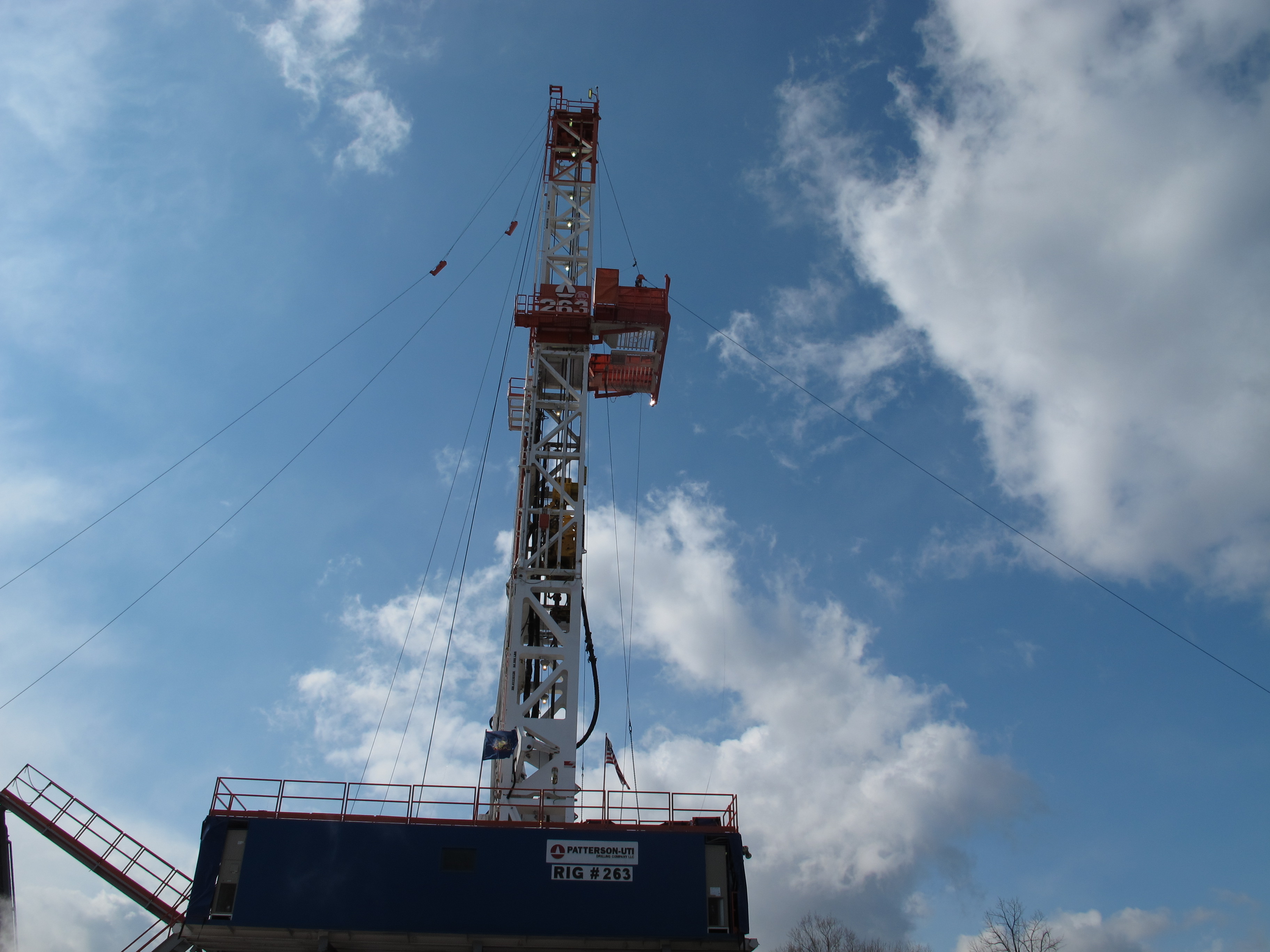
Contaminants in groundwater exiting Fort Dix in New Jersey have been discovered at levels far exceeding national safety standards. This is causing concerns for private and public drinking water downstream from the base.  


In our latest podcast episode, we discuss the issue with Jon Hurdle, a Philadelphia-based freelance writer, who reports for StateImpact, NJ Spotlight and The New York Times.


Listen to the episode here

Like what you hear? Then subscribe to our free podcast on:
iTunes (Podcast App on  your iPad, iPhone)

Stitcher (Android)
Player FM
MixCloud

and other popular podcast services.

It’s easy to do and you’ll never miss a future episode.

See and hear all 15 previous episodes 

Questions? Email: frankbrilljr@gmail.com or 609-577-9017

Does pollution from Fort Dix threaten downstream water? Read More »

EPA announces $14M cleanup of Gibbsboro (NJ) dump site

This news release just in from the Environmental Protection Agency (EPA)


(New York, N.Y. –  March 30, 2017) The U.S. Environmental Protection Agency today announced a legal agreement with the Sherwin-Williams Company to clean up lead and arsenic contaminated soil and sediment at the Route 561 Dump site in Gibbsboro, N.J. The site is near a former paint manufacturing plant and was used as a paint waste dump. The Route 561 Dump site includes businesses, a vacant lot, White Sand Branch creek, and wetlands. Sherwin-Williams will pay an estimated $14 million to clean up the site, and pay the EPA’s expenses in overseeing the work.
“This agreement allows us to move forward on this much needed cleanup of contaminated soil and sediment and to protect the health of people who live and work in this community,” said Catherine McCabe, Acting EPA Regional Administrator. “Cleanup of the Route 561 Dump Site is being paid for by Sherwin-Williams, not the taxpayers, which is an important feature of EPA’s site cleanup program.”

The soil and sediment cleanup at the Route 561 Dump site builds on previous work conducted at the site to address immediate risks. For this phase of cleanup, the EPA will oversee the removal of contaminated soil and backfilling of excavated areas with clean soil. Contaminated soil will be properly disposed of at approved facilities that are licensed to handle the waste. In total, approximately 23,000 cubic yards of contaminated soil will be removed.  Following excavation and backfilling, a soil cover will be placed over vegetated areas and an asphalt cap will be placed over portions of commercial properties. The remedy also requires excavation of contaminated sediment from White Sand Branch. The EPA will coordinate with property owners and occupants to ensure that the work is done with minimal disruption. The EPA will monitor the air near work areas throughout the process to ensure the safety of workers and the surrounding community.

EPA is requiring that deed notices be placed on the land to inform the public and limit their exposure to contaminated soil. The EPA will conduct a review every five years to ensure the effectiveness of the cleanup.

The Route 561 Dump site, the Sherwin-Williams/Hilliard’s Creek Superfund site, and the United States Avenue Burn Superfund site are all sources of contaminated soil and sediment, which has spread onto a number of residential properties within Gibbsboro and Voorhees, N.J.  Under previous orders by the New Jersey Department of Environmental Protection and the EPA, Sherwin-Williams has:
  • removed 8,096 cubic yards of sludge from a former lagoon area
  • removed 44,785 gallons of liquid waste
  • installed a soil vapor extraction treatment system to reduce the volatile organic compounds in soil near two former plant buildings
  • installed fencing to limit access to some source areas, and
  • started soil cleanup at residential properties, which is ongoing.
Lead is a neurotoxin and increasing amounts build up in the body. Even at low levels, lead in children can lower I.Q.s, cause learning disabilities, damage hearing, reduce attention spans, and cause hyperactivity and other behavior problems. Arsenic is toxic, can damage people’s health, and can cause cancer. This cleanup reduces the potential for harm to people’s health from coming into contact with, or accidentally ingesting, soil or creek sediment contaminated with lead and arsenic.

The Superfund program operates on the principle that polluters should pay for the cleanups, rather than passing the costs to taxpayers. The EPA searches for parties legally responsible for the contamination and it seeks to hold those parties accountable for the costs of investigations and cleanups.

The EPA held a public meeting in Gibbsboro in June 2016 to take public comment on cleanup options for the Route 561 Dump site and EPA’s proposal.  The cleanup plan was finalized by the EPA in September 2016.

The Administrative Order on Consent can be viewed at https://semspub.epa.gov/src/document/02/413752. Project documents for the Route 561 Dump cleanup can be viewed at https://www.epa.gov/superfund/route-561-dump. Follow EPA Region 2 on Twitter at http://twitter.com/eparegion2 and visit our Facebook page, http://facebook.com/eparegion2.

Like this? Use form in upper right to receive free updates
See popular posts from the last 30 days in right column —
>>

EPA announces $14M cleanup of Gibbsboro (NJ) dump site Read More »

NJ court approves road along Pinelands hiking trail


DEP reverses earlier decisions to deny construction permits; court upholds agency, frustrating ‘greens’ who argued against project

lacey railtrail

Parts of the popular Lacey rail trail are located near the Pinelands National Reserve.
A state appeals court yesterday tossed out a suit brought by conservationists who sought to block the construction of a nearly two-mile road on portions of a popular biking and walking trail near the Pinelands National Reserve.
In a unanimous decision, the three-judge panel found that the state Department of Environmental Protection, which previously had twice denied permits for the project, acted within its authority in granting approval for a slightly revamped version.
The project had been opposed by four conservation organizations, which had argued in court that the state agency had failed to justify its reversal on the proposal and neglected to recognize the trail as public open space. The court rejected those assertions in a 43-page unpublished decision.
The 1.9-mile bypass road, designed to ease congestion on the busy Route 9, has been under consideration for the past decade. The road runs along an abandoned rail line, once operated by the Central Jersey Railroad, and now used as a recreational trail.
Like this? Use form in upper right to receive free updates
See popular posts from the last 30 days in right column —
>>

The trail winds its way through pine and oak forests with indirect access to many parks and recreation areas, including the Forked River Game Farm and Double Trouble State Park.

In its decision, the court essentially bowed to the expertise of the state agency in deciding to grant a Coastal Area Facility Review for the project, noting the DEP had insisted on a number of adjustments in the route of the project.
“We accord deference to a final agency action, and will not substitute our judgment for the expertise of an agency so long as that action is statutorily authorized and not otherwise defective because arbitrary or unreasonable (or not supported by the record),” the court said.
As for whether the land was designated for open space, the court noted that the DEP, in granting the permit, concluded the land was not public open space after finding it was purchased by Lacey Township “for the purpose of construction of the road project’’ and was not “dedicated for conservation, public recreation, public access, or wildlife protection.’’
The case is the latest in which environmental groups are challenging decisions they believe are undercutting protections to safeguard the Pinelands, a 1-million-acre expanse of pine forests set aside for preservation four decades ago. Yesterday, the Pinelands Preservation Alliance announced it was going back to court to try and prevent construction of a 22-mile pipeline, 10 miles of which would traverse the forested area of the preserve.
“What we’ve seen with Gov. (Chris) Christie, it’s been death by a thousand cuts. It’s a roadway here, a pipeline there, and just one thing after another,’’ said Jeff Tittel, director of the New Jersey Sierra Club, one of the organizations involved in the Lacey lawsuit. Lacey Rail Trail Environmental Committee; Save Barnegat Bay; and the American Littoral Society were the other appellants in the lawsuit.

Like this? Use form in upper right to receive free updates
See popular posts from the last 30 days in right column —
>>

NJ court approves road along Pinelands hiking trail Read More »

Monmouth, NJ residents RAGE over high-voltage line plan

A large and vocal crowd are attending a public meeting tonight in Monmouth County to oppose a high-voltage power line proposed by JCP&L.They say, if approved, the project would ruin their property values and put their children at risk. Brenda Flanagan covers the story above for NJTV News.


Like this? Use form in upper right to receive free updates
See popular posts from the last 30 days in right column —
>>

Monmouth, NJ residents RAGE over high-voltage line plan Read More »

NJ Pinelands battle over gas pipeline heads back to court


Pinelands Preservation Alliance argues that 22-mile conduit violates its Comprehensive Management Plan

b.l. england

Credit: Kirk Moore
B.L. England power plant in Cape May County
Tom Johnson reports
for NJ Spotlight


The South Jersey Gas pipeline is headed back to litigation.
The Pinelands Preservation Alliance yesterday filed an appeal in the appellate division challenging the approval of the 22-mile project through the Pinelands.
In a meeting last month, the Pinelands Commission approved the project, which will supply natural gas to the B.L. England power plant in Beesley’s Point, in a packed public meeting in Cherry Hill over the protests of hundreds.
The project, tied up in litigation and disputes for the past six years, would cross 10 miles of forest through the Pinelands, a 1–million-acre preserve set aside more than four decades ago. Opponents say it violates the agency’s Comprehensive Management Plan.
Despite the ongoing controversy, the Christie administration has steadfastly backed the project, which would allow the power plant to convert from coal to cleaner- burning natural gas. It has won support from many legislators, business interests and labor.
Four former governors, virtually all of the state’s environmental groups, and thousands of residents have opposed the project since early in its review process.
“Over the last four years, we have seen some politicians, South Jersey Gas, and the staff of the Pinelands Commission do everything in their power to move this forward,’’ said Carleton Montgomery, executive director of the alliance.
If the project is not built, the B.L. England plant will have to shut down under a consent decree with the state Department of Environmental Protection.


Like this? Use form in upper right to receive free updates
See popular posts from the last 30 days in right column —
>>

NJ Pinelands battle over gas pipeline heads back to court Read More »

Bridget Kelly sentenced to 18 months in Bridgegate

Here’s NJTV News’ coverage of the sentencing today of Bill Baroni and Bridget Kelly in the Bridgegate political scandal.


More coverage coming…

Related news stories: 
Bill Baroni draws two-year jail sentence for Bridgegate
Former Christie allies get prison time for their roles in the Bridgegate scandal


Like this? Use form in upper right to receive free updates
See popular posts from the last 30 days in right column —
>>


Bridget Kelly sentenced to 18 months in Bridgegate Read More »