Pinelands commissioner sues online critics of pipeline vote

Joseph P. Smith reports for The Daily Journal:  

BRIDGETON – A state Pinelands Commission member is taking 14 people into state court over comments posted on her business Facebook pages, including one unsympathetic lyrical comparison to the devil, over her support for a natural gas pipeline.                        

Read the full story here

Like this? Use form in upper right to receive free updates
See popular posts from the last 30 days in right column — >>

Pinelands commissioner sues online critics of pipeline vote Read More »

Climate Change May Be Intensifying China’s Smog Crisis


BEIJING — Chinese leaders, grappling with some of the world’s worst air pollution, have long assumed the answer to their woes was gradually reducing the level of smog-forming chemicals emitted from power plants, steel factories and cars.

But new research suggests another factor may be hindering China’s efforts to take control of its devastating smog crisis: climate change.

Changing weather patterns linked to rising global temperatures have resulted in a dearth of wind across northern China, according to several recent studies, exacerbating a wave of severe pollution that has been blamed for millions of premature deaths.

Wind usually helps blow away smog, but changes in weather patterns in recent decades have left many of China’s most populous cities poorly ventilated, scientists say.

The findings, some of the first to link climate change to smog, may escalate pressure on Chinese leaders to move more swiftly to shutter steel factories and coal-fired power plants amid rising public anger over smog caused by soot and gases like sulfur dioxide.

The research could also push China to assume an even more forceful role in international efforts to curb climate change by reducing carbon emissions, at a time when the United States, under President Trump, appears to be backing away from the issue.

“Everyone used to think that controlling smog hinged on reducing regional pollution,” said Liao Hong, a professor at Nanjing University of Information Science and Technology and the co-author of a climate change study published this week. “Now it’s clear that it will require a global effort.”

As public outrage has grown in China over dirty skies and a rash of respiratory illnesses linked to smog, Chinese officials have redoubled efforts in recent years to fight air pollution. They have sent teams of police officers to inspect factories, closed hundreds of coal-fired power plants and imposed limits on driving and activities like outdoor barbecuing.

Premier Li Keqiang, speaking at the annual session of China’s legislature this month, vowed to “make our skies blue again” and promised to take further steps to reduce the use of coal.

But even if Chinese officials push forward with ambitious plans to cut emissions, they may struggle to offset the effects of climate change, the findings suggest.

Ms. Liao’s study, which examined data on pollution in Beijing from 2009 to 2016, predicted that weather conditions associated with severe smog would become increasingly common in coming decades. The study did not account for possible reductions in carbon emissions under the 2015 Paris Agreement on climate change.

Scientists point to the so-called airpocalypse that fell on Beijing in January 2013 as an example of the effects of climate change on smog.

During that episode, Beijing and dozens of other cities in northern China were shrouded in toxic haze for days. Despite emergency measures to cut emissions, the concentration of PM2.5, particles of a size that can penetrate the bloodstream, remained dangerously high.

Researchers now attribute the resilience of smog during that period to unusually stagnant air conditions brought on by climate change. The air was the stillest in three decades during the heavy particulate pollution in 2013, according to a study published this month in the journal Science Advances.

The study found that the melting of ice in the Arctic, combined with increased snowfall in Siberia, contributed to changes in wind patterns across Asia that winter that failed to clear the air over northern China.

Yuhang Wang, an atmospheric scientist at Georgia Institute of Technology in Atlanta who was a co-author of the study, said the results suggested that Chinese officials would have an especially difficult time curbing air pollution in the winter, when weather conditions are most conducive to smog and more coal is burned for heating.


The Ministry of Environmental Protection pledged this month to put in place stricter policies to curb winter air pollution. Beijing is set to host the Winter Olympics in 2022.

“In the long run, emission reductions of both pollutants and greenhouse gases are needed to mitigate the winter haze problem,” Mr. Wang said.

Read the full story here

Like this? Use form in upper right to receive free updates
See popular posts from the last 30 days in right column — >>

Climate Change May Be Intensifying China’s Smog Crisis Read More »

EnviroPolitics Podcast #15 – Week in Review – Mar 20-24

In this week’s Episode (#15), we look back at some of the political and environment stories featured last week in our daily subscription newsletter, EnviroPolitics or its free companion–EnviroPolitics Blog.

Listen to the episode here  

You can subscribe to our podcast for fee on:
iTunes (Podcast App on  your iPad, iPhone)

Stitcher (Android)
Player FM
MixCloud

and other popular podcast services.

It’s easy to do and you’ll never miss a future episode.

See and hear all 15 episodes 

Questions? Email: frankbrilljr@gmail.com or 609-577-9017

EnviroPolitics Podcast #15 – Week in Review – Mar 20-24 Read More »

How the overworked, unstable El, Philadelphia’s transportation aorta, just might be saving the city


Mark Dent, Anna Orso and Cassie Owens 
report for BillyPenn:

The creaky, overburdened Market-Frankford Line has as important a place among millennials, immigration, and swanky restaurants as keys to Philadelphia’s early 21st century turnaround.

For the next few weeks, the Inquirer and Billy Penn will be teaming up with stories like this to show how important the El has become to the city’s continued growth — and examine why the fruits of that growth have not benefited more stops along the way.


THE RISE OF THE EL
 

I rode the El from end to end for the first time
 

Jesse Hein bought a new house with his husband about a year ago in Kensington near York Street. The rowhouse — just a few blocks away from the Berks Street station on the Market-Frankford line — had only been on the market a month. Hein, a communications professional at a Center City healthcare company, said its proximity to the El is one of the main reasons he chose the area.

Today, Hein concedes, he probably couldn’t afford a home like that in his neighborhood because of skyrocketing prices and the flurry of development. Hein, 29, drives only four or five times a year. He realizes he couldn’t operate without the El.

“It was absolutely awful during the SEPTA strike, and it sounds silly, but it really threw everything into chaos,” he said. “When the El is messed up, it really throws my day into a tailspin pretty hard.”

Any time there’s even a minor disturbance on the El, a domino effect can stall riders and overburden platforms along the 13-mile stretch from Frankford to Upper Darby. Buses are pressed into service as ad hoc shuttles — easing the load on the tracks, but clogging already-gridlocked streets of the old city.

If you’re a commuter, a patient headed toward the doctor or a student on the way to class, SEPTA can absolutely ruin your day: When the El goes out, Philly slows down.

But the crises on an overworked, aging infrastructure underscore how valuable the Market-Frankford Line is to Philadelphia. For years, the city shed population and appeared headed toward the fate of Rust Belt cities such as Detroit and Cleveland. Around 2000, this changed. Experts pointed to any number of factors, including immigrants, empty-nesters, and millennials, and civic leaders bragged about a restaurant scene drawing national envy, beer gardens and even Jay Z and his “Made In America” festival.

New numbers from the transit agency tell a different story. The creaky, overburdened Market-Frankford Line has as important a place among millennials, immigration, and swanky restaurants as keys to the city’s early 21st century turnaround. Its cars carry more people than they have in decades. That’s why the Inquirer teamed up with Billy Penn to write about how important the El has become to the city’s continued growth — and examine why the fruits of that growth have not benefited more stops along the way.
Change along the rails

Much of Philly’s resurgence straddles the Market-Frankford Line. Take away the census tracts abutting the El, and Philly’s average annual growth rate the last few years is only about 0.4 percent. Clustered around the El, it’s 1.5 percent, a rate surpassing the performance of most American big cities.

Richard Montanez, chief traffic and street lighting engineer of the Streets Department, called the El one of the city’s “aortas.”

“It is a major lifeline in the city of Philadelphia,” he said, adding, “I don’t think the city could be what the city is without it.”

Read the full story here

Like this? Use form in upper right to receive free updates

See popular posts from the last 30 days in right column — >>


How the overworked, unstable El, Philadelphia’s transportation aorta, just might be saving the city Read More »

NJ Gov. Christie signs $400M transportation spending bill

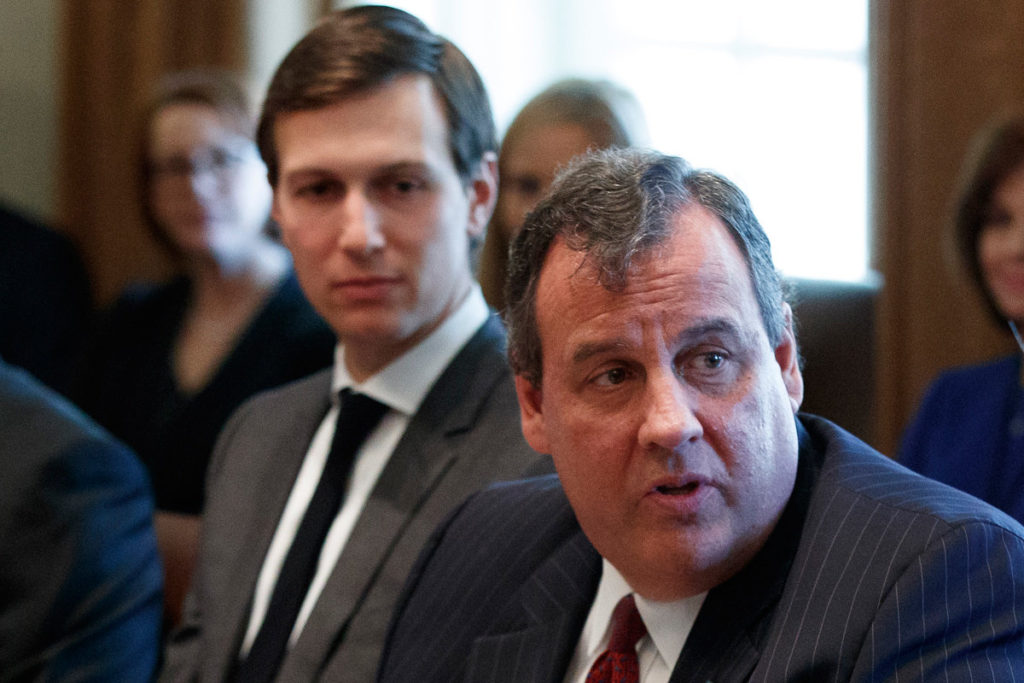
Gov. Chris Christie signs the $400M transportation funding appropriation (

Andrew George writes for

Gov. Chris Christie signed a bill Monday that will give New Jersey’s Transportation Trust Fund immediate access to a $400 million supplemental appropriation for road and transit projects.
The bill, passed by the state Legislature last week in response to Christie’s recent call for more transportation funding this year, allocates $260 million for projects involving roads and bridges and $140 million for matters related to New Jersey Transit.
Like this? Use form in upper right to receive free updates
See popular posts from the last 30 days in right column — >>


The state Department of Transportation will have 100 days to decide which projects receive funding.
With the appropriation, the Transportation Trust Fund now has access to roughly $2 billion in spending for the current fiscal year.
Christie signed the bill Monday at LiUNA Local 172 in Trenton and emphasized that a bipartisan effort, particularly with Senate President Steve Sweeney (D-West Deptford) and Assembly Speaker Vincent Prieto (D-Secaucus), was needed to advance the measure forward.
“Everybody doesn’t get everything they want, but everybody gets some of what they need,” Christie said.
The additional funding comes as a result of Christie’s deal with the Legislature last year to raise the state’s gas tax by 23 cents per gallon in an effort to replenish the then-depleted Transportation Trust Fund with an eight-year, $16 billion plan with matching federal dollars.
Christie said that, although he had given “his word” that he would address the Transportation Trust Fund, he guessed that many in the room Monday didn’t think he would move ahead with the gas tax hike.
“When I say I’m going to do something, I do it,” Christie said. “When I say I won’t, I won’t.”
Since then, Christie says, states like Alaska, Tennessee and Indiana have all considered proposals to increase their own gas taxes in order to fund infrastructure projects. And still, he maintains, nearby states like New York, Connecticut and Pennsylvania continue to have higher-priced gas than New Jersey.
Christie added that his decision to tackle the Transportation Trust Fund last year will be particularly beneficial to whomever is set to replace him, following the state’s upcoming gubernatorial election later this year. Raising taxes, especially at the pump, is not a politically friendly strategy, no matter how pertinent, and there would be no guarantee that the next governor would agree to it, Christie said.
“I’m leaving, and you don’t know what you’re going to get next,” Christie said.

Like this? Use form in upper right to receive free updates

See popular posts from the last 30 days in right column —
>>

NJ Gov. Christie signs $400M transportation spending bill Read More »

Will NJ tighten up fuel standards to keep up with Cali?


Garden State belongs to coalition that has agreed to lower emission standards in step with the Golden State

electric vehicle charging

Tom Johnson reports for
NJ Spotlight:


For the time being, New Jersey is still going to have to figure out a way to begin selling low-emission vehicles in greater numbers.
In a vote on Friday, a California agency moved to press forward with a plan to require car manufacturers to offer cars and trucks with much lower emission standards, a program New Jersey and eight other states have agreed to follow.
The action by the California Air Resources Board sets up a potential confrontation with the Trump administration, which reportedly is considering pulling a waiver under the federal Clean Air Act, which allowed California to write and other states to abide by more stringent pollution standards for vehicles than the rest of the nation.
President Donald Trump already has acted to relax tougher fuel-efficiency standards adopted by the Obama administration for vehicles — a move backed by the auto industry, which also is seeking relief from the so-called California Low-Emission Vehicle program.
If California prevails in the fight, it would mean manufacturers would be required to sell vehicles with much lower emission limits, and zero-emission vehicles, either electric or powered by fuel cells, in the states. By 2018, at least 5 percent of the vehicles would have to be zero-emission, a tough goal to meet given that New Jersey has not built out an infrastructure to fuel or recharge such vehicles.
Still, in a state where clean-energy advocates have long criticized the efforts to shift to less-polluting transportation sector, the action by California was welcomed. Cars, trucks, and other forms of transit make up the largest source of emissions in New Jersey contributing to global warming.
“We have been hoping they would act,’’ said Pamela Frank, executive director of Charge EVC, a coalition promoting electric vehicles. “It lays a good foundation to get the market moving.’’
“It’s the best antidote to the Trump administration’s rollbacks on the environment,’’ agreed Doug O’Malley, director of Environment New Jersey, referring to the California clean-car program. “For New Jersey, it is so important because over half of our carbon emissions come from cars and trucks.’’
“We’re on the hook beginning next year to start selling more electric vehicles,’’ O’Malley noted.
To some, the market needs a big push in New Jersey, which has fewer than 500 electric-vehicle charging stations, a fact that some blame on the lackluster sales of the zero-emission vehicles.
If the auto industry fails to meet the targets for selling such vehicles, which ramp up as the years pass by, it could face fines that are likely to be passed on to motorists, dealers say.
The auto industry also contends that the California emission standards pose a huge challenge and would likely greatly increase their costs. By 2025, under the program, the average fuel economy for new vehicles would jump to 54.5 miles per gallon.
Clean-energy advocates hope a settlement with Volkswagen over the automaker’s cheating on diesel-emissions tests could provide money to bolster the state’s efforts to usher in electric vehicles. New Jersey stands to receive $65 million from the case; about 15 percent of that could be used to promote zero-emission vehicles.

Like this? Use form in upper right to receive free updates
See popular posts from the last 30 days in right column —
>>

Will NJ tighten up fuel standards to keep up with Cali? Read More »