Some utilities–like PSEG–are rethinking business model


Some states are successfully using ‘decoupling’ as a way to get power companies to convince customers to use less energy — without taking an economic hit

Ralph Izzo, chairman, CEO,
and president of PSEG

Tom Johnson reports for NJ Spotlight:


If the state is going to be more successful in cutting energy use and saving consumers money in the process, it needs to revamp its business model for utilities, according to New Jersey’s most prominent energy executive.
In a keynote address on the state’s evolving energy needs, Ralph Izzo, the chairman, president, and CEO of Public Service Enterprise Group, offered the company’s most expansive plea to date to develop a new regulatory model to encourage utilities to more aggressively invest in energy-efficient technology.
Izzo suggested that Public Service Electric & Gas, the state’s oldest and largest utility as well as PSEG’s most profitable business, is interested pursuing an overhaul of the century-old utility system.
Talks to that effect are now occurring in Trenton among a wide-ranging legislative task force, but similar efforts in the past have proved fruitless. Still, utilities are increasingly being squeezed financially by an array of changes sweeping the sector — declining energy use; increased reliance on cleaner and more localized energy sources, such as solar; and demands for better reliability.
“Meeting new expectations will require utilities to evolve,’’ Izzo said. “Energy efficiency is what the customers need… and we want to make it easy for them to get it.’’
Twenty-nine states already have embraced one new utility model in some form, a system dubbed “decoupling’’ in energy jargon. According to Izzo, “It seems to be a promising way to help make that (energy efficiency) happen.’’

Read the full story here

Like this? Use form in upper right to receive free updates 
See popular posts from the last 30 days in right column — >>

Some utilities–like PSEG–are rethinking business model Read More »

Star-Ledger’s Tom Moran says: Give fracking a chance

JPIPE27-F

The columnist and chief editorial writer for New Jersey’s largest newspaper–the Star-Ledger–says give fracking a chance (with tighter regulations).  His    column, reproduced below, has already generated 61 comments. Give it a read and let us know what you think. To do so, click the tiny ‘comments’ line at the bottom of this post.

Climate change is why environmentalists must reconsider fracking | Moran


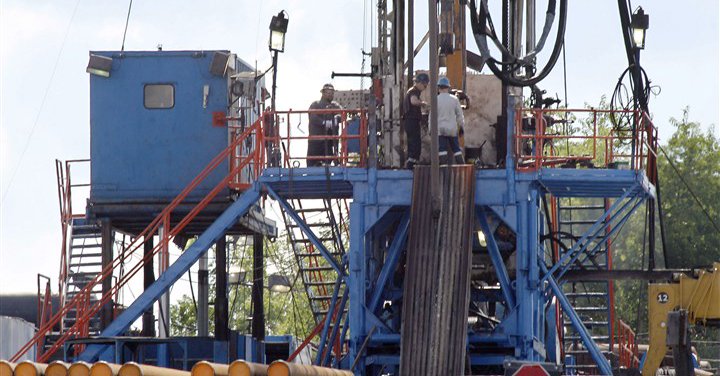
The Sierra Club, like most environmental groups, vehemently opposes fracking for natural gas, and building pipelines to send it to market.
But it’s time for them to take a fresh look. PSEG announced last week that it will close two enormous coal plants, one near Trenton and the other in Jersey City. By switching to natural gas, carbon emissions will drop by about half.
Why did PSEG make this decision? Mainly because it’s now cheaper to run a power plant on natural gas, thanks to the abundant supplies produced by fracking.
Power companies across the country are making the same decision, with coal burning dropping by 9 percent this year alone. This transition has actually dropped power plants behind transportation as the largest source of carbon emissions for the first time in 1979 — a significant step in the greatest environmental challenge we face.
No doubt, fracking presents two big risks. The process calls for pumping chemicals into the ground to force out the natural gas, and that puts water supplies at risk. And leaks of methane, a gas that is an even more potent risk to the climate than carbon, can undercut the gains of this switch.
But those risks can be managed with vigorous regulation. The Obama administration has found only a few isolated cases of water contamination, and believes the methane leaks are not big enough to outweigh the clear advantages of switching to natural gas. It is studying ways to further reduce both risks with more strict oversight.
The fight against climate change is a desperate one that we are losing. Even if all nations honor the ambitious pledges made during the Paris talks in 2015, scientists say it will be only a start, and that much more must be done to avert catastrophe.
Yes, the ultimate challenge is to wean ourselves off fossil fuels entirely. And a hefty carbon tax is the best way to start. But Washington isn’t close to doing that.
Even when they do wake up, as they will have to eventually, a carbon tax would not suddenly end our reliance on all fossil fuels. It would take years, probably decades.
We need to bring a fanatic realism to this fight, and that means taking every step we can to reduce carbon emissions now. Including fracking.
So let’s not end fracking just yet.   61 Comments

Tom Moran may be reached at tmoran@starledger.com or call (973) 836-4909. Follow him on Twitter @tomamoran. Find NJ.com Opinion on Facebook.


Like this? Use form in upper right to receive free updates
See popular posts from the last 30 days in right column — >>

Star-Ledger’s Tom Moran says: Give fracking a chance Read More »

Bridgegate: Prosecution rests case on infamous email

Bill Baroni and  Bridget Anne Kelly  – DANIELLE PARHIZKARAN/STAFF PHOTOGRAPHER


Paul Berger reports for The Record:


After almost four weeks of testimony, prosecutors wrapped up their case against two former allies of Governor Christie by calling an FBI agent to testify that she was unable to find several crucial emails between a former aide to Christie and the admitted mastermind of the George Washington Bridge lane closures.


Special Agent Michelle Pickels testified in federal court in Newark on Thursday that she had a copy of the emails between the governor’s former deputy chief of staff, Bridget Anne Kelly, taken from bridge plotter David Wildstein’s email account.

An in-depth look at the scandal over the lane closures at the George Washington Bridge and related aftershocks. Click here to launch.

But Pickels said that when she searched Kelly’s Yahoo account, she could not locate those same emails. The missing messages included the now-infamous August 2013 email from Kelly to Wildstein, first reported by The Record: “Time for some traffic problems in Fort Lee.”


Asked why she could not find those emails, Pickels responded: “I could not tell.”

Jurors were presented with the evidence immediately after watching video of a combative appearance by Kelly’s co-defendant, Bill Baroni, in 2013, before a legislative committee probing the lane closures.


Lawyers for Baroni, the former deputy executive director of the Port Authority of New York and New Jersey, had fought to keep the video out of the trial.

The recording showed Baroni testify that Fort Lee unfairly benefited from having three access lanes to the congested bridge and that the lane reductions, over five mornings in September 2013, were part of a legitimate traffic study.

Over the course of about 1½ hours, Baroni comes under sustained interrogation in the video from a panel of angry and deeply skeptical lawmakers led by Assemblyman John Wisniewski, D-Middlesex.


Baroni and Kelly, both 44, are accused of reducing the lanes from three to one to punish the mayor of Fort Lee for refusing to endorse the governor’s 2013 reelection bid.

The mayor, Mark Sokolich, and his police chief, Keith Bendul, testified earlier in the trial that the closures caused gridlock in their town, severely delaying commuters, school buses and first responders. Both men said that their repeated phone calls and messages requesting relief from the Port Authority during the week of the closures went unreturned and unheeded.


During the legislative testimony, Baroni stated that the lanes from Fort Lee constituted 25 percent of the access to the upper level of the bridge but were used almost exclusively by Fort Lee residents, constituting less than 5 percent of bridge traffic. Previously, the jury heard from Port Authority traffic specialists that 25 percent of vehicles on the upper level used the three Fort Lee lanes, many of them originating from other North Jersey towns.


Baroni also told lawmakers that the lane reductions were requested by leaders of the Port Authority Police Benevolent Association. Earlier this week, the jury heard Officers Paul Nunziato and Mike DeFillipis testify that Baroni asked them to falsely state that the lane reductions were their idea. The two testified that they had refused.


Exchanges in the video between Baroni and Wisniewski were particularly tense, with both men disagreeing, talking over and making cutting comments toward each other. Wisniewski complimented Baroni several times on his “valiant” attempts to dodge questions.

At one point, Baroni offered to take Wisniewski on a field trip to look at access lanes to the Lincoln Tunnel.


“Come on. I’ll even pack your lunch,” Baroni said.

“I would want to get it tested first,” Wisniewski responded.

Read the full story here

Like this? Use form in upper right to receive free updates 
See popular posts from the last 30 days in right column — >>
Bridgegate: Prosecution rests case on infamous email Read More »

Judge finds probable cause in GWB complaint vs. Christie


Salvador Rizzo reports in The Record:


Governor Christie may have broken New Jersey law during the George Washington Bridge lane closures, a municipal court judge ruled Thursday.

Judge Roy F. McGeady of Bergen County found probable cause that Christie engaged in official misconduct during the 2013 lane closures and issued a summons for the governor to appear Oct. 24.  


An in-depth look at the scandal over the lane closures at the George Washington Bridge and related aftershocks. Click here to launch.

Probable cause is a relatively low bar in the legal system that allows law enforcement agencies to search, charge or arrest individuals suspected of wrongdoing, but it is not enough to prove guilt.

Christie said through a spokesman that he is appealing the ruling immediately and that the citizen who filed the court complaint against him is “a political activist with a history of abusing the judicial system.”
It is now up to the Bergen County Prosecutor’s Office to decide whether to pursue an indictment against Christie. A spokeswoman for acting Bergen County Prosecutor Gurbir S. Grewal, a Christie appointee, declined to comment Thursday.

For years, Christie has denied any knowledge of the plot to close Fort Lee access lanes to the world’s busiest bridge. But lawyers for the prosecution and the defense in the ongoing Bridgegate trial have cast doubt on Christie’s assertions.

A former political operative for Christie who plotted the scheme, David Wildstein, testified in federal court that he discussed the lane closures with the governor during a Sept. 11 memorial ceremony at Ground Zero, while a massive traffic jam was paralyzing Fort Lee. Christie has said he does not recall Wildstein’s comments.

Wildstein is the main witness for the prosecution and says he is cooperating with U.S. Attorney Paul Fishman’s investigation in part because he hopes to avoid prison.

A former firefighter from Teaneck, Bill Brennan, filed a complaint against Christie in municipal court based on Wildstein’s testimony.

Brennan argues that Christie engaged in official misconduct because he should have reversed the lane closures once he became aware of them. Under state law, official misconduct is punishable by five to 10 years in prison.

Like this? Use form in upper right to receive free updates 

See popular posts from the last 30 days in right column — >>


Judge finds probable cause in GWB complaint vs. Christie Read More »

Labor unions backing a NJ Republican in Congress? Yes.

Chris Opfer of Bloomberg’s Bureau of National Affairs reports:
Labor unions are spending some of their campaign cash on an unlikely ally as the election season heads into the final stretch: a New Jersey Republican running against a former Obama administration adviser.
Frank LoBiondo
Labor groups have chipped in about $316,000 toward Rep. Frank LoBiondo’s re-election campaign, more than unions have contributed to all but one other congressional candidate of either party this cycle. That’s also six times more than Democratic challenger Dave Cole has received in contributions from all sources in his uphill battle for LoBiondo’s seat.
The figures, compiled by the Center for Responsive Politics and based on disclosures through the second quarter of this year, don’t include outside spending by unions or dark money funneled through Super PACs. The contributions to the 11-term Republican come from some of the same labor organizations that are pushing to secure Democratic control of the Senate and to send Hillary Clinton to the White House.
“We’ve supported Frank LoBiondo for 20 years, and he’s supported us,” UNITE HERE Local 54 President Bob McDevitt told Bloomberg BNA. The union represents casino workers in Atlantic City, part of LoBiondo’s district. “We don’t discard political allies just because there’s someone else running from the Democratic party,” McDevitt added.
Labor groups told Bloomberg BNA that they’re backing LoBiondo based on their history with the candidate, not necessarily because he’s more aligned with them on the issues than Cole. They also noted that the South Jersey lawmaker has used his role as chair of a transportation subcommittee to fight against foreign airlines accused of trying to undercut U.S. air carriers by skirting labor laws. 

Read the full story here

Like this? Use form in upper right to receive free updates 
See popular posts from the last 30 days in right column — >>
Labor unions backing a NJ Republican in Congress? Yes. Read More »

Kelly’s lawyer: She and Christie discussed plot beforehand

Bridget Anne Kelly and legal team leave federal court on Tuesday. Katherine Taylor for The New York Times

Kate Zernike of The New York Times
reports today:
Bridget Anne Kelly discussed the
George Washington Bridge lane closings with her boss, Gov. Chris Christie of New Jersey, before they happened in
September 2013, her lawyer asserted in federal court here on Tuesday. She also
discussed them with him the week they were happening.
The lawyer, Michael Critchley, did
not elaborate on his cryptic claims, which he made while questioning a
prosecution witness.
Testimony in the trial has shown
that in the months after the lane closings, several of Mr. Christie’s top
advisers had told him that Ms. Kelly, his former deputy chief of staff, had
emails about the closings. Those people included his chief of staff, chief
counsel, press secretary, chief political adviser and an aide he had tapped to
lead the Port Authority of New York and New Jersey,
which runs the bridge.
Yet Mr. Christie, a Republican,
convened a staff meeting in December 2013 and angrily demanded to know if
anyone had knowledge or emails about the closings. An hour later, he held a
news conference where he said he was certain that none of his staff members had
any knowledge of or had been involved in the scheme.
When emails with Ms. Kelly’s name
appeared as a result of a legislative subpoena a month later, Mr. Christie held
another news conference and declared that she had lied to him.
It was, Mr.
Critchley said in court on Tuesday, a “sham.”
According to testimony in federal
court here, where Ms. Kelly and another former Christie aide, Bill Baroni, are
on trial for authorizing the lane closings and then covering them up, the
governor’s office was not much concerned about finding the truth about the
shutdown in the months after they took place.
Instead, the governor and his aides,
keenly aware of Mr. Christie’s presidential ambitions and how a scandal could
damage them, were more worried about keeping any evidence implicating his
office hidden.
Cross-examining
a former top Christie aide, Mr. Critchley offered tantalizing clues as to what
Ms. Kelly may say on the stand about what Mr. Christie knew about the closings,
which prosecutors say were meant to punish the mayor of  Fort Lee, N.J.,
for refusing to endorse the governor’s re-election.
 
Like this? Use form in
upper right to receive free updates
See popular posts from
the last 30 days in right column — >>

Kelly’s lawyer: She and Christie discussed plot beforehand Read More »