Wildstein says Christie knew; No evidence, Christie says

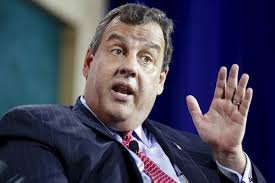
NJTV NEWS Correspondent Michael Aron calls Tuesday’s testimony by David Wildstein, a former aide to NJ Gov. Chris Christie, ‘explosive.’


Wildstein testified that the governor knew about the George Washington Bridge lane closures during the lane closures.


Like this? Use form in upper right to receive free updates 
See popular posts from the last 30 days in right column — >>

Wildstein says Christie knew; No evidence, Christie says Read More »

NJ’s largest utility moving into unregulated power sales

New Jersey’s largest utility is quietly setting up PSEG Energy Solutions to sell

Ralph Izzo, chairman, CEO, and president of PSEG

electricity and gas to commercial and industrial accounts

NJ Spotlight‘s Tom Johnson reports:

Public Service Enterprise Group is getting into the retail energy business.
The Newark energy company is quietly setting up an unregulated business called PSEG Energy Solutions to sell electricity and gas to commercial and industrial customers.
The venture, expected to be launched early next year, is similar to businesses already set up by energy conglomerates, including by affiliates of the owners of the three other electric utilities in New Jersey, all of which have retail subsidiaries.
PSEG Energy Solutions is initially focused on providing a hedge to its PSEG Power, which owns more than 12,000 megawatts of generating capacity. With power prices slumping, the new venture can assure all of its generation assets are maximized.
“Our intention is to help hedge the power portfolio,’’ said Tom Chamberlin, the newly hired managing director of PSEG Solutions. The company will not market to residential customers, unlike other retail businesses set up by competitors.
Since the state deregulated the energy marketplace, utilities have gotten out of the generation business, making a profit only on delivering electricity and gas to their customer through their poles, wires and pipes. Unregulated companies, largely energy companies with power plants, and suppliers that buy the electricity and gas and sell it directly to customers, have taken their place.
Exelon, which recently acquired Atlantic City Electric, owns Constellation, one of the largest retail energy businesses in the country, with 2 million customers. PSEG Solutions’ ambitions appear to be much more modest.
In an earnings call earlier this summer, Ralph Izzo, the chairman, CEO, and president of PSEG, used that term when describing the new company’s aims.
“We remain interested in retail for our defensive purposes managing basis risk and not as a significant growth opportunity by any stretch of the imagination,’’ Izzo said, when asked about the issue.
With power prices depressed, PSEG has relied on its utility, Public Service Electric & Gas, in the past couple of years to earn the bulk of its profits, primarily by investing heavily in a multibillion dollar capital construction program.
A lot of energy companies are getting involved in the retail energy business, according to Paul Patterson, an energy analyst with Glenrock Associates. “It’s a way of hedging their output,’’ he said.
Initially, PSEG Energy Solutions will focus primarily on the electricity sector in areas where its generation assets are located (primarily New Jersey and Pennsylvania), but it also wants the option to provide customers with gas. The company recently applied to the New Jersey Board of Public Utilities for licenses to sell electricity and gas.
The new company will probably be based in Newark, and is currently looking to fill two or three new positions, according to Chamberlin.

Like this? Use form in upper right to receive free updates 
See popular posts from the last 30 days in right column — >>

NJ’s largest utility moving into unregulated power sales Read More »

Under fire, PennEast proposes 33 pipeline route changes


Beset with criticism about the environmental impacts of its project, the developer of the PennEast natural-gas pipeline is proposing dozens of modifications to its route through parts of New Jersey and Pennsylvania.
Tom Johnson reports for NJ Spotlight:
The PennEast Pipeline Company LLC Friday filed new changes to its pipeline route with the Federal Energy Regulatory Commission, including seven in New Jersey. All told, the company made 33 modifications to the 118-mile route, adding two miles in the process.
The changes minimize environmental impacts by modifying the route to run along existing transmission lines — avoiding wildlife habitats and reducing tree clearing, according to the company. No new landowners are affected by the revisions, the company said.
But critics argued that the modifications — made after public comment closed on a draft environmental impact statement — demonstrate the harm posed by building the pipeline and called on regulators to undertake a new analysis of the project.
“It’s pretty significant route changes — both in New Jersey and Pennsylvania,’’ said Tom Gilbert, campaign director of the New Jersey Conservation Foundation. “It calls into question the whole EIS.’’
Not a single federal or state agency voiced any support for the projects submitted on its EIS, Gilbert noted. “FERC must withdraw the application to fully evaluate a no-action alternative.’’
But Pat Kornick, a spokeswoman for PennEast, said the company submitted its route modification based on comments made by the public and government agencies and were responsive to their recommendations.
The changes reduce the permanent impacts on forested wetlands by 64 percent; curb impacts to endangered species, including a known salamander habitat in Delaware Township; and incorporate 23 additional trenchless crossings to reduce impacts to pristine waterways. 
Read the full story here

Like this? Use form in upper right to receive free updates 
See popular posts from the last 30 days in right column — >>

Under fire, PennEast proposes 33 pipeline route changes Read More »

Bridgegate Trial Day 6: Wildstein on hatching the plot


The government’s star witness in the political conspir
acy trial of two former allies of New Jersey Gov. Chris Christie said he identified local access lanes to the George Washington Bridge as a “potential leverage point” against the mayor of Fort Lee two years before the plan was executed.


Paul Berger, reporting for The Record and reprinted in USA TODAY, writes:


David Wildstein also told a Christie-appointed GOP member of the Board of Commissioners of the Port Authority of New York and New Jersey about the plan a few weeks before it happened, he said Monday.


“I viewed Mr. (William “Pat”) Schuber as a loyal member of Governor Christie’s team,” Wildstein said. He added that he told Schuber that the order for the lane closures “came from the governor’s office” and Schuber told Wildstein that he understood.


Contacted later, Schuber’s lawyer, Salvatore Alfano, said Schuber “categorically denies that he had any conversation with Wildstein about the lane closures.”


Wildstein said that he informed Schuber of the plot because Schuber was a former Bergen County executive and he most likely would receive complaints once the closures took effect. 


Read the full story here.


Like this? Use form in upper right to receive free updates 
See popular posts from the last 30 days in right column — >>


Bridgegate Trial Day 6: Wildstein on hatching the plot Read More »

One of Philly’s most effective state reps is a Republican?


“In Harrisburg, I passed more bills than all the Democrats combined, in terms of legislation affecting the city.”
— State Rep. John Taylor


That declaration, by a Republican lawmaker, about
his ability to benefit the Democratic stronghold of Philadelphia, may sound
like just another phony political boasts. It is not.
BillyPenn writer Mark Dent checked it out and
here’s what he found:

State representative John Taylor is the rarest of Philadelphia’s elected officials: He’s a Republican. More than that, he’s a Republican liked by the unions, a Republican liked by Mayor Jim Kenney.  
Taylor told City & State PA last week he’s done something that makes him stand out even more among Philadelphia’s politicians: “In Harrisburg, I passed more bills than all the Democrats combined, in terms of legislation affecting the city.”
We’re talking about one representative versus 23 Democratic representatives. Could he really have passed more bills than all of them combined?
First, we asked Taylor what time frame he was referring to. He said he meant this two-year term, from 2015 to present, given the article in which he was quoted focused on his bid for re-election against Democrat Joe Hohenstein.
To test Taylor’s statement, we turned to the Legislature’s website, which tracks every bill sponsored by members of the state House and Senate. And it turns out Taylor is dead on.
This term he’s been the primary sponsor of five bills that have passed into law, four of which have at least some relevance to Philadelphia. All 23 Philly Democrat representatives have been the primary sponsor of a combined two bills that have passed into law.  
The only two Democrats to sponsor bills that passed are Kevin Boyle and Bill Keller. Keller’s bill was about renaming portions of highways and streets in the area. Boyle’s had to do with emergency vehicles. Democrats Ed Neilson, Dwight Evans and Lynwood Savage haven’t even been a prime sponsor for a bill, period.  
“I don’t how far back that statistic would hold up,” Taylor said of his passing more bills than the Democrats, “but it is certainly true for this term. And frankly it would be true for the next term.”
With that reference to the future, Taylor refers to the likelihood that Republicans will continue to hold power in the Senate and House. He said Republican leadership, which dominates the various committees, tends to emphasize their members ahead of the other party, meaning Republican-sponsored bills have a better chance of passing than Democrat-sponsored bills.   
“I was in the minority for 10 years,” Taylor said. “You could come up with the cure for cancer and it would get put aside or it would come out with the Democratic name on it.”
Like this? Use form in
upper right to receive free updates
See popular posts from
the last 30 days in right column — >>


One of Philly’s most effective state reps is a Republican? Read More »

Bridgegate trial spotlights those who forgot how to behave

Strangely, in almost every spare moment, whether he’s walking into the federal courthouse in Newark with his lawyers, pacing the corridors or turning to look over the gallery during a break in testimony, Bill Baroni sports a wide, friendly grin – as if he couldn’t be happier with his new role. what’s he smiling about? (Amy Newman, staff photographer)

Mike Kelly, a columnist for The Record writes:

LET’S FACE IT, being a government worker is not all that complicated. Tax collectors collect taxes. Street cleaners clean streets. Firefighters put out fires. Cops write tickets and arrest criminals. Simple, straight-forward stuff.

An in-depth look at the scandal over the lane closures at the George Washington Bridge and related aftershocks. Click here to launch.

Now consider the Bridgegate trial that began last week. Consider what we are learning about all these public servants who took on tasks that were never part of their job descriptions. All this extra work.
Truly amazing to behold.

Let’s begin with Bill Baroni, one of the top officials at the Port Authority, personally appointed by Governor Christie. Baroni is now on trial for stepping out of his role and helping to orchestrate the traffic scheme that gridlocked Fort Lee’s streets for five days in September 2013 as punishment for the town’s Democratic mayor’s refusal to endorse


Baroni was supposed to be keeping an eye on no fewer than six major airports, including JFK International, Newark Liberty and La Guardia, which happen to be among the busiest in the nation. He was also supposed to be overseeing the operations at two Hudson River Tunnels and four bridges, including the George Washington Bridge, which is the busiest in the world and a prime terrorist target.

And, yes, let’s not forget the PATH subway system, the commuter bus terminal in midtown Manhattan, and the rebuilding of the World Trade Center, which happens to include a 1,776-foot-tall skyscraper.

Big job, no?

Consider Baroni now. He is trying to fend off a nine-count federal indictment for his alleged involvement in the Bridgegate scheme.
Strangely, in almost every spare moment, whether he’s walking into the federal courthouse in Newark with his lawyers, pacing the corridors or turning to look over the gallery during a break in testimony, Baroni sports a wide, friendly grin – as if he couldn’t be happier with his new role. What’s he smiling about?

Read the full column here 


Like this? Use form in upper right to receive free updates 
See popular posts from the last 30 days in right column — >>

Bridgegate trial spotlights those who forgot how to behave Read More »