Bridgegate trial spotlights those who forgot how to behave

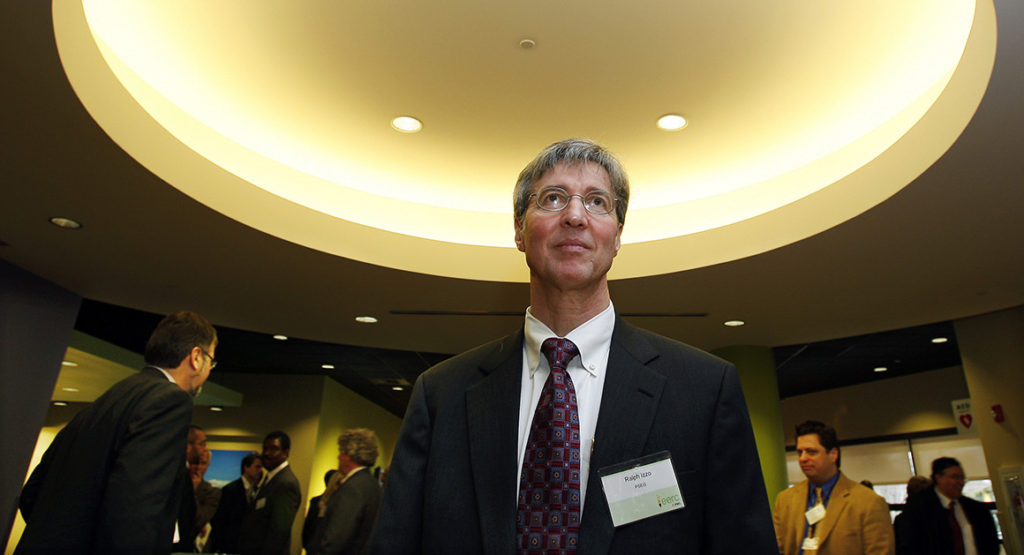
Strangely, in almost every spare moment, whether he’s walking into the federal courthouse in Newark with his lawyers, pacing the corridors or turning to look over the gallery during a break in testimony, Bill Baroni sports a wide, friendly grin – as if he couldn’t be happier with his new role. what’s he smiling about? (Amy Newman, staff photographer)

Mike Kelly, a columnist for The Record writes:

LET’S FACE IT, being a government worker is not all that complicated. Tax collectors collect taxes. Street cleaners clean streets. Firefighters put out fires. Cops write tickets and arrest criminals. Simple, straight-forward stuff.

An in-depth look at the scandal over the lane closures at the George Washington Bridge and related aftershocks. Click here to launch.

Now consider the Bridgegate trial that began last week. Consider what we are learning about all these public servants who took on tasks that were never part of their job descriptions. All this extra work.
Truly amazing to behold.

Let’s begin with Bill Baroni, one of the top officials at the Port Authority, personally appointed by Governor Christie. Baroni is now on trial for stepping out of his role and helping to orchestrate the traffic scheme that gridlocked Fort Lee’s streets for five days in September 2013 as punishment for the town’s Democratic mayor’s refusal to endorse


Baroni was supposed to be keeping an eye on no fewer than six major airports, including JFK International, Newark Liberty and La Guardia, which happen to be among the busiest in the nation. He was also supposed to be overseeing the operations at two Hudson River Tunnels and four bridges, including the George Washington Bridge, which is the busiest in the world and a prime terrorist target.

And, yes, let’s not forget the PATH subway system, the commuter bus terminal in midtown Manhattan, and the rebuilding of the World Trade Center, which happens to include a 1,776-foot-tall skyscraper.

Big job, no?

Consider Baroni now. He is trying to fend off a nine-count federal indictment for his alleged involvement in the Bridgegate scheme.
Strangely, in almost every spare moment, whether he’s walking into the federal courthouse in Newark with his lawyers, pacing the corridors or turning to look over the gallery during a break in testimony, Baroni sports a wide, friendly grin – as if he couldn’t be happier with his new role. What’s he smiling about?

Read the full column here 


Like this? Use form in upper right to receive free updates 
See popular posts from the last 30 days in right column — >>

Bridgegate trial spotlights those who forgot how to behave Read More »

Wildstein: ‘If it was good for Christie, it was good for us’

David Wildstein arriving for Bridgegate trial in Newark on Friday – AP photo by Julio Cortez 

The architect of an alleged political-payback scheme to cause massive traffic jams near the George Washington Bridge in September 2013 testified Friday that he and another top New Jersey appointee at the bistate Port Authority served just “one constituent”: Gov. Christie.


“If it was good for Gov. Christie, it was good for us; if it was not good for Gov. Christie, it was not good for us,” David Wildstein said.


Chief among the Republican governor’s priorities was using the Port Authority of New York and New Jersey to help win endorsements for his reelection campaign three years ago, Wildstein testified


On behalf of the governor, Wildstein said, he and Bill Baroni, Christie’s top executive appointee at the independent agency, tapped it to provide towns with grants, offer elected officials tours of the World Trade Center site, and distribute 100 flags that flew over ground zero on the 10th anniversary of the Sept. 11, 2001, terrorist attacks


In a May 2011 email to Bridget Anne Kelly, then Christie’s deputy chief of staff, who along with Baroni is on trial in the bridge case, Wildstein referred to the Port Authority as a “goody bag.


“I like goody bags,” she replied, according to evidence admitted in court. “I appreciate it.”


Taking the stand for the first time in the trial that began Monday, Wildstein said Baroni also observed the same “one-constituent” rule.


“The only person who mattered was Gov. Christie. He was the one constituent,” Wildstein, who has pleaded guilty and is the government’s star witness, told the court.


Asked by Assistant U.S. Attorney Lee Cortes how he knew he was abiding by the rule, Wildstein said, “I knew because we were either told it by the one constituent – Gov. Christie – or by members of Gov. Christie’s staff. We received specific instructions.”


Wildstein said he came up with the phrase and discussed it with Baroni at a Starbucks store in New York City after Baroni accepted his job as deputy executive director at the Port Authority in 2010.


Read the full story here


Like this? Use form in upper right to receive free updates 
See popular posts from the last 30 days in right column — >>


Wildstein: ‘If it was good for Christie, it was good for us’ Read More »

NJDEP gets federal grant to help protect bog turtles

 The U.S. Fish and Wildlife Service has awarded the Department of Environmental Protection an $850,000 grant under the federal Endangered Species Act Grants Program, Commissioner Bob Martin announced today. 

The Cooperative Endangered Species Conservation Fund (CESCF) Recovery Land Acquisition grant for New Jersey will go toward the future acquisition of hundreds of key acres of habitat for the bog turtle, which is found predominately in the northern half of New Jersey.

“Preservation of this unique habitat protects the federally threatened bog turtle, while also enhancing our environment and providing a better quality of life for residents of the state,” Commissioner Martin said. “We are grateful to the U.S. Fish and Wildlife Service for our inclusion in this federal grant program.”

New Jersey is one of 20 states to receive funding to support projects that conserve at-risk species and their habitats.

“These grants will enable state fish and wildlife agencies to advance the stewardship of our nation’s fish and wildlife resources,” said Dave Chanda, Director of DEP’s Division of Fish and Wildlife.

The bog turtle is native only to the eastern United States and is found in the northern half of New Jersey. The species, considered threatened at the federal level and endangered at the state level, congregates in small colonies often of fewer than 20 individuals. They prefer calcareous wetlands (areas containing lime), including meadows, bogs, marshes, and spring seeps, that have both wet and dry regions.

Once the purchases of the properties are completed, the preserved lands will be managed by the New Jersey Natural Lands Trust in cooperation with the DEP’s Endangered and Nongame Species Program. 

Read the full NJDEP news release here 


Like this? Use form in upper right to receive free updates 
See popular posts from the last 30 days in right column — >>

NJDEP gets federal grant to help protect bog turtles Read More »

Will renewed NJ lawmakers’ probe end in impeachment?

New Jersey State Senator Loretta Weinberg says a renewed legislative inquiry into Bridgegate could lead to the impeachment of Gov. Chris Christie, but if the current federal trial goes on for many weeks, the time left before Christie leaves office may leave an impeachment not worth the time.  

Like this? Use form in upper right to receive free updates 
See popular posts from the last 30 days in right column — >>


Will renewed NJ lawmakers’ probe end in impeachment? Read More »

Bridgegate: NJ Dems may move to subpoena Gov. Christie

Bridget Anne Kelly, a former aide to NJ Gov. Chris Christie 

Dormant for months in deference to the federal investigation into Bridgegate, the Legislature’s Joint Select Committee on Investigations may be reconvened in order to get answers directly from Gov. Chris Christie about what the governor knew and when he knew it.
Claude Brodesser-Akner reports for the Star-Ledger:


Assemblyman John S. Wisniewski (D-Middlesex) said Thursday he wanted to ask Christie under oath about when he was actually informed about George Washington Bridge lane closures federal prosecutors say were made to clog traffic in Fort Lee and punish its mayor for not endorsing the governor’s re-election. 
“I’d want to ask him that question: ‘Did you know?'” said Wisniewski, who’d served as the co-chair of the joint investigations committee.
Wisniewski and Senate Majority Leader Loretta Weinberg (D-Bergen), the panel’s co-chair, said they have conferred about introducing a resolution to re-activate the investigative committee. Weinberg said Senate President Stephen Sweeney (D-Gloucester) and Assembly Speaker Vincent Prieto (D-Hudson) told her they were inclined to allow that. 
Wisniewski said “we’re strongly leaning towards” introducing the resolution to bring back the panel.
Bridgegate: Wildstein 'terrorized' P.A. employees
Director says he believed the government’s star witness was protected by Christie.
Weinberg said “probably well more than half” of New Jersey residents would want to ask Christie, under oath, “when he found out about the lane closures.” 
On Monday, federal prosecutors disclosed that David Wildstein, a former Port Authority employee who pled guilty to federal charges last year, would testify that Christie was informed of the move to cut off access lanes to the bridge while traffic was still snarled in Fort Lee.
“We are going to find out through this trial about many incidents, texts, emails that were never responsive to the subpoenas we issued,” said Weinberg. “And I’d like to go back as we find out about these things, and think that we should take a look at them, cumulatively.”
In August, federal court filings showed that Christina Renna, a former director of the governor’s now-defunct office of intergovernmental affairs, sent text messages to Peter Sheridan, the New Jersey Republican Party’s deputy executive director, during Christie’s Dec. 13, 2013, press conference about lane closures on the George Washington Bridge.
In the texts, Renna claimed the governor “flat out lied” about his senior staff and campaign manager Bill Stepien not having knowledge of the lane closures. Christie has steadfastly said he did not know of the plot and has disputed what was said in Renna’s texts.

Like this? Use form in upper right to receive free updates 
See popular posts from the last 30 days in right column — >>

Bridgegate: NJ Dems may move to subpoena Gov. Christie Read More »

Agency wants to reduce PFOA in NJ drinking water


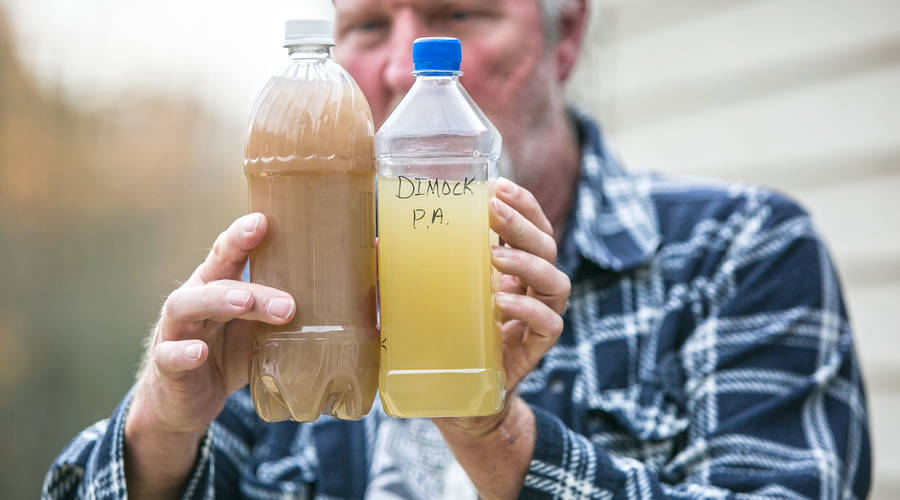
A New Jersey agency has proposed adopting what would be the most stringent standard in the nation to control levels of a cancer-causing chemical linked to an array of health problems and which is prevalent in drinking water systems across the state.


James M. O’Neil reports for The Record
:

The chemical, commonly called PFOA or C8, has been used in the manufacture of stain-resistant carpets, waterproof clothing, non-stick cooking pans and other products that make life less messy. It has spread so far through the environment that it can be found everywhere, from the fish in the Delaware River to polar bears in the Arctic.

It has also become the subject of thousands of lawsuits.

The state’s Drinking Water Quality Institute on Thursday proposed the standard, which, if adopted, would require water utilities to treat water to reduce the amount of PFOA reaching taps.

“The institute is taking a pretty aggressive approach on PFOA,” said Howard Woods Jr., a private consultant to water utilities and a former water company executive. “It’s a good idea. The institute is deliberate and not rash. The stuff is all over the place.”

Smaller water utilities, including some in North Jersey, have said the extra treatment would be a major financial hit.

“System by system, you’ll find issues where the cost of treatment is prohibitive compared to finding an alternative water source, so some towns might abandon wells and buy water from a neighboring system,” Woods said.

The current state health advisory standard for PFOA is 0.04 parts per billion. The proposed standard is 0.014 – nearly three times lower – and many drinking water systems in the state have had levels above that.

The contaminant is found much more frequently in drinking water in New Jersey than in many other states. Sampling conducted by the state in 2006 and 2009 showed PFOA at levels above the state’s current standard in Garfield, Atlantic City, Brick, Greenwich, Montclair, Orange, South Orange, Paulsboro, Rahway and New Jersey American Water’s Logan, Raritan and Penns Grove systems.

The Montclair system has been blending water and is testing to determine if that lowers the levels. The two Orange treatment plants with high readings have been shut down. So has a treatment plant in Paulsboro. New Jersey American has installed treatment systems to remove PFOA at its Penns Grove and Logan systems, according to the state Department of Environmental Protection.

More recently, the federal Environmental Protection Agency over the past two years has detected PFOA in levels of at least 0.02 parts per billion in 14 drinking water systems, including Ridgewood Water, Fair Lawn, Garfield, Wallington and Hawthorne.

The institute’s proposed new standard drew praise from environmental advocates. “PFOA is a very significant carcinogen, it doesn’t degrade in the environment and levels are increasing over time, so it’s entirely appropriate for the state to regulate it,” said David Pringle, Clean Water Action’s New Jersey campaign director, who served on the Drinking Water Quality Institute from 2002 to 2010 and pushed the institute to address the issue.

The institute Thursday also unanimously approved recommending a maximum standard of 0.03 parts per billion for 1,2,3-trichloropropane, another contaminant found in drinking water. It is a man-made chemical solvent and a likely human carcinogen.
Like this? Use form in upper right to receive free updates 
See popular posts from the last 30 days in right column — >>

Agency wants to reduce PFOA in NJ drinking water Read More »