RGGI: The New Jersey pollution debate that refuses to die

The multi-state energy compact with the friendly sounding name of RGGI (pronounced Reggie) has morphed into a decidedly unfriendly tug of war between New Jersey Democrats and Republicans that goes on and on and on.

Under the Democratic administration of former Gov. Jon Corzine, RGGI was hailed as an innovative way to cut carbon emissions from energy plants and simultaneously generate money to support a variety of alternative energy investments and energy conservation projects.

Under the Republican administration of Gov.Chris Christie, RGGI was re-cast as a villain out to jack up energy costs, mug big industrial power users, and not accomplishment much for the environment in the process.

NJ Spotlight‘s Tom Johnson, who has been chronicling every RGGI push and pull, brings us up to date on NJDEP’s reaction to the Legislature’s latest attempt to get RGGI back in the game.

DEP says ‘no way’ to rejoining RGGI; Dispute may head to court–again


RGGI: The New Jersey pollution debate that refuses to die Read More »

If Pines leader is axed in a forest, does it make a sound?

If the axed is the chairman of the New Jersey Pinelands Commission and the woodsman delivering the chop is Gov. Chris Christie, how could it not?

Witness:

Christie replaces
Pinelands chairman

In the same week
that a controversial gas pipeline through 22 miles of the Pine
Barrens was approved by state regulators, Gov. Chris Christie has removed
the chairman of the Pinelands Commission who opposed the project.


Ousted
Pinelands Commission Chairman Speaks Out

Following
his sudden replacement as head of the Pinelands Commission last week, Mark
Lohbauer won’t rule out the possibility that his vote against a
controversial gas pipeline played a role in his downfall. Lohbauer, who will
continue with the Commission under its new chairman Sean Earlen, told PolitickerNJ that the decision from the governor’s
office caught him off guard.


Gov.
Christie Fires Pinelands Commissioner Chairman Lohbauer

Bridgegate
in the Pines, Part Deux: Gov. Christie Fires Pinelands Commissioner Chairman
Lohbauer. Decision Comes Same Week as Legal Suit Against Pinelands
Commission for SJ Gas Pipeline Decision and BPU Approval of NJ Natural Gas
Pipeline


 Pinelands Chair Mark Lohbauer and commissioner Candace Ashmun confer at earlier meeting- Inquirer


If Pines leader is axed in a forest, does it make a sound? Read More »

Higher lead levels for kids in 11 NJ cities than in Flint

Activists and State Senator Shirley Turner report on kids’ lead levels in 11 NJ communities


“Young children in 11 cities and two counties in New Jersey have higher levels of lead in their blood than children in Flint, Michigan, where a water contamination crisis has grabbed national attention.”


That’s what Michael Symons reported yesterday for Gannett after attending a news conference in Trenton where activists identified the  localities as Irvington, Trenton, Newark, Paterson, Plainfield, Jersey City, Elizabeth, Atlantic City, New Brunswick and Passaic, plus Cumberland and Salem counties.


“There were more than 3,000 new cases in New Jersey of children under 6 with elevated lead levels in 2015, bringing the total to around 225,000 since 2000, said Elyse Pivnick, director of environmental health for Isles Inc. New Jersey’s exposure is linked to lead paint in homes, not water supplies.


“Because of Flint, Michigan, most of the world now knows lead in water can poison children,” Pivnick said. “The deplorable water scandal is an important story, but it is just as tragic and alarming that thousands of children in New Jersey continue to be exposed to lead year after year.”


Lawmakers and advocacy groups have a four-part plan, launched Monday, to get state officials to do more about lead poisoning of children, Symons wrote:


1. Get the attention of a public startled by Flint

Higher lead levels for kids in 11 NJ cities than in Flint Read More »

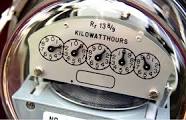
Did Philadelphia woman’s smart meter make her sick?


“The
Pennsylvania Public Utility Commission on Thursday cracked open the door for
opponents of the state’s compulsory smart-meter deployment policy, allowing a
hearing on a customer’s complaint that the installation of a wireless meter
outside her bedroom caused her to get sick.”
The Philadelphia
Inquirer
‘s Andrew Maykuth reports:
In a 4-1 vote, the PUC rejected Peco Energy Co.’s petition to
prevent an administrative law judge from hearing the health complaints of Susan
Kreider, a registered nurse who said she suffered “deleterious health
effects” after Peco installed the new meter on her Germantown home in 2013.
The commission has previously declined to hear scores of
complaints from smart-meter opponents, who object to the devices on privacy,
safety, or health grounds. Utilities say they are required to install the
meters to comply with Act 129, a 2008 energy-conservation law that ordered all
Pennsylvania utilities to deploy the devices.
Kreider’s complaint was different, the PUC said, because she said
she could produce medical documentation showing that the electromagnetic
radiation from the meter caused her to get sick. The meter violates the state’s
public utility code requiring utilities to provide “safe and
reasonable” service, she has maintained.
“To ignore claims relating to the safety of smart meters
would be an abdication of our duties and responsibilities under . . . the
code,” the PUC said in its order Thursday.

Read the full story here

Did Philadelphia woman’s smart meter make her sick? Read More »

Is your construction permit expiring in New Jersey?

In the midst of the economic recession, the New Jersey State Legislature, in 2008, recognized that permits for a multitude of developments would expire before the projects could find the necessary construction financing. Lawmakers passed the Permit Extension Act (PEA) to toll the expiration of various approvals necessary for development through 2012. Additional extensions were approved in 2012 and in 2014.      


A bill to grant an additional extension failed in the recently ended legislative session, prompting Gibbons attorneys Howard D. Geneslaw and Andrew J. Camelotto to publish
the alert below.


No Further Extensions of New Jersey’s Permit Extension Act

The state legislature took no action to further extend New Jersey’s Permit Extension Act (“PEA”) during the recently concluded legislative session, which means that permits and approvals extended by the PEA’s tolling period either have expired or will expire soon. Pursuant to the terms of the act, the expiration date for most approvals covered by the PEA are tolled through June 30, 2016, with certain approvals expiring before that date, making right now the time to evaluate projects approaching construction to determine which existing approvals were extended by the PEA, the exact expiration date of such approvals, and whether further extensions are available under other laws. After such an evaluation, developers and project managers can then determine whether approval rights can be fully vested prior to their expiration date and, if not, whether an extension, amendment, or renewal of the approval is required.
The PEA was initially enacted in 2008 in response to “the crisis in the real estate finance sector of the economy.” The purpose of the PEA was to toll the expiration of various approvals necessary for development through 2012. The PEA was later amended in 2012 and again in 2014, due to the then “current national recession,” extending the tolling of those approvals until December 31, 2015. The PEA provides for the tolling of any “approval,” as defined in the statute, which is or was in existence during the extension period (January 1, 2007 through December 31, 2015). Most subdivision, site plan, and variance approvals granted pursuant to the Municipal Land Use Law are encompassed within covered “approvals,” as are many approvals granted by the New Jersey Department of Environmental Protection (NJDEP), New Jersey Meadowlands Commission (NJMC), New Jersey Pinelands Commission, and various other state agencies. Caution, however: there are important exceptions to the general rule above, and some permits and approvals are expressly excluded from the tolling which the PEA provides.
Given that the PEA has not been extended further, those with existing approvals tolled by the PEA should evaluate them now, determine their present status, and whether the project can move to construction before the approvals expire. If financing is an issue, there are various grant, loan, and other incentive programs which should be explored. If there are reasons why the project may not move forward before the expiration of an approval, other methods of extension could be available and should be investigated. This could be particularly important in situations where changes have occurred in applicable regulations, since extensions allow an applicant to rely on the regulations in effect when the original approval was obtained, while new applications to replace expired approvals must comply with the new regulations now in effect. Please contact Howard D. Geneslaw or Andrew J. Camelotto if you have a project for which you would like this analysis performed.
Howard D. Geneslaw is a Director in the Gibbons Real Property & Environmental Department. Andrew J. Camelotto, an Associate in the Gibbons Real Property & Environmental Department, co-authored this post.


Recent blog posts: 


Is your construction permit expiring in New Jersey? Read More »

In Jersey, The Wiz feels The Burn and takes a daring step


Weeks ago, when New
Jersey Assemblyman John Wisniewski announced his allegiance to presidential
candidate Bernie Sanders, the collective response of party pros likely was: Say
Wha?
The Middlesex County
attorney is the mild-mannered, thoughtful (very un-Jersey-like) liberal
Democrat who enjoyed multiple national appearances on the Rachel Maddow Show when Bridgegate was the rage.

He earned the spot by chairing the joint legislative committee that was
investigating the role of the Governor’s office in the bridge lane shutdown and
subsequent cover up.

The exposure lead to speculation that Wisniewski
(who under media attention had morphed into The Wiz) was entertaining thoughts
of a race for Governor in 2017. But the story ran out of gas when the U.S.
Attorney asked all other investigations but his own to cease.

The Wiz went back to the
far less media-worthy job of running the Assembly Transportation Committee. And
then along came the most improbable ticket back to the limelight–Bernie
Sanders. 
While Bernie’s growing
poll blips were still relatively unrecognized, the Wiz announced he would chair
New Jersey for Bernie Sanders 2016 committee which will host it’s kickoff event on Wednesday night in Sayreville.  
Let us direct you at
this point to the brightly written piece by the anonymous ‘PolitickerNJ Editor’
that appeared last week.

The Smartest Man in New Jersey Politics (Today)


Here’s a taste:

But Wisniewski – two decades in
the legislature now and waddling in the playpen of second banana contenders for
the 2017 Democratic nomination for governor – needed to make something happen
to extend that narrative of righteous progressive paladin he forged – justly –
when Bridgegate made him the state’s leading counterweight to Republican Gov.
Chris Christie.

So while the rest of the
Democratic Party establishment zigged (gloomily and in slow motion) into the
camp of Hillary Clinton, Wiz zagged – the only one in the state to do so, eight
years after several handfuls of Democrats opted for Barack Obama over Clinton
in the 2008 Democratic Primary. Of course, Wisniewski wasn’t one of them.
He was firmly – albeit quietly – in the Clinton camp back then.

A year later, he royally
irritated that tiny inner circle of impassioned Jon Corzine supporters when he
bucked the governor on asset monetization and ever after earned their scorn –
even in the furnaces of Bridgegate when the assemblyman stalked Christie like a
hard-boiled detective in a Mickey Spillane novel.


Politicker NJ’s editor suggests
that the Wiz’s chess move might constitute a
 “grand Machiavellian machination,’ but it also might be
driven by an equally strong streak of idealism.
It likely did
not take Bridgegate to convince Wisniewski that old-style, play-to-pay politics
has done serious damage to the country and its political system. He might think
that Hillary Clinton is not that much different than Donald Trump when it comes
to Wall Street and income inequity–or to getting a national airline to create
a new route to your vacation home town.
Like Bridgegate, we’ll have to wait
and see how it all plays out. It may be instructive. It certainly will be
entertaining. Politics remains New Jersey’s favorite spectator sport.


Recent blog posts: 

In Jersey, The Wiz feels The Burn and takes a daring step Read More »