Renewables the poor stepchild in NJBPU energy budget

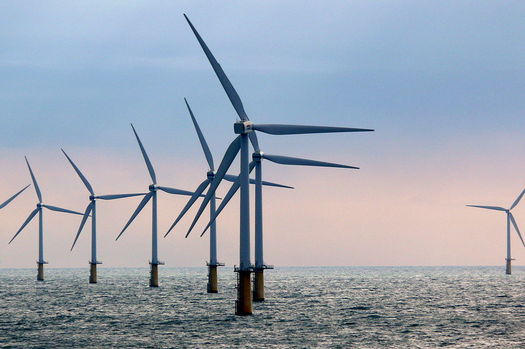
Out of a total of $360.8 million in clean energy funding approved Wednesday by the Board of Public Utilities, just $2 million is allocated for renewable energy, according to state budget documents.

David Giambusso reports in Politico New Jersey 
The board voted Wednesday to approve the straw budget proposal presented last month by the Office of Clean Energy. While the amount for renewables seems paltry in comparison to the total, energy efficiency, which is often considered a form of clean energy, got the lion’s share of funding, with a total of $184.7 million.


State officials seemed to anticipate criticism over the low amount of renewable funding and addressed it in the May budget proposal.

“The funding requested in this [budget] for renewable energy programs in New Jersey is a fraction of the total contribution made by ratepayers to support the development of renewable energy,” state officials said. “It does not include other costs, such as the cost of compliance with NJ’s [renewable portfolio standard], as well as the value provided through net metering of customer-sited renewables and utility managed [programs].”

Distributed energy programs, which usually take the form of microgrids and energy storage, often also include renewable resources, such as solar energy. Those programs received $23 million in funding from the state.

Administration of the clean energy program received $12.5 million.


Read the full story here 


Like this? Use form in upper right to receive free updates

See popular posts from the last 30 days in right column — >>


Renewables the poor stepchild in NJBPU energy budget Read More »
Link fixed: Is Christie leaving? If so, how soon?

** We apologize for the bad link in this post sent yesterday. Too much July 4 fun **

Over the grilled chicken and hot dogs this July 4 weekend, the conversation at more than
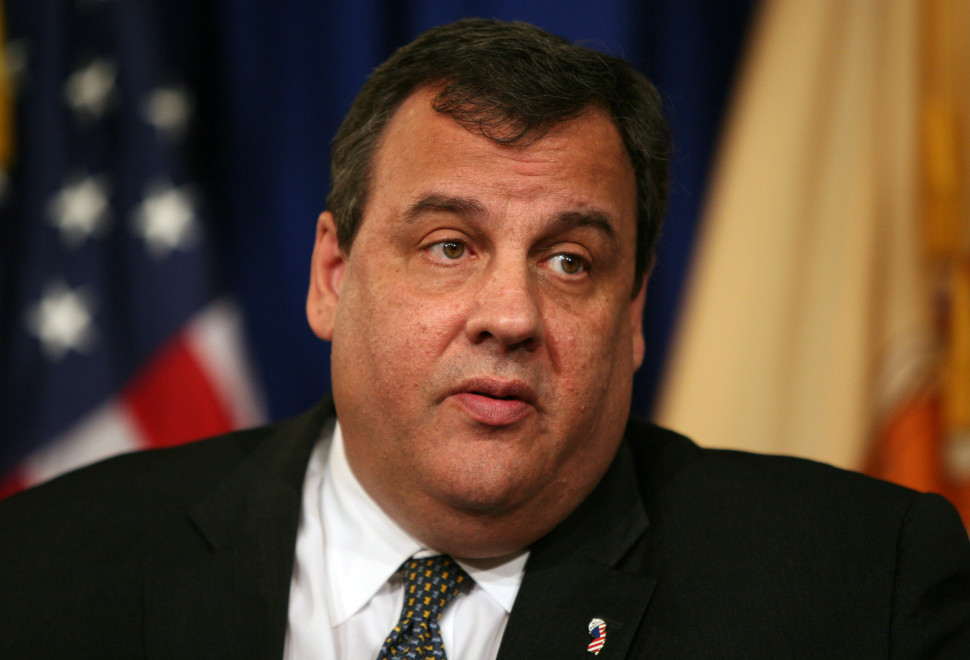
a few New Jersey barbecues will turn to speculation over the future if Donald Trump picks Chris Christie to be his Vice Presidential running mate.


And, specifically, if he does, how long will the Governor hold down the fort in Trenton before joining the campaign full time.

Here are two views:

The editor of PolitickerNJ claims: Why Christie Won’t be Here in Late July – and Beyond

Bill Orr, in BlueJersey, argues Christie will leave us later rather than sooner

What’s your opinion? Click the comment line below and let us know.


Ours?  We think the steaks on the grill probably need turning. Have a great holiday.

Like this? Use form in upper right to receive free updates

See popular posts from the last 30 days in right column — >>

Link fixed: Is Christie leaving? If so, how soon? Read More »

Gov. Christie signs permit-extension bill for Sandy counties

New Jersey Gov. Chris Christie has signed into law A-3617. The bill extends certain government approvals
for land located in the Superstorm Sandy-impacted counties
until December 31, 2016 and, for many, to June 30, 2017.

The new law sets the nine Superstorm Sandy-impacted counties as
Atlantic, Bergen, Cape May, Essex, Hudson, Middlesex, Monmouth,
Ocean, and Union.

Bill sponsors explained that:

“Once-approved permits are in danger of expiring or lapsing
because gaining a permit extension is difficult and costly and
developers do not have the resources to obtain extensions. The effects
of Superstorm Sandy exacerbated this problem as areas in this State
attempt to recover from the devastation caused by the storm.

“As permit
approvals lapse, lenders must re-appraise and thereafter substantially
lower real estate valuations established in conjunction with approved
projects, thereby requiring the reclassification of numerous loans.
This in turn affects the stability of the banking system and reduces the
funds available for future lending, thus creating more severe
restrictions on credit and leading to a vicious cycle of default.

“Accordingly, this bill would extend permits which have been
granted by State, regional, county, and municipal agencies for an
additional one year in the Superstorm Sandy-“impacted counties in
order to prevent a waste of public and private resources.

The New Jersey Sierra Club had urged legislators to vote no, asserting that the measure would result in new construction in high-risk flood areas of the coast. The legislature disagreed and approved the measure on a 78-0 vote in the Assembly and 39-0 in the Senate.

Like this? Use form in upper right to receive free updates

See popular posts from the last 30 days in right column — >>

Gov. Christie signs permit-extension bill for Sandy counties Read More »

Another delay in setting PFOA safe-health levels in NJ

Just the latest in a series of delays on urgent matters of public health, environmental advocates say

Tom Johnson reports today in NJ Spotlight:

water fountain

With rising fears about the presence of toxins in drinking water, local advocates say the scientific panel that is charged with recommending safety standards for New Jersey’s drinking water may be dragging its feet.
The Drinking Water Quality Institute (DWQI) put off recommending a safe limit for the presence of a particular toxic chemical in drinking water on Thursday, saying it needed more time to evaluate its health effects. The chemical, PFOA — perfluorooctanic acid –once used in nonstick cookware, carpets, and clothing, and which is now present in some public water systems, has been the subject of a year-long investigation by the DWQI.
The institute, a scientific panel that advises the Department of Environmental Protection (DEP), was expected to release its findings this week. Instead, it met in closed session and said it would recommend a safe level of PFOA on its website in August.
After a 30-day public comment period, the panel will send its recommendation for a Maximum Contaminant Limit (MCL) to DEP Commissioner Bob Martin. By setting a MCL for PFOA, the state could step up its control of the chemical through regulation.
The chemical, which the U.S. Environmental Protection Agency (EPA) calls a likely carcinogen, has been found in 12 New Jersey water systems at or above a “guidance” level set by the DEP in 2009.
Advocates questioned why the group had to meet in private and complained about another delay. Dr. Keith Cooper, a Rutgers University toxicologist who chairs the DWQI, said during the public portion of the meeting that it was necessary to also hold a closed session to evaluate the findings of three subcommittees (on health effects, detection, and treatment), and so that members could speak freely.
The panel has met in closed session before, Cooper said. “In reality, we can go into closed session any time we want.”
He said the investigation of PFOA has been delayed because of the difficulty of coordinating the schedules of its members — who include academics, water company executives, and state officials, and are all volunteers.
Environmental advocates often accuse the DWQI of moving slowly on urgent matters of public health, and note that it did not meet for almost four years between 2010 and 2014 because of what they say was a “shutdown” by the Christie administration.
Tracy Carluccio, deputy director of the environmental group Delaware Riverkeeper Network, said the public has been waiting for the DWQI to make its recommendation on PFOA for a year, and that officials who run public water systems are anxiously awaiting state action on the issue.

Like
this? Use form in upper right to receive free updates
See popular posts from the last 30 days in
right column — >>


Another delay in setting PFOA safe-health levels in NJ Read More »

Another delay in setting PFOA safe-health levels in NJ

Just the latest in a series of delays on urgent matters of public health, environmental advocates say

Tom Johnson reports today in NJ Spotlight:

water fountain

With rising fears about the presence of toxins in drinking water, local advocates say the scientific panel that is charged with recommending safety standards for New Jersey’s drinking water may be dragging its feet.
The Drinking Water Quality Institute (DWQI) put off recommending a safe limit for the presence of a particular toxic chemical in drinking water on Thursday, saying it needed more time to evaluate its health effects. The chemical, PFOA — perfluorooctanic acid –once used in nonstick cookware, carpets, and clothing, and which is now present in some public water systems, has been the subject of a year-long investigation by the DWQI.
The institute, a scientific panel that advises the Department of Environmental Protection (DEP), was expected to release its findings this week. Instead, it met in closed session and said it would recommend a safe level of PFOA on its website in August.
After a 30-day public comment period, the panel will send its recommendation for a Maximum Contaminant Limit (MCL) to DEP Commissioner Bob Martin. By setting a MCL for PFOA, the state could step up its control of the chemical through regulation.
The chemical, which the U.S. Environmental Protection Agency (EPA) calls a likely carcinogen, has been found in 12 New Jersey water systems at or above a “guidance” level set by the DEP in 2009.
Advocates questioned why the group had to meet in private and complained about another delay. Dr. Keith Cooper, a Rutgers University toxicologist who chairs the DWQI, said during the public portion of the meeting that it was necessary to also hold a closed session to evaluate the findings of three subcommittees (on health effects, detection, and treatment), and so that members could speak freely.
The panel has met in closed session before, Cooper said. “In reality, we can go into closed session any time we want.”
He said the investigation of PFOA has been delayed because of the difficulty of coordinating the schedules of its members — who include academics, water company executives, and state officials, and are all volunteers.
Environmental advocates often accuse the DWQI of moving slowly on urgent matters of public health, and note that it did not meet for almost four years between 2010 and 2014 because of what they say was a “shutdown” by the Christie administration.
Tracy Carluccio, deputy director of the environmental group Delaware Riverkeeper Network, said the public has been waiting for the DWQI to make its recommendation on PFOA for a year, and that officials who run public water systems are anxiously awaiting state action on the issue.
Like
this? Use form in upper right to receive free updates
See
popular posts from the last 30 days in right column — >>


Another delay in setting PFOA safe-health levels in NJ Read More »

Groups press NY Gov. Cuomo on offshore wind energy

(Ad Meskens photo/Wikimedia Commons)


A coalition of environmental,
business and labor organizations on Wednesday reminded Gov. Andrew Cuomo of a
massive, untapped source of clean, renewable energy lies just off New York’s
shores. 

Adrienne Esposito, director of Citizens Campaign
for the Environment, wants the governor to know there’s a great opportunity
coming up for the state to start a new chapter in its drive for a clean energy
future.

“81,000 acres of bottomland off of the south
shore of Long Island is going up for lease,” she states. “And we want to
get, for the first time, offshore wind power for New York.”

More than 60 groups delivered a letter to the governor calling for a large scale, long-term commitment to
wind power.

Recently, the New York State Energy Research and
Development Authority announced its intent to pursue an offshore lease for
wind-power development. 

But Esposito says the governor needs to provide
the leadership.

“We need the governor to stand up and say,
‘I want offshore wind. I’m going to support it. I want to move the process
forward. Let’s get it done,’ ” she states.

New York has pledged to generate 50 percent of
its energy needs from renewable sources by 2030.

Esposito maintains offshore wind could play an
important part in meeting that goal.

“We’re not going to achieve that rooftop by
rooftop,” she says. “We will achieve this big, ambitious goal by implementing
some big, ambitious projects. Offshore wind is one of them.”

The federal Bureau of Ocean Management held a
public hearing in New York City on Wednesday evening on the up-coming
lease auction for the New York Wind Energy Area.


Like this? Use form in upper right to receive free updates
See popular posts from the last 30 days in right column — >>


Groups press NY Gov. Cuomo on offshore wind energy Read More »