
The longtime anti-nuclear advocate warns that subsidies, unresolved waste storage, and cheaper alternatives undermine the case for new reactors in New Jersey.
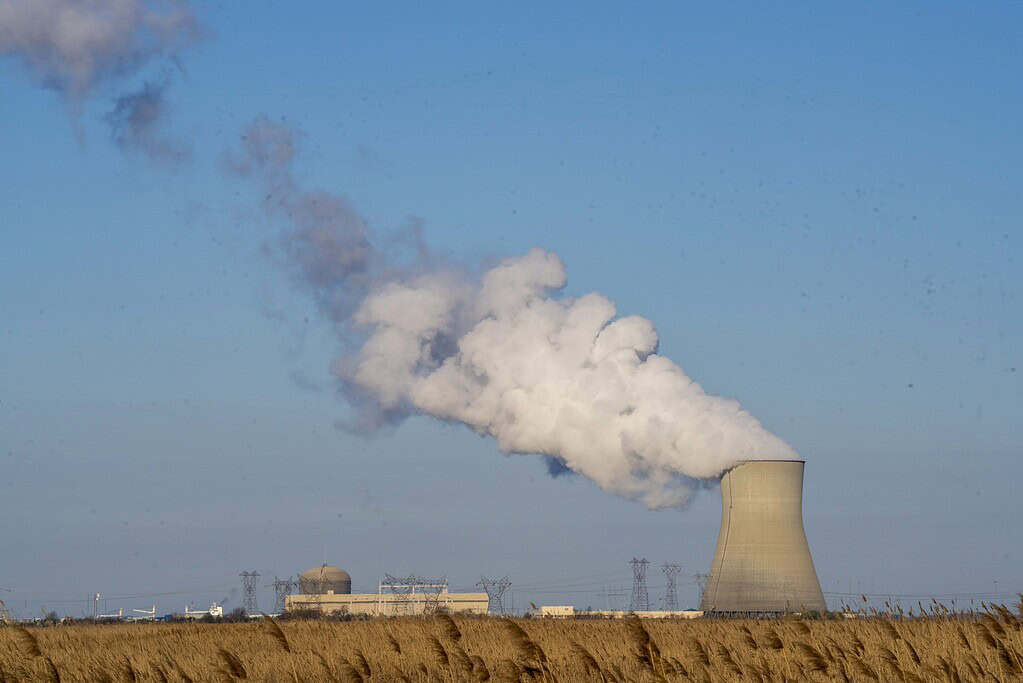
By Jeff Pillets, The Jersey Vindicator
On April 8, Governor Mikie Sherrill signed landmark legislation to officially end a 40-year de facto moratorium on the construction of new nuclear power plants in New Jersey.
That previous ban reflected a bipartisan view in Trenton that the state should not accept the growing stockpile of dangerous reactor waste without a permanent national disposal plan. No such solution has emerged. New Jersey is now home to an estimated 7 million pounds of radioactive waste, much of it stored in flood-prone coastal areas.
Sherrill and other elected officials from both parties now argue that nuclear power is needed to help meet rising demand for affordable electricity.

The Jersey Vindicator asked Tim Judson, executive director of the Maryland-based Nuclear Information and Resource Service, to weigh in on the state’s renewed embrace of nuclear energy. Judson, long one of the nation’s leading anti-nuclear voices, explains why he believes the shift could prove costly.
Q: Nuclear power supporters portray public subsidies as a temporary measure. They say new reactors will prove to be cost-effective in the long run. Are they wrong?
A: In short, yes. The costs of nuclear power plants have always gotten more expensive. They have required taxpayer and ratepayer subsidies at every stage, from construction to operation to decommissioning, and to storing their waste. New Jersey is a typical example. The Salem 1 and 2 reactors cost nearly $2 billion to build in the 1970s. The Hope Creek reactor cost more than double that amount in the mid-1980s. And even though ratepayers paid off those costs through huge rate hikes, PSEG and Constellation still demanded $300 million per year in ratepayer subsidies to keep running them.
Q: New Jersey ratepayers spent hundreds of millions of dollars to prop up aging nuclear plants at Salem and Hope Creek. Can we expect so-called small nuclear reactors, or SMRs, to require similar public support as they age?
A: What they call SMRs don’t really exist, but the fundamentals are similar enough that, if PSEG were to operate SMRs for 40 to 60 years, there’s no reason to think it would be different. Some concepts for what are being marketed as microreactors would supposedly be used for only a few years at a time, and then be replaced. But the costs for those are likely to be very high, so instead of requiring subsidies as they age, you might just end up paying high costs all the time. And when there are much more affordable sources of energy, like solar and wind, paying high costs for a power plant is really just a subsidy.