Panama Canal Congestion Drives Gas Tankers To Unusual Routes

Panama Canal to cap daily transits, anticipating severe El Niño


By Nicholas Lua, Bloomberg, August 29, 2026

Aug 28, 2026 (Bloomberg) –Growing congestion at the Panama Canal is forcing some gas tankers into unusual journeys, from a rare detour around South America to the possible emergence of shuttling through the waterway.

Two supertankers were recently observed conducting an unusual ship-to-ship transfer off Balboa port on Panama’s Pacific Ocean coast, according to vessel-tracking data, traders and shipbrokers. The process allows one of the tankers to shuttle back and forth through the canal to ensure the steady flow of liquefied petroleum gas to Asian customers, traders said.

The Iran war has diverted more traffic through the canal, while authorities tightened restrictions on how much cargo vessels can carry along with the number of ships that can cross due to drier conditions triggered by El Niño. Waiting times for vessels that haven’t made bookings in advance to transit the waterway have grown in recent months and some operators are paying millions of dollars to jump the queue.

Read Also: Supertanker Pays Record $4.6 Million to Skip Panama Canal Line

There are currently 14 ships waiting near the canal without reservations, while there’s a total of 115 scheduled to transit, a canal spokesperson said Friday. Of the 14 vessels without bookings, those seeking northbound passage face a maximum wait of 8 days, while those looking to go south have to wait as long as four days, the spokesperson said.

Read the full story here

____________________________________________________
Daily energy and environment updates. Free 30-day subscription

Panama Canal Congestion Drives Gas Tankers To Unusual Routes Read More »


Tesla dumping vaunted solar roofs for solar roof panels

The product meant to redefine both roofing and home solar never moved beyond expensive niche status. Does the new plan reflect lessons learned?
Close-up of roof with solar panels that look like black roof tiles, brick and white wood home
Tesla’s solar roof (Benjamin C Tankersley/For The Washington Post via Getty Images)


By 
Dan McCarthyJulian Spector,  Canary Media,  August 24, 2026

A thousand solar roofs per week. That was the pace Elon Musk predicted Tesla would install its electricity-generating roof tiles in 2020, more than three years after he unveiled the product to great fanfare on the set of the TV show Desperate Housewives.

That estimate fell flat. Tesla installed just 3,000 solar roofs in the U.S. by the end of 2022 and now appears to be scrapping the product altogether, Electrek reports. As of Monday, the solar roof was no longer featured among the home energy products on Tesla’s website. Tesla did not return requests for comment.

The official demise of Tesla’s supposedly transformative solar roof comes as the company is back in the news for a fresh round of eye-popping claims about its solar ambitions. In July, Tesla said it was interested in building a $10.1 billion solar cell factory in Texas. Earlier this year, Musk declared that Tesla will work with SpaceX to manufacture 100 gigawatts of integrated solar panels — meaning each major step of the supply chain. That’s far more than the entire country makes or installs annually.

Read the full story here

____________________________________________________
Daily energy and environment updates. Free 30-day subscription

Tesla dumping vaunted solar roofs for solar roof panels Read More »

Regulators: Operator of leaky PA-NJ pipeline blocked inspectors

Fuel conduit that cuts through New Jersey linked to hazard in Bucks County, Pennsylvania, that went unconfirmed for years


By Benjamin J. Hulac, Washington Correspondent | August 26, 2026 |

WASHINGTON — The operator of a pipeline that bisects New Jersey, carrying jet fuel, diesel and gasoline from suburban Philadelphia to a terminal in Newark, last year denied federal safety inspectors access to documents following a leak, a “probable violation” of federal law and regulations.

An official of the Pipeline and Hazardous Materials Safety Administration leveled the accusations at Energy Transfer in an official “warning letter” in September 2025.

RELATED: Neighbors live in fear after pipeline leak

According to the letter, agency staff conducted field inspections of the Twin Oaks pipeline on Aug. 20 and 21, 2025, in three Pennsylvania counties: Chester, Delaware and Montgomery. Sunoco, the company that operates the pipeline, denied inspectors’ request to photograph the pipeline and to produce records about completed repair work, the regulator said. “Specifically, Sunoco failed to allow PHMSA inspectors to take photographs of field notes created by Sunoco contractors during remediation work on the Twin Oaks pipeline.”

Officials carried out the inspections after a fuel leak polluted wealthy, semi-rural Upper Makefield Township. It borders the Delaware River on the Pennsylvania side, where 38% of the property is preserved from development.

An unknown volume of fuel has leaked from the Twin Oaks pipeline.

A spokesman for the New Jersey Department of Environmental Protection referred questions to Pennsylvania environmental regulators.

Read the full story here

_____________________________________________
Daily energy and environment updates. Free 30-day subscription


Regulators: Operator of leaky PA-NJ pipeline blocked inspectors Read More »

AI boosts speed of creating solid oxide electrolysis cells, advancing efficient hydrogen production

By SeoulTech

As countries invest in green hydrogen to decarbonize heavy industry, transportation, and energy systems, researchers are seeking faster ways to accelerate the development of hydrogen technologies. Solid oxide electrolysis cells are among the most efficient systems for producing green hydrogen from steam, but identifying their optimal operating conditions requires thousands of computationally intensive simulations, slowing innovation and increasing development costs.


Researchers from Korea have now developed an artificial intelligence (AI)-guided optimization framework that dramatically reduces the computational effort needed to optimize solid oxide electrolysis cell (SOEC) operation. By combining high-fidelity computational fluid dynamics (CFD) simulations with an AI-driven active learning framework, the researchers rapidly identified operating conditions that improve hydrogen production efficiency while maintaining the thermal stability required for long-term operation. This paper was made available online on 25 June 2026 and has been published in Volume 303, Part 1, of the journal Applied Thermal Engineering on August 1 2026.

Instead of evaluating every possible operating condition, the AI framework learns from each completed simulation and predicts which operating conditions are most likely to provide valuable new information. This allows researchers to focus computational resources on the most promising operating regions, replacing exhaustive trial-and-error searches with a faster, more data-efficient optimization strategy.

Read the full story here

Daily energy and environment updatesFree 30-day subscription


AI boosts speed of creating solid oxide electrolysis cells, advancing efficient hydrogen production Read More »

Lithium-ion battery recycler, Princeton NuEnergy, lands $50M federal grant

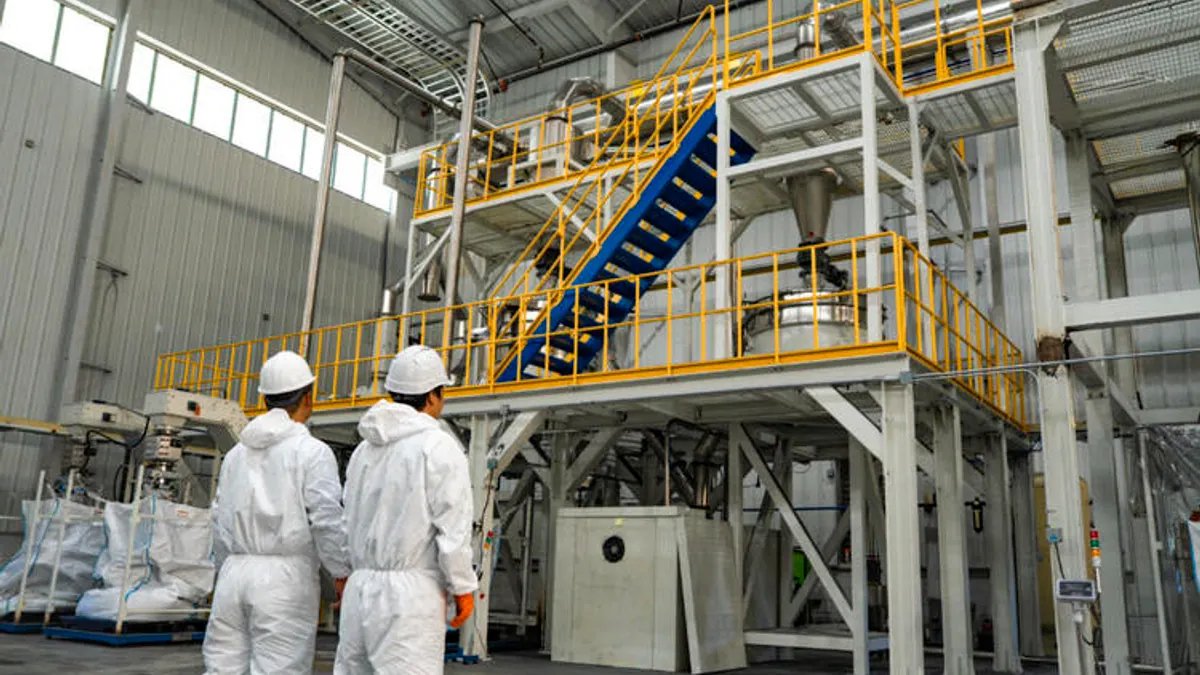
Workers in hard hats look up at equipment inside an industrial facility.
Workers at Princeton NuEnergy’s black mass recycling production facility in South Carolina. The U.S. Department of Energy awarded the company up to $50 million for a new demonstration facility in Georgia for recovering nickel from battery scrap. Courtesy of Princeton NuEnergy

Lithium-ion battery recycler, Princeton NuEnergy, lands $50M federal grant Read More »

Apparently fake public input has promoted fossil fuels while attacking clean energy

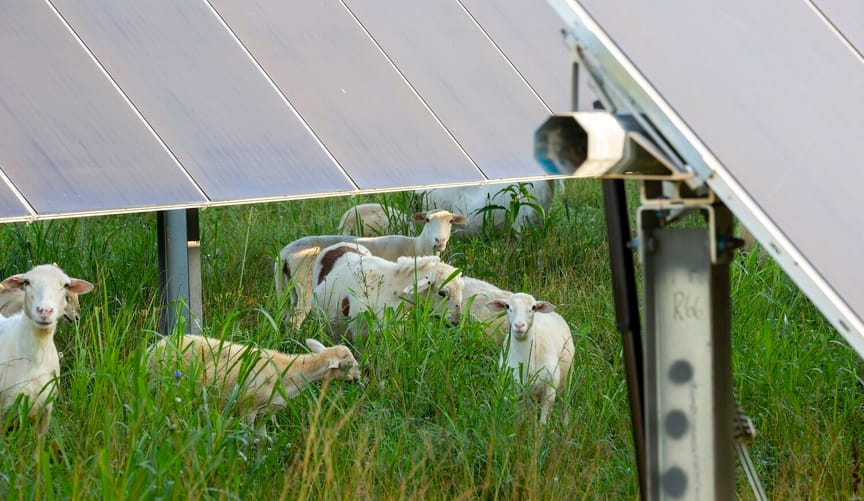
Sheep under solar panels

The Ohio Power Siting Board denied a permit application for a project that would have combined solar panels and grazing, like this one in Lancaster, Kentucky. (Jim West/UCG/Universal Images Group via Getty Images)

By Kathiann M. Kowalski, Canary Media, 25 August 2026

A troubling trend has emerged in some communities across the U.S.: Public officials are being inundated with seemingly fake public feedback aimed at blocking renewable energy and promoting fossil fuels.

In Ohio, one of the states grappling with this issue, regulators have done little to crack down on the problem, sparking concern among advocates for clean energy and good government that agencies will keep receiving public comments from people who didn’t authorize them or simply don’t exist.

“If we don’t address it, we’re definitely not going to fix it,” said Catherine Turcer, executive director for Common Cause Ohio, which works to strengthen public participation in U.S. democracy and hold officials accountable to citizens.

Fabricated comments corrupt public decision-making by diluting the impact of genuine people who take the time to share their views, Turcer explained. That’s especially true if officials focus on the number of pro and con comments rather than their substance.

“It skewers the whole process, and you don’t know who to trust,” said Beth Nagusky, an adjunct law professor who has taught at Case Western Reserve University and Cleveland State University and who was previously a utility regulator in Maine.

Read the full story here

_______________________________________________
Daily energy and environment updates
Free 30-day subscription

Apparently fake public input has promoted fossil fuels while attacking clean energy Read More »