The Pennsylvania Game Commission recently announced the expansion of several disease management areas after new cases of chronic wasting disease were found in deer across the state. (Shutterstock)
PENNSYLVANIA — The Pennsylvania Game Commission recently announced the expansion of several disease management areas after new cases of chronic wasting disease were found in deer across the state.
In a statement on its website, Game Commission officials said they expanded three Chronic Wasting Disease Management Areas — or DMAs. In the areas, it is illegal to remove or export any deer or elk high-risk parts or deposit those parts away from the harvest location of the animal. High-risk parts include the head, spinal column and spleen.
Officials said it is also illegal to use or possess deer or elk urine-based attractants and directly or indirectly feed wild deer.
If you liked this post, you’ll love our daily environmental newsletter, EnviroPolitics.It’s packed daily with the latest news, commentary, and legislative updates from New Jersey, Pennsylvania, New York, Delaware…and beyond. Please do not take our word for it, try it free for an entire month. No obligation.
A3034 – Directs Department of Agriculture to advertise and promote State aquaculture products through Jersey Fresh Program; establishes annual $100,000 appropriation; appropriates $100,000.
A3781 – Requires BPU to develop program to promote certain energy businesses in State.
A4569 – Appropriates $128.241 million from constitutionally dedicated CBT revenues to State Agriculture Development Committee for farmland preservation purposes.
S2788 – Appropriates $128.241 million from constitutionally dedicated CBT revenues to State Agriculture Development Committee for farmland preservation purposes.
Assembly State and Local Government Committee 10 am, 4th Floor, Committee Room 16, Annex.
A4217 Authorizes EDA to use moneys in “Global Warming Solutions Fund” to support projects to refurbish or upgrade existing electricity generation facilities.
Assembly Aging and Human Services Committee 1 pm, 4th Floor, Committee Room 15, Annex.
A1970 Requires DEP, DOH, owners or operators of public water systems, and owners or operators of certain buildings to take certain actions to prevent and control cases of Legionnaires’ disease.
S2188 Requires DEP, DOH, owners or operators of certain public community water systems, and owners or operators of certain buildings or facilities to take certain actions to prevent and control cases of Legionnaires’ disease.
If you liked this post, you’ll love our daily environmental newsletter, EnviroPolitics.It’s packed daily with the latest news, commentary, and legislative updates from New Jersey, Pennsylvania, New York, Delaware…and beyond. Please do not take our word for it, try it free for an entire month. No obligation.
Dozens of bodies were discovered in Delhi during a two-day stretch this week when even sundown brought no relief from sweltering heat and humidity. Tourists died or went missing as the mercury surged in Greece. Hundreds of pilgrims perished before they could reach Islam’s holiest site, struck down by temperatures as high as 125 degrees.
The scorching heat across five continents in recent days, scientists say, provided yet more proof that human-caused global warming has so raised the baseline of normal temperatures that once-unthinkable catastrophes have become commonplace.
The suffering came despite predictions that a year-long surge of global heat might soon begin to wane. Instead, in the past seven days alone, billions felt heat with climate change-fueled intensity that broke more than 1,000 temperature records around the globe. Hundreds fell in the United States, where tens of millions of people across the Midwest and Eastern Seaboard have been sweltering amid one of the worst early-season heat waves in memory.
“It should be obvious that dangerous climate change is already upon us,” said Michael Wehner, a climate scientist at Lawrence Berkeley National Laboratory. “People will die because of global warming on this very day.”
That much of this week’s heat unfolded after the dissipation of the El Niño weather pattern — which typically boosts global temperatures — shows how greenhouse gas pollution has pushed the planet into frightening new territory, researchers say. Scientists had expected this summer might be somewhat cooler than 2023, which was the hottest in the Northern Hemisphere in at least 2,000 years.
But with summer 2024 just getting started, there are ominous signs that even more scorching conditions may still be on the horizon.
If you liked this post, you’ll love our daily environmental newsletter, EnviroPolitics. It’s packed daily with the latest news, commentary, and legislative updates from New Jersey, Pennsylvania, New York, Delaware…and beyond. Please do not take our word for it, try it free for an entire month. No obligation.
In California, CBS looks at how the site of past environmental disasters could be a key to America’s clean energy future. Then in Florida, it explores restoration efforts to reverse years of devastation in the Everglades. Watch these stories and more on Eye on America with host Michelle Miller.
If you liked this post, you’ll love our daily environmental newsletter, EnviroPolitics.It’s packed daily with the latest news, commentary, and legislative updates from New Jersey, Pennsylvania, New York, Delaware…and beyond. Please do not take our word for it, try it free for an entire month. No obligation.
No, this post is not about the environment or politics. But it’s summertime again at the Jersey shore where boardwalk sights, smells and amusements share a cherished spot in visitors’ memories.
So indulge us, won’t you, as we celebrate news that one of the warmest recollection of childhood, shut down since 2019, is undergoing a meticulous restoration and should reopen later this month. Yes, ladies and gentlemen, the Seaside Heights Carousel is coming back!
If you liked this post, you’ll love our daily environmental newsletter, EnviroPolitics.It’s packed daily with the latest news, commentary, and legislative updates from New Jersey, Pennsylvania, New York, Delaware…and beyond. Please do not take our word for it, try it free for an entire month. No obligation.
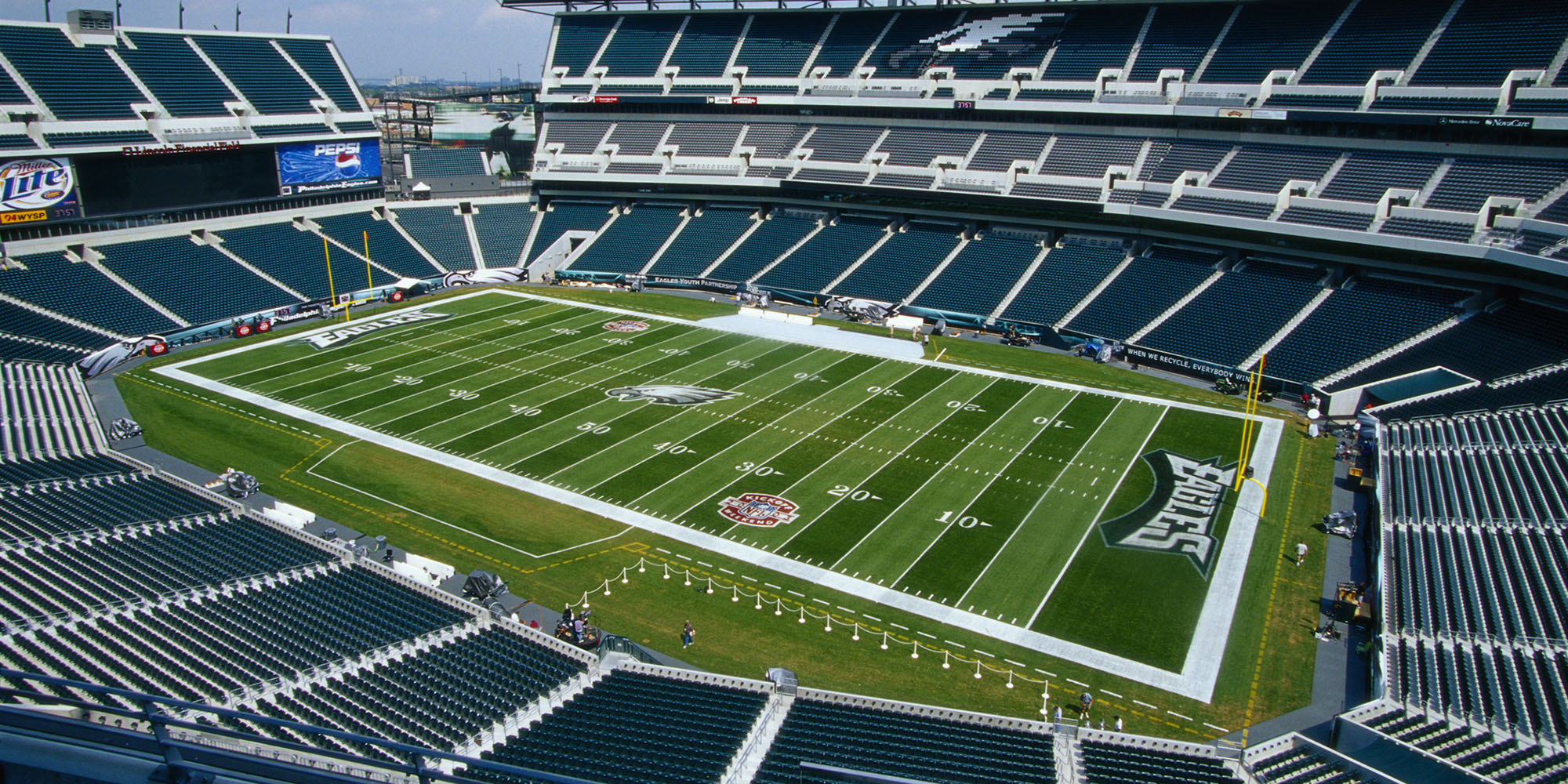
The Philadelphia Eagles announced this week that Lincoln Financial Field has been certified as a LEED Platinum building for its commitment to operational sustainability.
LEED (Leadership in Energy and Environmental Design), developed by the U.S. Green Building Council (USGBC), is the most widely used green building rating system in the world. Through design, construction, and operation practices that improve environmental and human health, LEED-certified buildings are helping to make the world more sustainable.
Lincoln Financial Field is one of only two previously constructed stadiums in the National Football League to achieve Platinum status – the highest of all LEED certifications – and the only one that is more than 10 years old. Since opening in 2003, Lincoln Financial Field has earned three levels of accreditation from USGBC, going from LEED Silver in 2013 to LEED Gold in 2018 to now LEED Platinum in 2024.
“LEED is a transformative tool that ensures a building is designed and operated to achieve high performance, improve human health, and protect the environment,” said Peter Templeton, President and CEO, USGBC. “By prioritizing sustainability, the Philadelphia Eagles are leading the way in their industry and helping USGBC continue towards our goal of green buildings for everyone within this generation.”
Lincoln Financial Field achieved LEED Platinum for implementing practical and measurable strategies and solutions in areas, including sustainable site development, water savings, energy efficiency, materials selection, and indoor environmental quality. Green buildings allow companies to operate more sustainably and give the people inside them a healthier, more comfortable space to work.
“Earning LEED Platinum from the U.S. Green Building Council validates the hard work and dedication we put forth into being an environmentally responsible organization,” said Jason Miller, Senior Vice President of Operations, Philadelphia Eagles. “It starts at the top with Chairman and CEO Jeffrey Lurie and President Don Smolenski who continuously drive innovation with their thoughtful and progressive leadership style. We have always operated through the lens of sustainability, so it is rewarding that our efforts are being recognized in such a distinguished way.”
Sustainability efforts that helped the Eagles and Lincoln Financial Field earn LEED Platinum:
First professional sports team in North America to install a hydrogen refueling station to power its passenger vehicles.
First NFL stadium to recycle beverage containers through the utilization of reverse vending machines.
10,456 solar panels annually produce around four megawatts of clean energy.
The installation of water filtration fountains has eliminated the use of more than one million plastic water bottles.
Implemented a closed-loop recycling program that collects bottle caps and turns them into new material for use at the stadium.
Achieved a 50% wattage reduction by replacing the stadium’s lights with patented, high-powered LED lighting technology.
Diverts 99% of waste from landfills and operates on 100% clean energy.
Yo Eagles, You make us proud. Now how about you get out on your green field and beat the Chiefs!
If you liked this post, you’ll love our daily environmental newsletter, EnviroPolitics.It’s packed daily with the latest news, commentary, and legislative updates from New Jersey, Pennsylvania, New York, Delaware…and beyond. Please do not take our word for it, try it free for an entire month. No obligation.