Succumbing to years of pressure, Harvard to stop investing in fossil fuel companies

Harvard University President Lawrence Bacow said Thursday that the university will move to end its investments in fossil fuel companies, though stopped short of using the word “divest.”Maddie Meyer/Getty Images


By Rachel Treisman, NPR

Harvard University says it will end its investments in fossil fuels, a move that activists — both on and off-campus — have been pushing the university to make for years.

In a Thursday message to the Harvard community, President Lawrence Bacow said that endowment managers don’t intend to make any more direct investments in companies that explore or develop fossil fuels and that its legacy investments in private equity funds with fossil fuel holdings “are in runoff mode and will end as these partnerships are liquidated.”

He noted that the university has not had direct investments in fossil fuels since June and that its indirect investments make up less than 2% of the total endowment. Harvard boasts the country’s largest academic endowment, clocking in most recently at $41.9 billion.

“Given the need to decarbonize the economy and our responsibility as fiduciaries to make long-term investment decisions that support our teaching and research mission, we do not believe such investments are prudent,” Bacow wrote. He called climate change “the most consequential threat facing humanity” and noted some of the other ways Harvard aims to address it.

The Harvard Crimson notes that Bacow — who has been president since 2018 — and his predecessors publicly opposed divestment and that administrators have focused on combating climate change through teaching, research, and campus sustainability efforts.

Activists Disrupt Harvard-Yale Rivalry Game To Protest Climate Change

Activists, students, and alumni have long called on the university to take action by selling off its fossil fuel holdings, with those voices growing louder in recent years.

Supporters of divestment have filed legal complaints, stormed the field at the 2019 Harvard-Yale football game, staged campus protests, and gained seats on school governance boards, according to The Crimson.

Other news coverage of the announcement:
Harvard to divest from fossil fuel industry (Washington Post)
Harvard’s Heat Week Sparks Fire for Divestment (Inside Climate)

If you liked this post you’ll love our daily newsletter, EnviroPolitics. It’s packed with the latest news, commentary, and legislative updates from New Jersey, Pennsylvania, New York, Delaware…and beyond. Don’t take our word for it, try it free for an entire month. No obligation.

Succumbing to years of pressure, Harvard to stop investing in fossil fuel companies Read More »
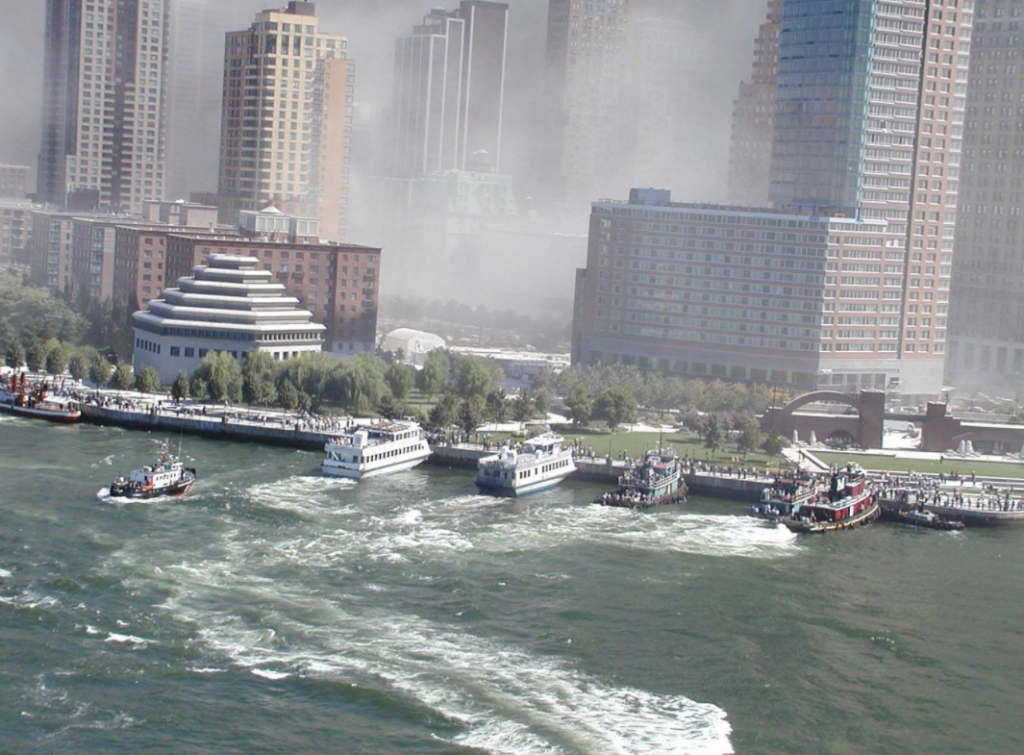
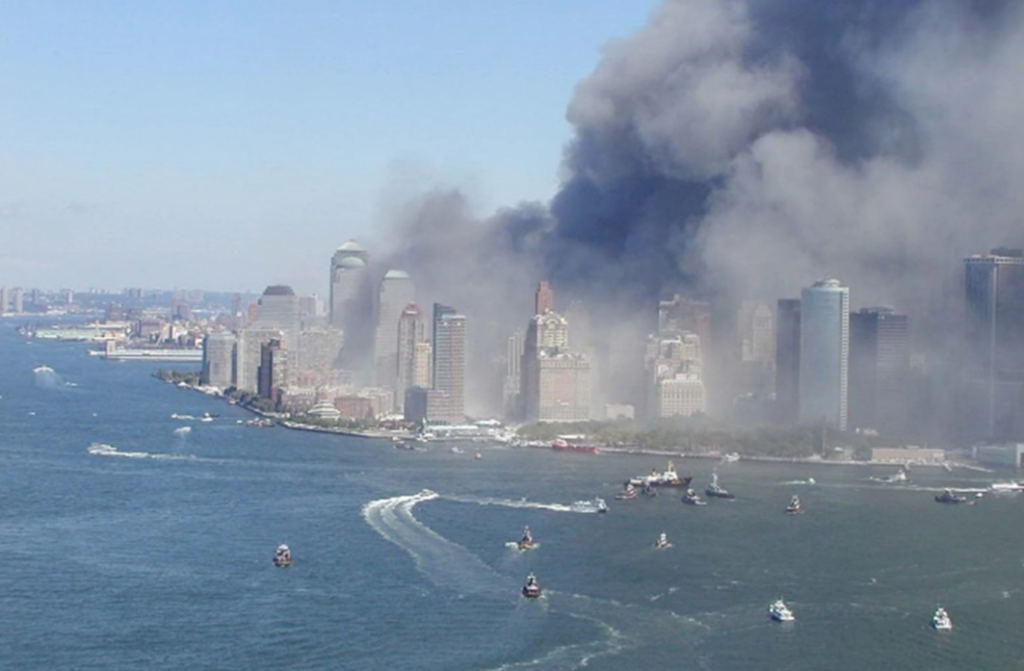
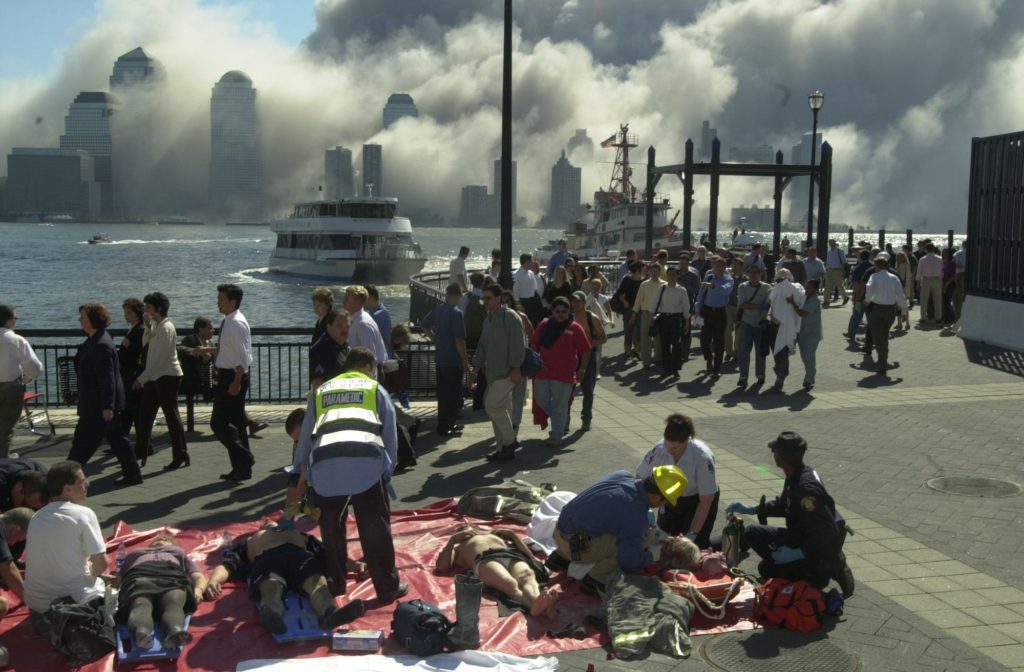
The great Hudson River boat rescue on 9/11

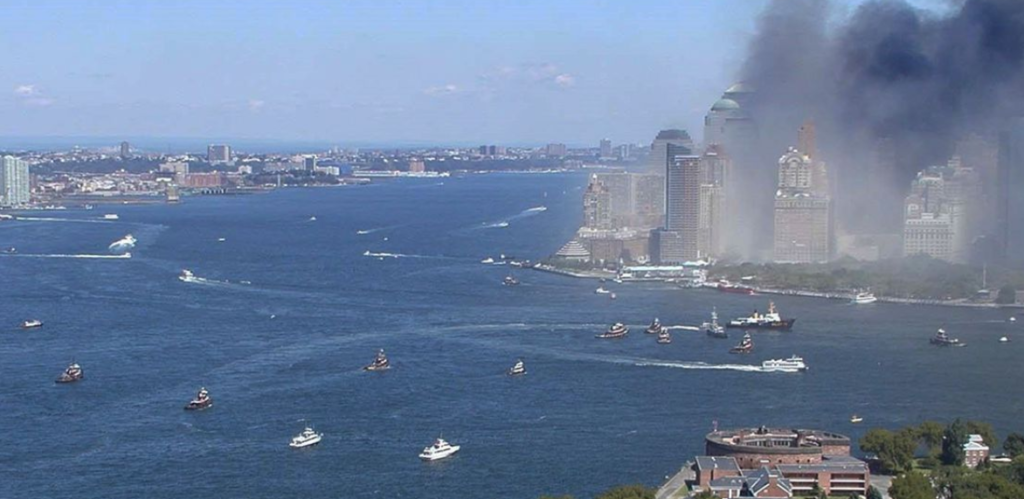
The unsung story of how hundreds of thousands were rescued by the NY/NJ maritime community as the Twin Towers burned

Boats converge on lower Manhattan to help evacuate thousands on Sept. 11, 2001. Twenty years later, it remains one of the lesser-known stories of 9/11. Courtesy of the New York Police Department

By Brittney Davie, Joe Atmonavage, and Matthew Stanmyre NJ.com

It was midmorning, but the air was black as midnight. Sirens and alarms wailed, echoing down ghostly streets, and dazed, ash-covered people, screamed as they scrambled in all directions.

Karen Lacey was among them, stumbling through throngs along the lower Manhattan waterfront, edging her way toward the cold, choppy waters of the Hudson River.

Fleeing from the dense dust in the aftermath of the collapse of the south tower of the World Trade Center and fearing she would be crushed by the debris, Lacey believed she had only one chance to save her life.

As the Twin Towers fell, the maritime community would rescue and transport an estimated 400,000 people off the island of Manhattan to New Jersey and elsewhere. Courtesy of the New York City Police Department

She climbed over the steel railing alongside the river.

“Lady, don’t jump!” a police officer yelled.

But in the heavy smoke and clouds of ash and dust, the air turned from gray to pitch-black and she immediately lost sight of him.

She jumped.

Gasping, her arms and legs fighting the fierce current, her clothes and Coach bag dragging her toward the bottom, Lacey swallowed gobs of dark, smoky air, trembling in the 60-degree water.

As she worked the dire odds in her head, determined to swim to New Jersey, a voice called out through the smoke.

“Is there anyone in the water?”

Read the full dramatic story here with additional photos and videos

The great Hudson River boat rescue on 9/11 Read More »

Dry weather, high winds raise risk of new fires in California today

ABC10 Chief Meteorologist Monica Woods explains the impact upcoming weather could have on the Dixie Fire.
By Derrick Bryson Taylor, New York Times Sept. 10, 2021, 6:19 a.m.

Exceptionally dry conditions in Sacramento and other parts of Northern California were expected to complicate firefighters’ efforts on Friday as they battle about a dozen major wildfires across the state.

A red flag warning — indicating that the combination of warm temperatures, very low humidity, and strong winds could spark new fires — was issued for the Sacramento region and areas east toward the California-Nevada state line until 11 p.m. Friday, according to the National Weather Service. Areas east and south of San Francisco were also included in the warning.

“Fire safety precautions should be exercised to prevent additional fires,” the Weather Service said, adding that fires could also start from lightning.

Don’t miss environmental news like this Click for free updates

By early Friday, light rain showers and thunderstorms were moving across Northern California, the Weather Service said.

About 100 miles east of Sacramento, the Caldor fire remained a threat, having consumed about 219,000 acres while being only 53 percent contained, according to a New York Times wildfire tracker. The cause of that blaze, which started almost a month ago, remains under investigation.

Thousands of residents have been forced to flee, and more than 780 homes have been destroyed since the blaze started. Late last month, officials said the Caldor fire had become the state’s top priority.

Farther north, where a red flag warning was also in place, the expanding Dixie fire prompted more evacuations on Thursday when the fire jumped Highway 44 and reached just outside of Old Station, a small town in Shasta County.

The Dixie fire, now the second-largest in state history, has burned more than 950,000 acres in two months and is 59 percent contained. More than 720 homes have been destroyed.

Read the full story here

Dry weather, high winds raise risk of new fires in California today Read More »

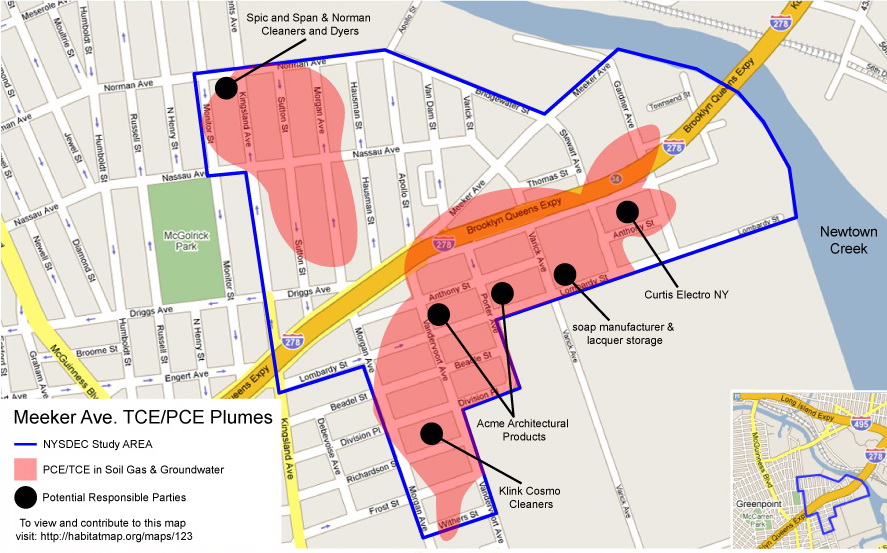
Meeker Avenue Plume, Brooklyn, proposed for Superfund list

The U.S. Environmental Protection Agency (EPA) announced yesterday that it is adding four sites to the National Priorities List (NPL) where releases of contamination pose significant human health and environmental risks.

EPA is also proposing to add another 13 sites including Meeker Avenue Plume, Brooklyn, New York, and is withdrawing a previously proposed site, following the Agency’s science-based determination that placing the site on the NPL is not needed to protect human health and the environment.

With this Superfund NPL update, the EPA says that the Biden-Harris Administration is demonstrating a commitment to updating the NPL twice a year. By pledging to add sites more regularly to the NPL, EPA is taking action to protect the health of communities across the country while cleaning up and returning blighted properties to safe and productive reuse in areas where environmental cleanup and jobs are needed most, the agency said.

EPA is proposing to list the Brooklyn site after close consultation with the New York State Department of Environmental Conservation (NYSDEC), which discovered a plume at the Meeker Avenue site during the investigation and remediation of an adjacent petroleum groundwater contamination location.

This area of Brooklyn housed historical petroleum refining and storage operations along the banks of Newtown Creek. Chlorinated volatile organic compounds (CVOCs) were found in subsurface soil and groundwater outside of the historic petroleum spill area, prompting NYSDEC to conduct several environmental investigations.

NYSDEC’s previous and ongoing work at this site includes investigations that found contaminants of CVOCs, including tetrachloroethylene (PCE) and trichloroethylene (TCE), in the subsurface and indoor air of occupied residential and commercial structures above the groundwater contaminant plume.

Indoor air contamination from vapor intrusion presents a potential health risk. NYSDEC has taken measures to mitigate exposures by installing sub-slab depressurization systems, which direct hazardous vapors in the soil to the exterior of the building. NYSDEC continues to conduct additional investigations to identify sources of contamination and continues to offer sub-slab and indoor air sampling to property owners within the boundary of the Meeker Avenue site. The State of New York supports the inclusion of the site on the Superfund NPL.

Background

The NPL includes the nation’s most serious uncontrolled or abandoned releases of contamination. The list serves as the basis for prioritizing EPA Superfund cleanup funding and enforcement actions. Only releases at sites included on the NPL are eligible to receive federal funding for long-term, permanent cleanup.

EPA says it proposes sites to the NPL based on a scientific determination of risks to people and the environment, consistent with the Comprehensive Environmental Response, Compensation, and Liability Act and the National Oil and Hazardous Substances Pollution Contingency Plan. 

Superfund cleanups provide health and economic benefits to communities. The program is credited for significant reductions in both birth defects and blood-lead levels among children living near sites, and research has shown residential property values increase up to 24 percent within three miles of sites after cleanup.

Further, thanks to Superfund cleanups, communities are now using previously blighted properties for a wide range of purposes, including retail businesses, office space, public parks, residences, warehouses, and solar power generation. As of 2020, EPA has collected economic data on 632 Superfund sites, finding 9,900 businesses in operation, 227,000 people employed, $16.3 billion in employee-earned income, and $63.3 billion in business-generated sales.

For information about Superfund and the NPL, please visit: https://www.epa.gov/superfund

If you liked this post you’ll love our daily newsletter, EnviroPolitics. It’s packed with the latest news, commentary, and legislative updates from New Jersey, Pennsylvania, New York, Delaware…and beyond. Don’t take our word for it, try it free for an entire month. No obligation.

Meeker Avenue Plume, Brooklyn, proposed for Superfund list Read More »

September 8, 2021 summary of all wildfires burning in California

The Golden Gate Bridge is barely visible through smoke from wildfires on Wednesday morning, September 9, 2020, in this view from Fort Baker near Sausalito, California
Cal Fire

As of Wednesday morning (9/8/210, nearly 15,000 firefighters are making progress on 14 major wildfires and three extended attack wildfires in California. Yesterday, firefighters responded to 32 new initial attack wildfires across the state, quickly containing them all.

Since the beginning of the year, over 2 million acres have burned across California. While firefighters continue battling the current major wildfires, CAL FIRE and fire departments across the state remain prepared for potentially more significant wildfires due to critical fire weather.

Six of the seven largest wildfires in California history have occurred since 2020, with the Dixie Fire now the 2nd largest wildfire in California history, the Caldor the 15th, and the Monument the 18th. This year’s wildfires have also been destructive with nearly 3,000 structures being destroyed.

Unusually warm and dry conditions will continue for most of Northern California today under the influence of a strong upper-level ridge. Incoming mid-level monsoonal moisture and the breakdown of the upper-level ridge will bring a variety of critical fire weather concerns to Northern California Thursday and Friday.

Peak gusts of 20-30 mph combined with minimum relative humidity in the upper single digits and teens and hot temps will create localized areas of enhanced area fire weather conditions today.

Southern California temperatures will remain above average through Saturday. With moisture ramping back into the region today, minimum humidity will be in the teens and 20’s away from the coastal areas through Friday. Isolated to widely scattered afternoon showers and thunderstorms (a mix of wet and dry) will be possible over the mountains and deserts of Southern California today through Friday.

Fires of Interest:

**CAL FIRE Fires**
Bridge Fire, Placer County (more info…) 
Northeast of Auburn
*411 acres, 50% contained
*Evacuation warnings have been lifted
*Road closures in the area

**Unified Command Fires**

Caldor Fire, El Dorado County (more info…)
South of Grizzly Flats – El Dorado National Forest
*217,569acres, 50% contained
*15th largest and 17th Most Destructive Wildfire in California history
*Evacuation orders and warnings remain in place
*More than 24,600 structures remain threatened, 996 structures destroyed
*Damage inspection is ongoing
*Repopulation ongoing where safe to do so

Dixie Fire, Butte, Plumas, Lassen, Tehama & Shasta Counties (more info…)
Feather River Canyon
*922,192 acres, 59% contained
*Almost 6,000 structures threatened, 1,282 destroyed
*2nd Largest and 14th Most Destructive Wildfire in California history
*Evacuation orders and warnings in place for multiple communities
*Repopulation ongoing where safe to do so
*Damage assessment is ongoing
*Unified Command CAL FIRE, USFS, BLM, and National Park Service
*CAL FIRE IMT 1 and Great Basin IMT 1 are in command

Click for data on all additional fires

If you liked this post you’ll love our daily newsletter, EnviroPolitics. It’s packed with the latest news, commentary, and legislative updates from New Jersey, Pennsylvania, New York, Delaware…and beyond. Don’t take our word for it, try it free for an entire month. No obligation.

September 8, 2021 summary of all wildfires burning in California Read More »