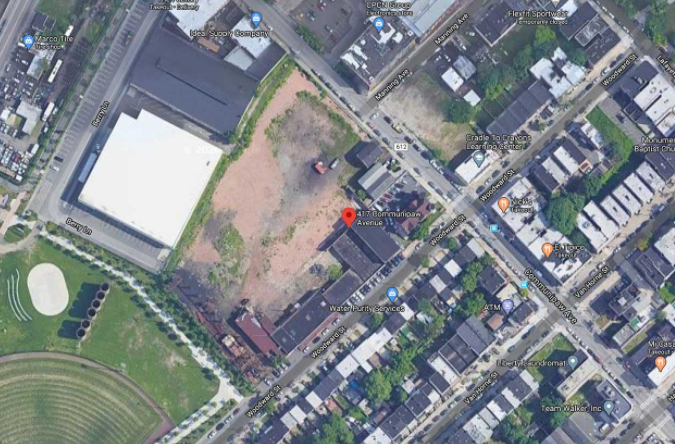
Site in question, also known as the Steel Tech site, 417 Communipaw Avenue, Bergen-Lafayette, Jersey City. Photo via Google Maps/Street View.
By Chris Fry, Jersey Digs
The battle over a proposed high-rise in Bergen-Lafayette section of Jersey City has officially spilled into the courtroom as a local non-profit has taken legal action over an ordinance allowing residential and commercial development at property allegedly set aside for a park expansion.
On January 29, the Morris Canal Redevelopment Area Community Development Corporation (MCRACDC) filed a lawsuit against Jersey City and their planning division in Hudson County Civil Court. Formed in 1999 to ensure inclusion of residents as the Morris Canal Redevelopment Plan progressed, the organization’s complaint centers around a proposal that has emerged at 417 Communipaw Avenue.
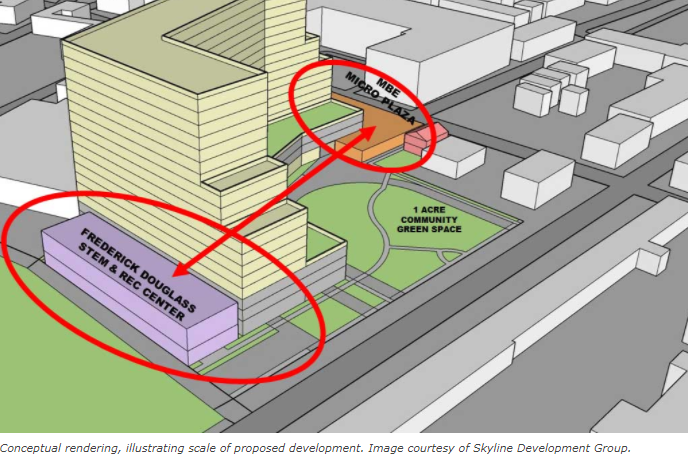
Known as the Steel Tech site, Skyline Development Group has pitched a revitalization that includes a 17-story residential building, a public STEM school, recreation center, and a Business Enterprise Incubator with eight affordable commercial working spaces for minority-owned businesses. But the MCRACDC says in their lawsuit that the 3.3-acre parcel was intended as part of a Berry Lane Park expansion that has yet to materialize.
“This is a case of promises — and a community-driven public-private partnership — broken, all to pave the way for a developer to profit,” the complaint says.
MCRACDC argues that the ordinance violates a New Jersey law prohibiting so-called “spot zoning,” which generally refers to the re-zoning of land for the benefit of an owner over the community. The complaint alleges that “the illicit spot-rezoning of the Steel Tech property is slated to net the aforesaid high-rise’s developer nearly $3 million in profit.”
Grants Available to Community Projects in Company’s Service Areas in 10 States
CAMDEN, N.J.–(BUSINESS WIRE)–American Water (NYSE: AWK), the nation’s largest publicly traded water and wastewater utility company, announced today that applications are now being accepted by its participating state subsidiaries for the company’s 2021 Environmental Grant Program awards. The grant awards will be available in American Water service areas in 10 states: Illinois, Indiana, Iowa, Kentucky, Maryland, New Jersey, Pennsylvania,Tennessee, Virginia and West Virginia.
“For American Water, delivering a reliable supply of safe, clean, water to our customers and treating their wastewater is just a start. Our goal is to provide essential services in ways that minimize our impact on the environment and strengthen the communities we serve,” said Cheryl Norton, Chief Environmental Officer of American Water. “We are all responsible for protecting our nation’s water and watersheds, and this program is just one way we help communities engage in this important effort.”
Established in 2005, American Water’s Environmental Grant Program offers funds for innovative, community-based environmental projects that improve, restore or protect the watersheds, surface water and/or groundwater supplies through partnerships. Last year, American Water and its state subsidiaries funded 42 projects that were awarded grants totaling approximately $141,000.
Information and application requirements can be obtained directly from participating American Water state subsidiaries, or on the Environmental Grant section of the company website.
Applications must be postmarked by March 31, 2021.
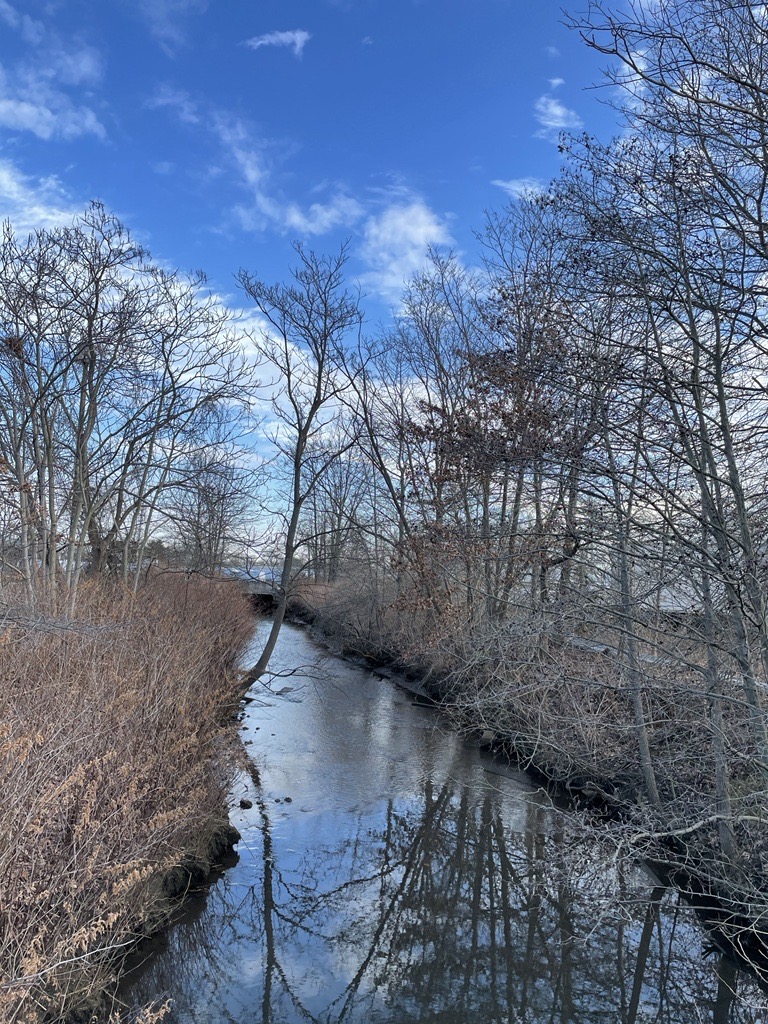
Turtle Mill Brook Water Quality Testing Location along the Shrewsbury River
By Allie Tully, Marketing & Communications Coordinator, COA
At its Virtual Rally for the Navesink public meeting on January 28, Clean Ocean Action (COA) announced that the initiative to improve water quality in the Navesink and Shrewsbury Rivers, formally known as “Rally for the Navesink”, has been officially renamed “Rally for the Two Rivers.”
“As interconnected water bodies, the water quality of the Navesink and Shrewsbury Rivers are inextricably linked and suffer from similar impairments. A watershed-wide approach is needed to effectively address the issues in both rivers. As the Rally for the Two Rivers, we will seek opportunities for pollution reduction by engaging new partners throughout the Shrewsbury River watershed, while leveraging our ongoing successful collaborations in the Navesink watershed. Despite the name change, the goal of the Rally remains the same: to make the rivers healthy for fish, shellfish, and families,” said COA’s Watershed Program Coordinator, Alison Jones.
When the initiative first began in 2016, the Navesink River was the primary focus of source trackdown efforts due to the severity of the pathogen pollution issue, which resulted in the downgrade of 565 acres of shellfishing habitat. While source trackdown efforts are still ongoing to identify the few remaining sources of pathogen pollution in the watershed, pathogen levels in the river have decreased significantly, thanks to five years of coordinated effort from the Rally for the Navesink and collaboration with the NJDEP. Unfortunately, other water quality impairments have become cause for concern, as evidenced by increases in the number and severity of fish kills and algal blooms. The Shrewsbury River suffers from these same impairments, including pathogen pollution.
“Healthy rivers are integral to our wellbeing and link communities. COA’s Rally for the Two Rivers strives to do just that with proven, collaborative approaches to science, and education,” stated COA’s Staff Scientist Dr. Swarna Muthukrishnan, PhD.
The volunteer Oceanport Water Watch Committee has been diligently monitoring water quality in the Shrewsbury River for many years, providing COA with a thorough understanding of the current water quality conditions in the river. This baseline knowledge is critical to identifying and addressing problem areas. Moving forward, the Rally for the Two Rivers will focus on preventative actions to maintain the water quality improvements achieved in recent years, while continuously working to find and fix sources of pollution in both the Navesink and Shrewsbury Rivers.
“Oceanport Water Watch Committee is a group of citizen science volunteers that has been in existence for 30 years, for which I have been involved with for 13 years. Once a month we sample 9-10 sites around the shores of Oceanport in the Shrewsbury River, and occasionally a bit upstream. There is usually low fecal content in the main part of the Shrewsbury River. However, there are exceptions upstream at Turtle Mill Brook. That area sometimes produces high levels of bacteria, especially after heavy rains that you can see diluting as the water flows downstream. Originally the goal was to get Monmouth Park Racetrack to clean up their act which turned out to be a success. The work continues not only to keep an eye on the park but also to monitor the recent reuse of the Fort Monmouth sewerage system. The initiative is strictly a volunteer effort,” shared Tom Cox of the Oceanport Water Watch Committee.
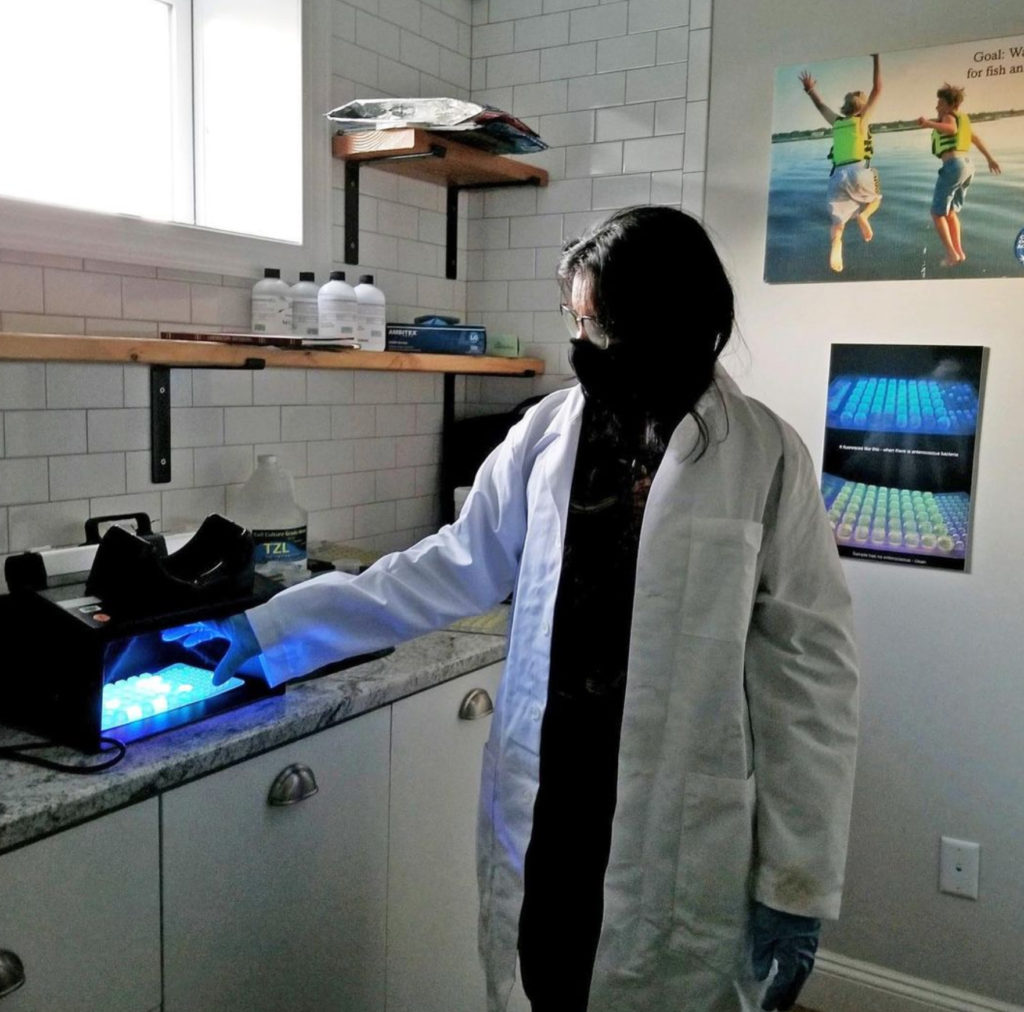
IDEXX Water Quality Testing is performed weekly in COA’s lab by Dr. Swarna Muthukrishnan, PhD
In November 2020, COA began IDEXX Enterolert bacteria monitoring of select locations in the Two Rivers Watershed thanks to the IDEXX equipment loan grant from U.S.EPA Region II Citizen Science Program. Sixteen locations of potential bacteria pollution issues have been selected for the IDEXX study, based on an evaluation of bacteria monitoring data collected by Oceanport Water Watch Committee, COA and the Department of Environmental Protection (DEP) for the Shrewsbury and Navesink Rivers. All selected sites are sampled twice a month with a minimum of five sampling events over the course of the study. The IDEXX study for the Two Rivers Watershed will help collect valuable data on ambient bacteria in these waterways.
At the meeting, Alison Jones discussed another water quality concern that goes beyond pathogens – road salt. Pictured above is a sample collected from a road salt study COA is currently working on with NJ Watershed Watch Network.
To learn more about the Rally for the Two Rivers program and stay informed, visit the Facebook page.
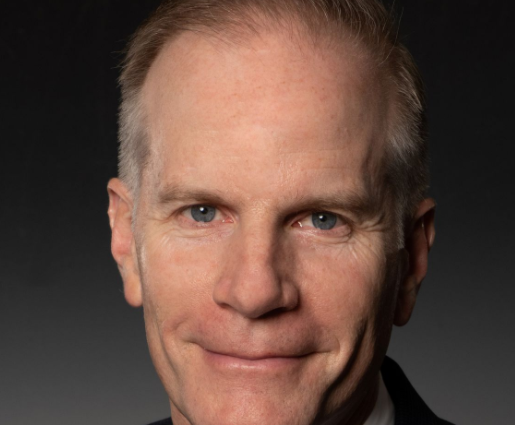
William M. McSwain, who last month stepped down from his position as the top federal prosecutor in the region, is joining one of the region’s top law firms, Duane Morris LLP.
McSwain, 51, was appointed by Donald Trump in 2017 as U.S. Attorney for the Eastern District of Pennsylvania and served three years before resigning on Jan. 22.
On Monday, Duane Morris announced McSwain would be joining the firm’s trial practice group where he will focus on white collar defense and government investigations.
“This is a great day for Duane Morris and our clients,” said Matt Taylor, CEO of the Philadelphia-based firm with almost 900 practicing attorneys. “One of the cornerstones to growing strategically is to bring on marquee talent in key practice areas. Bill McSwain is marquee talent.”
“He’s a straight shooter, a very humble guy, and an incredibly hard worker,” Taylor said.
As U.S. Attorney, McSwain oversaw all federal criminal prosecutions and civil litigation in the region. He cast himself as a bulwark against what he called “a culture of lawlessness.”
Proposed measure, backed by Katie Brennan and leading activists,requires campaigns, party organizations to implement anti-harassment policies, training and confidential complaint process
From the New Jersey Senate Democrats
TRENTON – Senate Majority Leader Loretta Weinberg and Senator Vin Gopal today introduced legislation requiring campaigns and political parties to implement anti-harassment policies, training and a confidential complaint process, and establishing an independent governmental unit to investigate complaints of sexual misconduct in the political arena.
The Weinberg-Gopal bill, S3389, would establish an independent investigative unit not subject to control by campaign, party or elected officials to receive and probe allegations of sexual violence, harassment and misconduct throughout New Jersey politics.
The bill would also require state, county and local campaigns and political party organizations to adopt anti-harassment policies covering behavior both during and after work hours, provide anti-harassment training and designate specific individuals to receive confidential complaints of sexual misconduct.
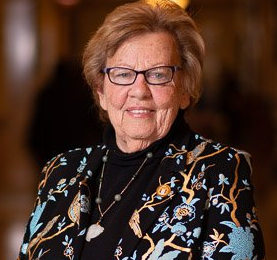
Senator Loretta Weinberg
The legislation is based on recommendations developed by the 15-member ad hoc Workgroup on Harassment, Sexual Assault and Misogyny put together by Senator Weinberg, which issued its report last week, and by the nine-member Working Group on Campaign Harassment Legislation convened by Senator Gopal.
“Political candidates, campaigns and party organizations have a vested interest in suppressing, hiding or ignoring allegations of sexual misconduct to avert political damage or preserve their personal power,” said Senator Weinberg (D-Bergen). “Survivors who complain publicly, or even privately, face retaliation, are not believed and risk losing their political careers. This legislation would enable survivors to confidentially report sexual misconduct to an independent investigative agency and / or to a designated campaign or party official responsible for monitoring anti-harassment policies.”
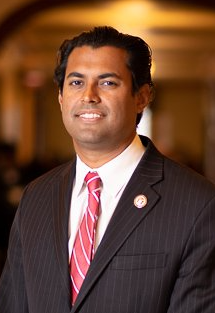
Senator Vin Gopal
“It is important that this legislation was shaped by the recommendations of women who understand the impact of harassment, sexual misconduct and misogyny on women in politics,” said Senator Gopal (D-Monmouth). “This comprehensive legislation requires political party organizations and campaigns to adopt anti-harassment policies and conduct training, and it provides important new options for survivors to report misconduct, have their allegations heard and investigated, and obtain justice.”
Senators Weinberg established her workgroup and Gopal convened his bipartisan committee in the wake of a December 29, 2019, investigative report in the Star-Ledger and NJ.com by Sue Livio and Kelly Heyboer that detailed a toxic culture of harassment, sexual assault and misogyny in New Jersey politics.
Patricia Teffenhart, executive director of the New Jersey Coalition Against Sexual Assault, who served on the Weinberg workgroup and was an adviser to the Monmouth committee, said the legislation was a collaborative effort.
“Over the last few years, women in New Jersey have been increasingly vocal about the ways in which power and control impact their involvement in politics. The fact that two important groups, Monmouth County’s Task Force and the Workgroup on Harassment, Sexual Assault and Misogyny, have spent the past year organizing around this issue is telling – women all throughout New Jersey’s political arena are ready to disrupt and dismantle the patriarchal status quo,” Teffenhart said.
If you like this post you’ll love our daily newsletter, EnviroPolitics. It’s packed with the latest news, commentary and legislative updates from NJ, PA, NY, Delaware…and beyond. Try it free for an entire month.
“The introduction of today’s legislation is the product of what is possible when we work together to address the issues being raised by women and we look forward to New Jersey leading the nation in passing ground-breaking legislation to truly create a safe and equitable environment for all people interested in civic engagement,” she said.
Katie Brennan, whose recommendations for reforms to protect the rights of survivors in sexual assault cases in the criminal justice system formed the basis of an eight-bill package that passed the Senate last month, applauded the legislative effort to address sexual misconduct in the political sphere.
“We need more women in politics. We need more women running for office. But all too often, once we get there, we are met with misogyny and harassment. So we’ve asked for accountability, and with this bill we’ll start to get it,” Brennan said. “This legislation will hold our campaigns accountable, our elected officials accountable, and begin to make New Jersey politics a little more inclusive.”
By Insider NJ | January 5, 2021, 1:42 pm | in Caucus Room
Andrew Zwicker, a member of the NJ General Assembly representing the 16th Legislative District, has named Petra Gaskins as his chief of staff, effective Monday, January 11, 2021.
“I am thrilled to welcome Petra Gaskins to my staff. She brings a tremendous amount of experience and a unique personal perspective into this role. Her deep desire to help others and to seek changes that improve people’s lives will be invaluable,” said Zwicker.
Gaskins formerly served as the director of Outreach & Programming for Congresswoman Bonnie Watson Coleman, from the 12th Congressional District. In that role, she was responsible for the development and implementation of projects and programs to engage key constituency groups. Previously, she was as an aide to New Jersey Governor Phil Murphy in Intergovernmental Affairs where she served as the liaison to local officials in Mercer and Hunterdon counties. She began her career in government with Congresswoman Bonnie Watson Coleman in constituent relations.
A graduate of Rider University, Gaskins takes great pride in mentoring the next generation of civic leaders by volunteering with New Leaders Council-New Jersey, according to a release from Zwicker’s office. She also is an advisor to the Mercer County Young Democrats.