Researchers at the University of Pittsburgh School of Medicine report initial success in animal trials for a vaccine to neutralize the virus that causes COVID-19.
University of Pittsburgh
By Eric Poole, The (Sharon) Herald 11:55 AM April 2, 2020
During tests in mice, the vaccine was shown to produce antibodies specific to SARS-CoV-2, known as the novel coronavirus. University researchers said the mice responded with antibodies sufficient to neutralize the virus.
The researchers released their findings today in a paper published in EBioMedicine, published by The Lancet, a leading British medical journal.
The authors said they are now in the process of seeking investigatory new drug approval from the U.S. Food and Drug Administration with expectation of beginning human clinical trial within the next few months.
Dr. Andrea Gambotto, co-senior author of the paper, said the university researchers were able to move so quickly because they were already working on vaccines for similar viruses.
“We had previous experience on SARS-CoV in 2003 and MERS-CoV in 2014,” Gambotto said. “These two viruses, which are closely related to SARS-CoV-2, teach us that a particular protein, called a spike protein, is important for inducing immunity against the virus. We knew exactly where to fight this new virus.”
The researchers are calling the vaccine PittCoVacc, short for Pittsburgh Coronavirus Vaccine. The process uses laboratory-made pieces of viral protein to build immunity, similar to the process of annual vaccinations for the flu.
This differs from the experimental vaccines, which focus on RNA development, that have recently entered clinical trials.
For delivery, the vaccine uses a microneedle array, a fingertip-sized patch of 400 tiny needles that deliver the spike protein into the skin. The patch, similar to an adhesive bandage, is affixed to the patient and the needles, which are made of sugar, dissolve into the skin.
“Our ability to rapidly develop this vaccine was a result of scientists with expertise in diverse areas of research working together with a common goal,” said co-senior author Dr. Louis Falo, a professor and chairman of dermatology at the University of Pittsburgh School of Medicine and University of Pittsburgh Medical Center.
Additional authors on the study are Eun Kim, Geza Erdos, Shohua Huang, Thomas Kenniston, Stephen Balmert, Cara Donahue Carey, Michael Epperly, William Klimstra and Emrullah Korkmaz of Pitt and Bart Haagmans of Erasmus Medical Center.
Funding for the study came from the National Institute of Allergy and Infectious Diseases, National Institute of Arthritis and Musculoskeletal and Skin Diseases and National Cancer Institute.
If you liked this post you’ll love our daily newsletter, EnviroPolitics.It’s packed with the latest news, commentary and legislative updates from New Jersey, Pennsylvania, New York, Delaware…and beyond. Don’t take our word for it, try it free for an entire month. No obligation.
States are changing policies as an old debate gains new traction. Research shows consumers could wash reusables more, but there’s no clear proof single-use bags are less likely to spread coronavirus.
Permission granted by Kroeger
Leslie Nemo reports for WasteDive
Coronavirus upheaval has halted evictions, converted factories into ventilator and hand sanitizer producers and reshaped lives. The virus also seems to be disrupting something unexpected: Plastic bag bans.
Like most responses to the pandemic, initial steps came at the local level, with cities and states pulling back on proposed or enacted bag bans. Some of these choices are based on logistical issues: Boston reinstated their use, citing a need for stores to serve customers any way they can, for example. Massachusetts followed suit with more drastic measures: banning reusable bags and preempting local bag bans across the entire state. Maine has delayed its planned ban, which was supposed to kick-off on April 22nd. Connecticut lifted a 10-cent fee on plastic bags that just went into place last year and Hawaii County, Hawaii has also suspended its own plastic bag ban.
Another state taking a stance during the pandemic linked its choice to sanitation concerns — something the Plastics Industry Association echoed in a letter to federal health authorities. New Hampshire temporarily banned reusable bag use, which Gov. Chris Sununu tweeted was because of concerns the bags could spread the virus. In a letter to the U.S. Department of Health and Human Services (HHS), the Plastics Industry Association requested that the agency issue a statement on what the association calls “the health and safety benefits seen in single-use plastics.”
This claim comes despite the fact that experts Waste Dive spoke with aren’t aware of any scientific evidence that single-use plastic bags are less likely to spread SARS-CoV-2. Additionally, the American Recyclable Plastic Bag Alliance, an industry association promoting plastic bag use, declined to offer any evidence proving its product is less prone to spreading the virus. While preexisting public health research indicates shoppers could be keeping their reusable bags cleaner, emerging research on the brand-new virus shows details are still evolving about where and how long the pathogen can survive.
As preliminary as much of the coronavirus information is, it is worth nothing that major public health bodies have yet to issue a statement on risks from reusable bags, John Hocevar, the oceans campaign director of Greenpeace, told Waste Dive. “Trust the health professionals first and foremost,” he said. “This is not an alarm they’re raising.”
Epidemiologists still have a lot to learn about COVID-19. Experts believe the primary transmission mode is via respiratory droplets, which people inhale from one another if they stand too close. It’s possible those specks of moisture land on surfaces, and that people could touch virus-laden materials and then touch their faces, giving themselves the disease. Though the Centers for Disease Control and Prevention doesn’t think this is the main way SARS-CoV-2 spreads, the risk is part of why the agency recommends frequent hand-washing and disinfecting regularly-touched items in the home.
As for how long the virus survives on surfaces without a soapy or disinfectant intervention, researchers only have preliminary estimates. Initial research in the New England Journal of Medicine showed the pathogen lingers on stainless steel and plastic for two to three days, and cardboard for about 24 hours. Other new research on viruses related to SARS-CoV-2, in the Journal of Hospital Infection, shows those pathogens can persist on paper or PVC for up to five days.
No published studies have assessed SARS-CoV-2 survival on textiles or paper, however. Lab tests also hold humidity and room temperature constant for an entire week. If those conditions change — as they do in real life — survival situations can change, as noted in a March 25 webinar by the American Society of Safety Professionals.
There’s also been little investigation into whether reusable shopping bags spread disease. In 2018, a team of public health researchers sprayed reusable grocery bags with fake norovirus particles, handed them to shoppers and swabbed every surface the customer touched. The researchers picked up the fake virus with every swab and found the highest concentrations on the shopper’s hands, the checkout stand and the clerk’s hands.
With hands serving as hot-spots for this fake virus, the study backs up how important hand washing and hygiene are. “That’s really boring, probably, to hear,” said Ryan Sinclair, study co-author and public health researcher at Loma Linda University. But the sanitation measure is important.
Because their work also showed that reusable bags spread the fake virus around the store, Sinclair said he thinks it’s worth switching to disposable bags for the time being. Bags from home touch cars, grocery carts, conveyor belts and people’s hands. Sinclair thinks it’s important to minimize the amount of crossover between public and private spaces during the current health crisis.
“We need to work to minimize the wasteful use of plastics,” he said, “but while we’re in this pandemic, we definitely need to find another solution.”
His 2018 research didn’t receive any outside funding, though a PR group recently reached out to Sinclair to write about his thoughts on reusable bag use during the pandemic. The Plastics Industry Association letter to HHS also mentioned an attached affidavit from Sinclair supporting its claim that disposable bags are more sanitary. When asked if those behind the Plastics letter hired the PR group to contact Sinclair for the statement, the American Recyclable Plastic Bag Alliance declined to participate in this story.
The American Recyclable Plastic Bag Alliance also declined to comment when asked for scientific evidence indicating that single-use plastic bags are less likely to spread SARS-CoV-2 or other viruses. The lack of evidence presented has sustainability advocates skeptical of these claims.
If the pathogen lingers on plastic, disposable bags are as susceptible to hosting the virus as reusable plastic versions, said Judith Enck, founder of Beyond Plastics and a former U.S. EPA regional administrator. Plus, Enck said, “the bags have traveled the world and have been sitting in the store where a lot of people are,” and aren’t immune to being sneezed on or coughed over.
Additionally, reusable bags can get washed, a solution that public health researchers and waste reduction advocates agree on. A 2011 survey — which received support from the American Chemistry Council, an organization supported by plastics producers — found that 97% of shoppers never wash their reusable bags.
Since the research also found a sampling of reusable bags harbored potentially-harmful bacteria, Chuck Gerba, a University of Arizona researcher who wrote the paper along with Sinclair, agrees with his co-author. For now, shoppers should use disposable bags and eventually return to reusable options. When relying on reusables again, “treat them like your underwear,” Gerba said. Wash them after every use and don’t use them for anything besides groceries.
Enck points out that the bacteria Gerba found on reusable bags isn’t necessarily a stand-in for viruses, and thinks it’s worth simply advocating for better bag sanitation now.
“I am very concerned about the coronavirus, and if I saw anything to suggest that reusable bags are a problem, I would say let’s pause on them for a while,” she said. Without that evidence, Enck thinks it’s preferable to wash bags regularly and be mindful of where they go. “You know when you washed it and who else was touching it.”
Enck thinks this approach of more thoroughly and regularly cleaning reusable items can carry over into our post-pandemic life, too. Though the plastic industry paints reusables as unsanitary, the appeal of being in control of who touches and washes your mugs and bags might ultimately win over consumers, Enck said. In a sign that not every state shares long-term sanitation fears over reusable bags, Washington Gov. Jay Inslee signed legislation last week enacting a plastic bag ban starting January 2021.
In the meantime, the lack of definitive evidence for the sanitary superiority of single-use bags indicates that the single-use plastic industry is trying to capitalize on people’s fear, in Greenpeace’s view. Without that proof, Hocevarsaid, perhaps conversations should be dedicated to clearer, pressing concerns.
“I would like to see the focus of our conversation about health and safety right now focused on the threats that we know are real,” he said.
Related news stories: NJ enviro groups support 54 towns in retaining plastic bag bans NJ’s leading environmental groups are reaching out to support and help NJ’s 54 mayors and towns defend their single use plastics bag bans in response to what they call a bullying and misinformation campaign by Plastics industry and the NJ Food Council InsiderNJ
If you liked this post you’ll love our daily newsletter, EnviroPolitics.It’s packed with the latest news, commentary and legislative updates from New Jersey, Pennsylvania, New York, Delaware…and beyond. Don’t take our word for it, try it free for an entire month. No obligation.
The coronavirus is proving particularly dangerous for people with pre-existing conditions. Government officials have warned, and data shows, that many of those who have died already suffered from one disease — diabetes.
The concerns include threats as well as unwelcome communications from fervent admirers, according to people with knowledge of deliberations inside the Department of Health and Human Services and the Department of Justice.
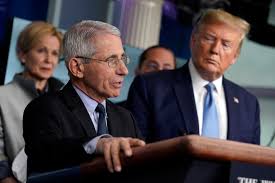
Fauci, 79, is the most outspoken member of the administration in favor of sweeping public health guidelines and is among the few officials willing to correct President Trump’s misstatements. Along with Deborah Birx, the coordinator for the White House’s task force, Fauci has encouraged the president to extend the timeline for social-distancing guidelines, presenting him with grim models about the possible toll of the pandemic.
“Now is the time, whenever you’re having an effect, not to take your foot off the accelerator and on the brake, but to just press it down on the accelerator,” he said Tuesday as the White House’s task force made some of those models public, warning of 100,000 to 240,000 deaths in the United States.
The U.S. solar and wind sectors got shut out of the last coronavirus stimulus package. The battle is far from over.
By Jeff St. John for gtm
The renewables industry is hoping to secure changes to two key federal policies.
The U.S. renewables industry was left out of the $2.2 trillion coronavirus stimulus bill passed last week, but the battle is far from over.
Congress is already considering further legislation to rescue the economy from the ravages of the COVID-19 pandemic, and renewable energy groups are ready to bring their proposals back to the table.
As with the last stimulus bill, the industry’s plans center on securing changes to two federal policies: the Investment Tax Credit (ITC) for solar power and the Production Tax Credit (PTC) for wind power.
Instead, they’re focusing on two key concepts. The first is extending “safe-harbor” deadlines for receiving the credits that may be thrown off track by the pandemic’s economic disruptions. The safe-harbor fix could potentially be made by the Treasury Department, without a need for congressional action, at least for solar.
The second is allowing the relatively small pool of tax equity investors in renewable projects to receive some of their value back as refundable credits or via “direct pay” provisions. Tax equity investors are likely to have lower tax liabilities amid an economic downturn and thus less “tax appetite.”
The ostensibly revenue-neutral aspect of these two requests could help differentiate solar and wind from requests for support in other areas like energy storage, and energy efficiency and electric vehicles. President Donald Trump and Senate Majority Leader Mitch McConnell (R-Kentucky) opposed efforts to put clean energy support into the last stimulus package, incorrectly conflating them with the Green New Deal and other proposals from House Democrats.