For years, we relied heavily on recycling operations in China to take our waste. But that came to an end in 2018, when Beijing barred the import of recycling materials. The result is a waste crisis that has caused at least dozens of municipalities to cancel curbside recycling programs, with many more implementing partial cuts. Huge amounts of recyclables are now going to landfills.
“When the biggest export market is no longer willing to accept your material, there’s an imbalance between supply and demand,” said David Biderman, the executive director of the Solid Waste Association of North America. “That’s just Economics 101.”
So, how can we fix the system?
Experts say that we would need to implement changes across the board. Legislators may need to pass laws requiring manufacturers to use more recyclable materials, companies would need to build much-needed recycling infrastructure and people would need to recycle properly.
Cities can’t do all that. But they can play an important role.
For a possible model, consider San Francisco, which runs one of the most successful waste-management programs in the United States. Through recycling and composting, the city manages to keep around 80 percent of its waste out of landfills.
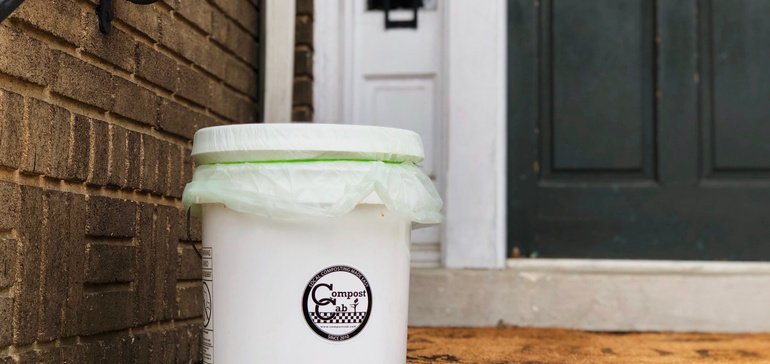
San Francisco’s program has been years in the making. In 2000, it introduced the “fantastic three” citywide curbside collection program with separate, color-coded bins for recyclables, compost and trash. In 2009, it passed a law requiring residents and businesses to separate their waste.
City inspectors monitor bins to ensure that residents sort their waste correctly and leave tags if materials are found in the wrong bin. They can impose fines if they find repeat offenders.
President Trump says dishwashers don’t work like they used to. (AP Photo/ Evan Vucci)
The Trump administration just finished a major revision of the rules for setting energy efficiency standards for dishwashers and other appliances — just the sort of common household items President Trump regularly tells campaign crowds no longer work properly.
The Department of Energy this week put the final touches on new procedures for energy-savings standards for dozens of machines used daily in homes and businesses, including residential appliances like clothes dryers and microwave ovens, commercial equipment like walk-in refrigerators and industrial instruments like distribution transformers on the electric grid.
While the Energy Department says the move will save money for consumers and manufacturers, advocates for making appliances more efficient counter that the new rules will only encourage lawsuits from manufactures upset with toughened standards and make it harder for regulators to cut the climate-warming impact of home appliances.
Yet advocates for making appliances more efficient say the new rules will only encourage lawsuits from manufactures upset with toughened standards and make it harder for regulators to cut the climate-warming impact of home appliances.
“It seems to be that they’re issuing this rule to handcuff a future administration,” said Andrew deLaski, who runs the energy-efficiency advocacy group Appliance Standards Awareness Project.
With the new rules governing how energy-savings standards are written, Trump’s deputies appear to be addressing one of the president’s more peculiar obsessions — his view that modern appliances just don’t work as well as they used to.
‘Women tell me’: Trump says he’s heard from women about inefficient dishwashers
Still, the decision to add more steps to the standards-writing process is a peculiar one for an administration that has sought to cut red tape elsewhere in the federal bureaucracy.
Under the new regulation, the department will be required to publish the procedures for testing an appliance 180 days before setting the actual standard for manufacturers. That binding requirement, said deLaski, the energy-efficiency advocate, “will make it harder and more time-consuming to update the standards.”
In the past, the Energy Department could tweak the procedures for testing the energy efficiency of machines while working to set the actual minimum efficiency requirements for them.
The department also said it only will place standards on manufacturers if the energy savings meet a certain threshold — arguing that a big, 40 percent chunk of the standards issued over the past three decades account for only a small, 4 percent piece of total energy savings.
Over the next three years, net-new renewable energy generating capacity will be 18 times greater than that of gas, coal, oil, and nuclear combined
By Editorial team at pv/buzz
Renewable energy is the energy that is collected from renewable resources, which are naturally replenished on a human timescale, such as sunlight, wind, rain, tides, waves, and geothermal heat (Image: Alberto Masnovo)
According to a review by the SUN DAY Campaign of data released by the Federal Energy Regulatory Commission (FERC) for the first eleven months of 2019, the mix of renewable energy sources (i.e., biomass, geothermal, hydropower, solar, wind) is now in first place in the race for new U.S. generating capacity added in 2019.
FERC’s latest monthly “Energy Infrastructure Update” report (with data through November 30, 2019) reveals renewable sources (i.e. biomass, geothermal, hydropower, solar, wind) accounted for 8,784 MW of new generating capacity through the end of November. That is 8% more than that of natural gas (7,819 MW), nuclear (155 MW), oil (77 MW), and coal (62 MW) combined.
Combined, renewables provided 52% of new generating capacity through the first eleven months of 2019 and seem poised to increase their share once the final December numbers are released.
Renewables have now also surpassed 22% (i.e., 22.03%) of the nation’s total available installed generating capacity – further expanding their lead over coal capacity (20.92%). Among renewables, wind can boast the largest installed electrical generating capacity – 8.52% of the U.S. total, followed by hydropower (8.43%), solar (3.43%), biomass (1.33%), and geothermal (0.32%).
In Thailand, where a major plastic bag ban went into effect on Jan. 1, 2020, shoppers are trying out creative new ways to transport their groceries, like wheelbarrow shopping above or the plant pot carryout method, below.
Justin Auciello reports for WHYY
New Jersey environmentalists are lamenting the state Assembly’s failure to vote on a comprehensive ban on single-use plastic, the most stringent of its type in the nation.
The legislation targets the sale of single-use plastic items, including single-use plastic straws, shopping bags and polystyrene containers, and paper bags. The Senate voted favorably on the statewide ban on Monday but the legislation was not posted by a vote by the Assembly.
The ban on single-use plastic and paper bags would be implemented after one year, and a ban on polystyrene containers, such as Styrofoam, would take effect after two years. Plastic straws would only be permitted by customer request.
And that lack of action is angering environmentalists.
Representatives of Clean Ocean Action, a regional coalition based in Sandy Hook that fights for clean water off the New Jersey and New York coastlines, said they’re disappointed, but will continue to fight and work with local municipalities to expand and build upon the foundation already set. Forty-eight towns have already taken action against single-use plastics.
‘Environmental Protection 101’
“How many more whales, turtles and other marine life must die before our elected leaders act? Single-use plastics cause needless misery and blight,” said Cindy Zipf, the organization’s executive director. “We call upon the Legislature to get a bill on Governor Murphy’s desk no later than Earth Day that would ban these initial plastics within the year. No more excuses. This is Environmental Protection 101.”
During Clean Ocean Action’s beach sweeps in 2018, volunteers removed more than 450,000 pieces of debris, with plastics accounting for the vast majority of items.
New Jersey Sierra Club director Jeff Tittel said the lack of a vote on the legislation “failed the people of New Jersey.”
“Because of these setbacks, we will redouble our efforts to get this comprehensive plastic bag ban passed in the next session. We will keep going until the Legislature acts and passes a full statewide ban,” he said.
Critics said the legislation was unnecessary because of advances in recycling technology. Others decried one aspect of the proposal that would force food retailers like grocery stores to give away reusable bags for free for the first two months of the ban.
An October 2019 Monmouth University poll found that about two in three New Jersey residents said they supported a plastic bag ban, but many backed away from that zeal when presented with specifics about how it would impact their shopping habits.
When given several options, only 31% of respondents supported a complete ban on single-use plastic bags. Another 27% suggested that consumers should pay a fee for the bags, and 39% stated that stores should be able to continue to give them out for free.
Rowan University Professor of Geography John Hasse and a team of researchers have compiled a massive trove of New Jersey land use data and moved it all online for easy access, a project that will benefit students, journalists, municipal officials, developers and residents for decades to come.
Dubbed, appropriately, NJ MAP, the project spawned numerous research offshoots including the New Jersey Conservation Blueprint to help guide development in the state and to preserve valuable and often sensitive parcels for future generations.
In December, Hasse and the team that compiled that work, including his partners at the Nature Conservancy and the N.J. Conservation Foundation, were among the recipients of the 2019 Governor’s Environmental Excellence Awards.
Hasse described NJ MAP (which is available at NJMAP2.com) as an interactive atlas, a 21st Century resource that makes finding detailed ecological and environmental information easy, and puts it literally in the palm of one’s hand, be it from a laptop, a desktop computer or a smartphone.
“Mapping is something humans did long before we were even writing,” he said. “Prehistoric humans first created maps on cave walls. Humans evolved to think graphically about what’s around them in the environment and, for many centuries, it was done on paper maps. Now we can make those graphical representations on a computer screen where we can do much more like dynamically zoom in and out, generate animations and create vast databases within them. With NJ MAP, we have many dozens of digital layers that help us understand and interpret the environment.”
The Conservation Blueprint – a collaboration between Rowan researchers and students, the Nature Conservancy, the New Jersey Conservation Foundation and 22 other partner organizations – received the state award in the Land Conservation Category, one of nine groups or individuals recognized during the program Dec. 9 at the New Jersey State Museum in Trenton. The Blueprint also earned an Environmental Achievement Award from the N.J. Association of Environmental Commissioners, which advises environmental commissions in all 21 counties.
Hasse said the NJ MAP program and side projects such as the Conservation Blueprint not only help illustrate the state in an unprecedented way but are helping to save resources, financial as well as physical.
“There’s a limited amount of money to protect open space,” he said. “Some parcels are more vulnerable and those would be the most logical to preserve.”
He noted that, from a business perspective, information that is readily available, without having to pay a third party to develop it, helps ensure smarter, more economically feasible planning.
“These resources help developers be more responsible and it helps them save money by mapping where they shouldn’t go,” Hasse said. “Plus, for example, we can show parcels that already have sewer or that are near highway infrastructure, and that type of information can help steer developers to smarter places.”
Significantly, Hasse said, data collected to produce NJ MAP and related projects show that development of environmentally sensitive areas has been recently declining in the state and that there’s been an uptick in farmland preservation, both of which can help offset the rising impact of climate change.“The question is, how much can we mitigate how climate change will affect life in New Jersey?” he said. “That remains unknown.”
Rowan University Professor of Geography John Hasse and a team of researchers have compiled a massive trove of New Jersey land use data and moved it all online for easy access, a project that will benefit students, journalists, municipal officials, developers and residents for decades to come.
Dubbed, appropriately, NJ MAP, the project spawned numerous research offshoots including the New Jersey Conservation Blueprint to help guide development in the state and to preserve valuable and often sensitive parcels for future generations.
In December, Hasse and the team that compiled that work, including his partners at the Nature Conservancy and the N.J. Conservation Foundation, were among the recipients of the 2019 Governor’s Environmental Excellence Awards.
“The New Jersey Conservation Blueprint is one of about a dozen projects that run out of the platform, NJ MAP,” Hasse said. “While the Blueprint is about conservation and preserving lands from overdevelopment, other projects include animations of environmental change, property parcel information and tracking the waste stream in New Jersey but they’re all powered by NJ MAP.”
Hasse described NJ MAP (which is available at NJMAP2.com) as an interactive atlas, a 21st Century resource that makes finding detailed ecological and environmental information easy, and puts it literally in the palm of one’s hand, be it from a laptop, a desktop computer or a smartphone.
“Mapping is something humans did long before we were even writing,” he said. “Prehistoric humans first created maps on cave walls. Humans evolved to think graphically about what’s around them in the environment and, for many centuries, it was done on paper maps. Now we can make those graphical representations on a computer screen where we can do much more like dynamically zoom in and out, generate animations and create vast databases within them. With NJ MAP, we have many dozens of digital layers that help us understand and interpret the environment.”
The Conservation Blueprint – a collaboration between Rowan researchers and students, the Nature Conservancy, the New Jersey Conservation Foundation and 22 other partner organizations – received the state award in the Land Conservation Category, one of nine groups or individuals recognized during the program Dec. 9 at the New Jersey State Museum in Trenton. The Blueprint also earned an Environmental Achievement Award from the N.J. Association of Environmental Commissioners, which advises environmental commissions in all 21 counties.
Hasse said the NJ MAP program and side projects such as the Conservation Blueprint not only help illustrate the state in an unprecedented way but are helping to save resources, financial as well as physical.
“There’s a limited amount of money to protect open space,” he said. “Some parcels are more vulnerable and those would be the most logical to preserve.”
He noted that, from a business perspective, information that is readily available, without having to pay a third party to develop it, helps ensure smarter, more economically feasible planning.
“These resources help developers be more responsible and it helps them save money by mapping where they shouldn’t go,” Hasse said. “Plus, for example, we can show parcels that already have sewer or that are near highway infrastructure, and that type of information can help steer developers to smarter places.”
Significantly, Hasse said, data collected to produce NJ MAP and related projects show that development of environmentally sensitive areas has been recently declining in the state and that there’s been an uptick in farmland preservation, both of which can help offset the rising impact of climate change.
“The question is, how much can we mitigate how climate change will affect life in New Jersey?” he said. “That remains unknown.”
By Ryan Sharrow – Editor in Chief, Philadelphia Business Journal
Longtime media executive Lisa Hughes will become the next publisher of the Philadelphia Inquirer, replacing Terry Egger who plans to retire after less than five years in the job.
Hughes will officially take over for Egger on Feb 3. She has been on the board of the Inquirer since 2018 and is the former publisher and chief business officer at the New Yorker.
Hughes becomes the first woman publisher and CEO of the Inquirer in the daily newspaper’s 190-year history.
“Philadelphia is the birthplace of free speech, and now in many ways it is ground zero for demonstrating that a deep community commitment to preserving local journalism matters and can be successful,” Hughes said in a statement.
In a memo to colleagues, Egger wrote the timing is right to step down as publisher and said he is looking forward to spending more time with his family.
During his tenure, Egger, 62, led the transformation of the Inquirer to nonprofit ownership by the Lenfest Institute, a structure designed to enable the long-term sustainability of the paper.
Hughes spent more than eight years as chief business officer at the New Yorker before departing from the role in 2017. She’s also held the role of vice president at Conde Nast Traveler.
Josh Kopelman, chairman of the Inquirer’s board of directors, called Hughes “a seasoned, high-integrity, high-performance media leader who embodies our values and our strategy.”