Utility-scale wind farms can do a lot more than just feed electricity into the grid. Could unlocking their ability to provide ancillary grid services help to stimulate California’s moribund wind market?
In tests conducted at the Tule wind farm in San Diego County last year, California’s grid operator determined that the project could provide essential services to the grid. The ability to provide those ancillary services could make it easier to add variable renewable energy sources to the grid, according to the California Independent System Operator (CAISO), which published a report (PDF) on the research project this month.
The 131-megawatt Tule project, which is operated by Avangrid Renewables, is equipped with an inverter-based smart controller that sends signals to all 57 turbines in the project, allowing them to operate as a single plant.
The tests determined that ancillary services typically provided by natural-gas generators, such as voltage regulation control, active power control and frequency response, can be supplied by a commercial wind farm outfitted with a plant-level controller.
“This means wind can be another way to inject stability into the grid from renewables sources and to create commercial paths for incorporating rising amounts onto the grid,” Clyde Loutan, report co-author and renewable energy adviser at CAISO, said in a statement (PDF).
CAISO conducted the tests in partnership with Avangrid Renewables, the National Renewable Energy Laboratory and General Electric, the plant’s turbine manufacturer. Previous CAISO-led tests had already established that utility-scale solar PV plants can provide grid services
We’re always looking for stories that might interest our readers. If you come across something so interesting that it cries out to be shared, please send it to editor@enviropolitics.com If we agree, you’ll see it here soon.
New Jersey now has at least 16,636 coronavirus cases including 198 deaths as health officials announced Monday another a jump of 3,347 positive tests, the biggest single-day increase since the start of the outbreak.
“I shudder to think what these numbers would be if we hadn’t taken the strong stance that we have,” Murphy said during the briefing.
Details on the 37 new deaths – the largest one-day increase in fatalities – were not immediately provided. More than 25,000 people have tested negative.
New Jersey now has more cases than all but eight countries.
The partial county-by-county breakdown of cases includes:
Bergen County: 2,482
Essex County: 1,564
Hudson County: 1,314
Union County: 1,213
Middlesex County: 1,123
Passaic County: 1,091
Monmouth County: 1,030
Ocean County: 874
Morris County: 720
Somerset County: 349
Mercer County: 249
Camden County: 200
Burlington County: 178
Sussex County: 113
Gloucester County: 89
Hunterdon County: 79
Warren County: 68
Atlantic County: 29
Cumberland County: 12
Cape May County: 9
Salem County: 3
Another 3,847 cases remain under investigation to determine where the person who tested positive resides.
EnviroPolitics Blog is working to keep you informed about all aspects of the coronavirus — the status of confirmed cases, disease spread, death toll–and also how Americans are coping. Like this story, for instance. If you like what we are doing, Click to receive free EP Blog updates and please tell your friends.
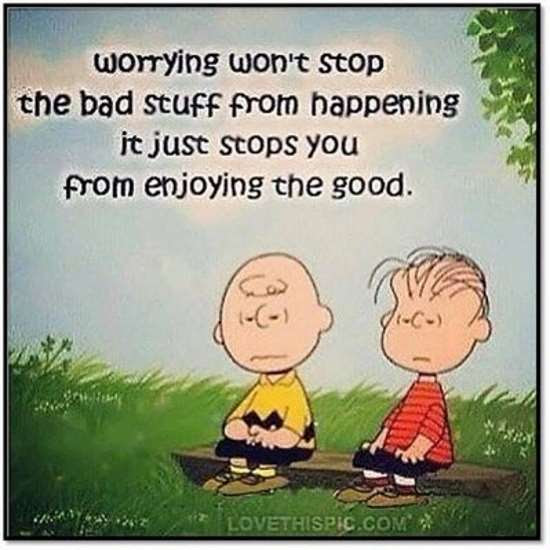
You might like to recall…October 3, 1950 “Peanuts” first debuted in seven newspapers under the United Features Syndicate. Developed by Charles M. Schulz, who was raised Lutheran in Minneapolis and Saint Paul, Minnesota, “Peanuts” ran for nearly 50 years and was published in 2,600 newspapers, 75 countries and 21 languages.
The following were sent by a loving friend and faithful EnviroPolitics reader.
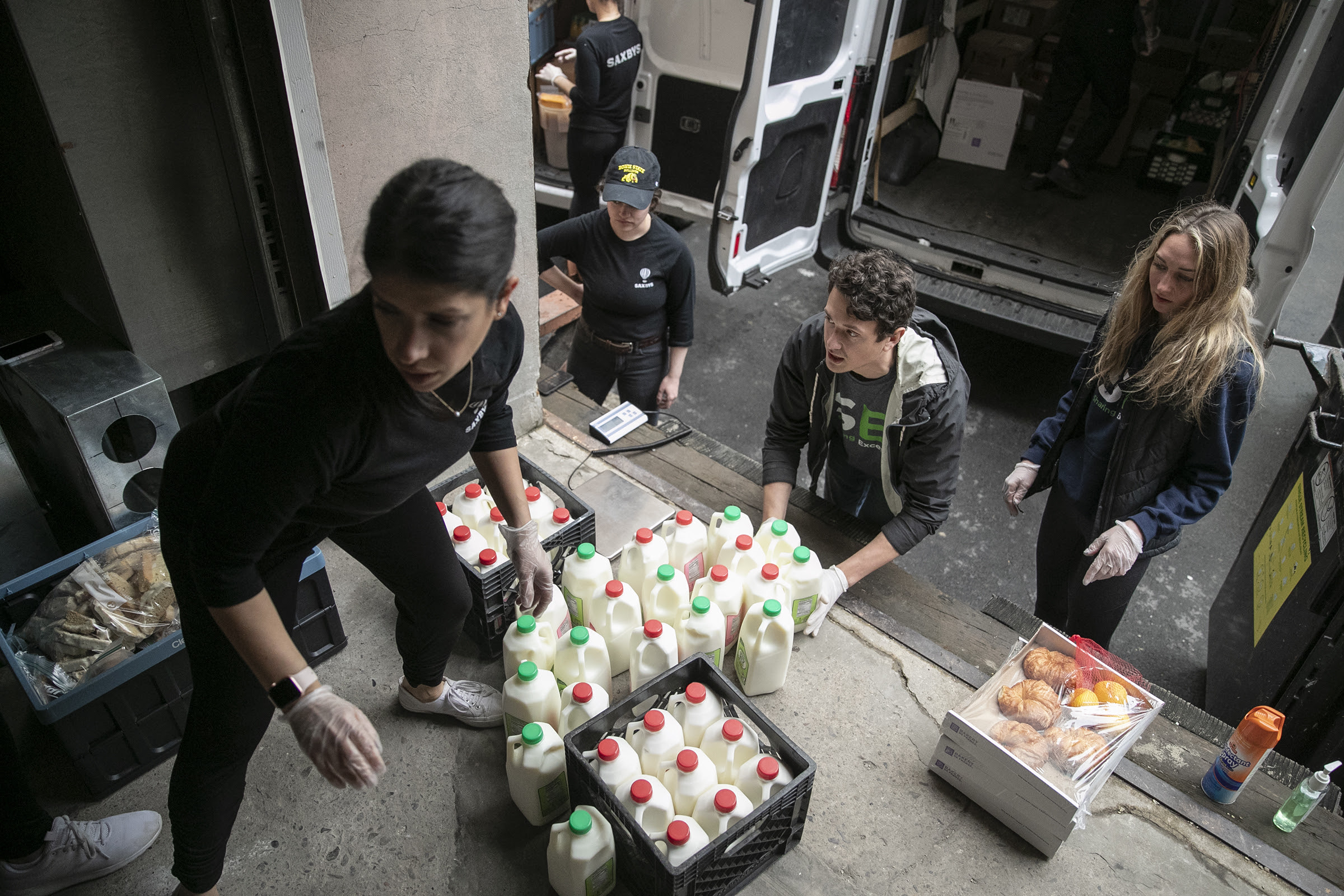
Evan Ehlers (right) founder of Sharing Excess, a Philadelphia-based nonprofit that helps connect grocery stores and restaurants with surplus food to hunger-relief organizations with storage space, lifts up milk to weigh and load in a truck from Saxby’s employee Haley Samsi (left) in Center City earlier this month. Sharing Excess has received much more food than usual due to restaurants closing from the spread of the coronavirus. HEATHER KHALIFA / Photographer
Each week the Philadelphia Inquirer goes behind the scenes with one of its reporters or editors to discuss their work and the challenges they face along the way. This week the paper chats with Jenn Ladd, who has been covering how food workers and restaurants have been handling the coronavirus pandemic.
Could you provide a brief timeline of events of how the Philly food community has been responding to COVID-19? It didn’t begin with a sudden shutdown, but a slowing of foot traffic and visitors, correct?
The city and state shutdown orders came on Monday, March 16 — only two weeks ago, if you can believe it. That’s when restaurants and bars had to decide whether to close completely or try to eke it out with pickup and delivery services.
What’s been the biggest need from the Philly food community?
It would depend on how you define Philly’s food community. Restaurants’ profit margins are notoriously thin, so business owners will need leniency and cash (and possibly good insurance policies), and if they’re doing takeout and delivery, regular customer support to cover reduced operating costs. Mike Klein lays a lot of this out here.
Then there are all the workers in the industry — many laid off, a few working reduced hours — who need to pay for rent, health care, their kids, etc. They’ll also need leniency and cash, and hopefully a job to come back to. But it’s hard to say what the restaurant landscape will look like when we emerge from lockdown.
Looking beyond that, restaurant suppliers — from big East Coast distributors to Lancaster farms — are hurting because their clients aren’t ordering in the same quantities. Many are starting to offer their services to the general public, which is kind of interesting to me as a home cook.
And besides money and consumer support, probably everyone could use some mental health services right now.
How have restaurants and organizations shifted their outreach and distribution amid a shutdown?
I can’t think of a time when social media was more important in communicating the basic functionality of a restaurant — it’s a lot easier to update your Instagram than your website. From what I’ve found, Instagram and Facebook are the best ways to check on what your favorite places are doing, whether they’re offering takeout, asking for your signature on a petition, or donating meals to others.
What are some ways residents can continue to support restaurants?
I’ll assume that most of our astute readers have heard that gift cards act as micro-loans for restaurants, and most places that are closed completely are offering them. There’s also the option of buying merchandise if you don’t feel comfortable buying a gift card for a place that might not reopen.
There are a ton of GoFundMes (some sanctioned, some not) and other fund-raisers going on right now, and there are also a lot of petitions and calls to action circulating. It can be hard to know where to put your time and your money, to know who it’s going to and how it will be spent.
Personally, I’m ordering takeout and other locally produced goods (bread, pastries, booze) at least a few times a week.
What do you foresee being the biggest need from the food community as the shutdown continues?
We’re always looking for stories that might interest EnviroPolitics readers. If you come across something so interesting that it cries out to be shared, please send it to editor@enviropolitics.com If we agree, you’ll see it here soon.
By Eli Saslow for the Washington Post MARCH 28, 2020 Add to list
She’s dead, and I’m quarantined. That’s how the story ends. I keep going back over it in loops, trying to find a way to sweeten it, but nothing changes the facts. I wasn’t there with her at the end. I didn’t get to say goodbye. I don’t even know where her body is right now, or if the only thing that’s left is her ashes.
From normal life to this hell in a week. That’s how long it took. How am I supposed to make any sense of that? It’s loops and more loops.An oral history of covid-19. First in a series.
She transported cars for a rental company. That’s where all this must have come from. People fly in from somewhere for a meeting and fly out a few hours later. You’ve got germs from all over the world inside those cars. I didn’t like the fact that she was working so hard, 69 years old and still climbing in and out of Ford Fusions all day, driving from Indianapolis to St. Louis and back with bad knees, bad hips, diabetes, and all the rest of it. Sometimes, she hurt so much after work I had to help her out of the car. I guess I should have told her to quit, but nobody told Birdie anything. She liked to drive, and we needed the money.
I think she’d been feeling bad for a few days, but I don’t remember much about what happened early on. She wasn’t a complainer, and I’m not always the best at noticing. There was a cough somewhere in there. Probably a touch of a fever. But this was a few weeks back, when those things didn’t mean so much. I thought she had a cold, or maybe bronchitis. She would get that sometimes, lose her voice and be fine a few days later, no big deal. But then she woke me up at about 4 in the morning and kept pointing to her throat. She said she couldn’t sleep. Said her eyes hurt. Said it felt like somebody was pounding on top of her head. Birdie’s usually one of those who wants to rub some dirt on it and keep moving, so when she told me to take her to the emergency room, I knew it was serious. I knew she was sick.
First it was a fever of 103. Then the doctors decided it was pneumonia and went ahead and admitted her. Then it was pneumonia in both of her lungs. If anybody was thinking it was the coronavirus, I didn’t hear it — at least not at first. Nobody in Indiana had it yet. Even if it was killing people in Washington state and starting to infect people in New York, it was basically happening on TV.
The best precautions weren’t taken in the early stages. A few nurses wore gloves or masks when they came to see Birdie, but that seemed normal for treating pneumonia. I didn’t wear anything, and nobody really asked me to. I was lying next to her in the bed or sitting in a chair and holding her hand. She didn’t have much other family, and if I got up to go out into the hallway for a few minutes, I’d kiss her goodbye.
Would it have gone any different if they knew what it was? Maybe. Or maybe they would have quarantined her right then, and I would have lost a few more days with her.
See, I could analyze this to death. I’ll be doing this for the rest of my life.
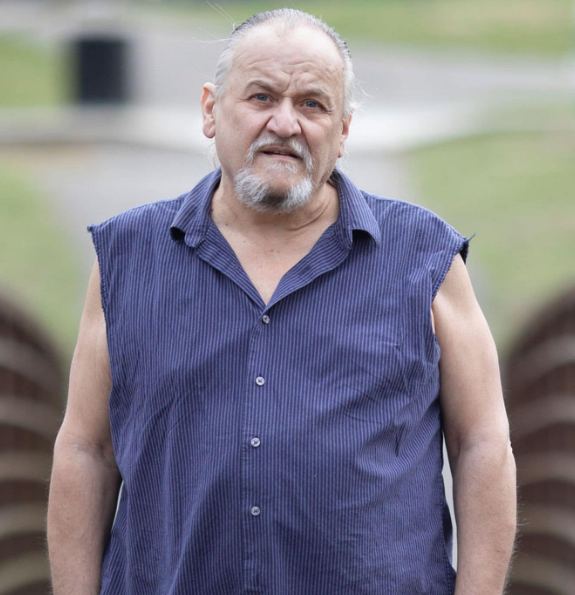
Tony Sizemore, whose partner was the first person known to have died of covid-19 in Indiana. (Chris Bergin for The Washington Post)
It was hard for me to sit there. I’m almost ashamed to say that, but it’s true. She was in the bed, and I was usually a few feet away in the recliner. It was two or three days in that room, but each one felt like a year. I’m not a natural caretaker, and never claimed to be, but it seemed like no matter what I tried, I couldn’t help her. It was just watch, wait, touch her forehead, apologize. I couldn’t do anything. Nobody could.
She was taking so much oxygen, but it was never enough. She had two little tubes put in her nose, and she couldn’t get enough air. They put a big mask on her face to get her oxygen back up, and that made her claustrophobic and panicky. She got real freaked out. I tried to count breaths with her. I kept saying: “Easy. Easy. In, out. In, out.” I couldn’t distract her because she was so deep in her head with panic. It labored her to talk. It labored her to breathe. I said, “Don’t talk then, honey. Save your energy.”
There was a TV in there, but neither of us could focus on it. I sat in the quiet with her, for whatever comfort that might have brought her. I don’t know. I listened to her breathing. I watched her. When she was asleep she was taking these real quick, short breaths, like she was gulping air more than breathing it. When she was awake, she was kind of mumbling to herself. Maybe it was the medication they were giving her. I hope to God it was the medication. She was talking about how her eyes hurt, her insides hurt. She would clutch her fists and hit the bed and stuff, and you don’t really know how to help somebody in that frame. I mean, when she’s just clutching her fists and moaning and — I don’t know.
I don’t know what I could have done. I sat there for as long as I could and then I got up every few hours to pace the hallway, or I’d drive eight minutes home to feed the dogs. I was starting to go a little crazy myself. I couldn’t keep sitting there, feeling helpless, listening to her breathe.
More than half of U.S. states with container redemption programs have temporarily suspended enforcement of requirements for retailers, and in some cases other facility operators, due to multiple factors around the new coronavirus. Connecticut, Iowa, Maine, Massachusetts, Michigan, New York, Oregon and Vermont recently announced respective suspensions.
California and Hawaii – the other two states with bottle bills – have not announced enforcement changes. Recology, which operates redemption facilities in California, notified customers that some of its redemption services are suspended because of COVID-19. The Hawaii Department of Health noted online that hours of operation for redemption centers could change due to the virus.The enforcement suspensions in Connecticut, Maine and Oregon run through the end of March, while Iowa’s continues through April 7 and Vermont’s goes through the end of April.
Those suspensions are subject to extension, and several state agencies have noted that the situation is changing quickly. The suspension in Massachusetts is in effect until further notice, or until a state of emergency ceases. New York will continue its policy “during the ongoing COVID-19 response efforts.”
We’re always looking for information that might benefit our readers. If you come across something that cries out to be shared, please send it to editor@enviropolitics.com If we agree, you’ll see it here soon.